01
Change what is on your plate
The single most direct, repeatable action available to almost any human being on earth. Three meals a day, every day, is a vote — for one kind of world or another.
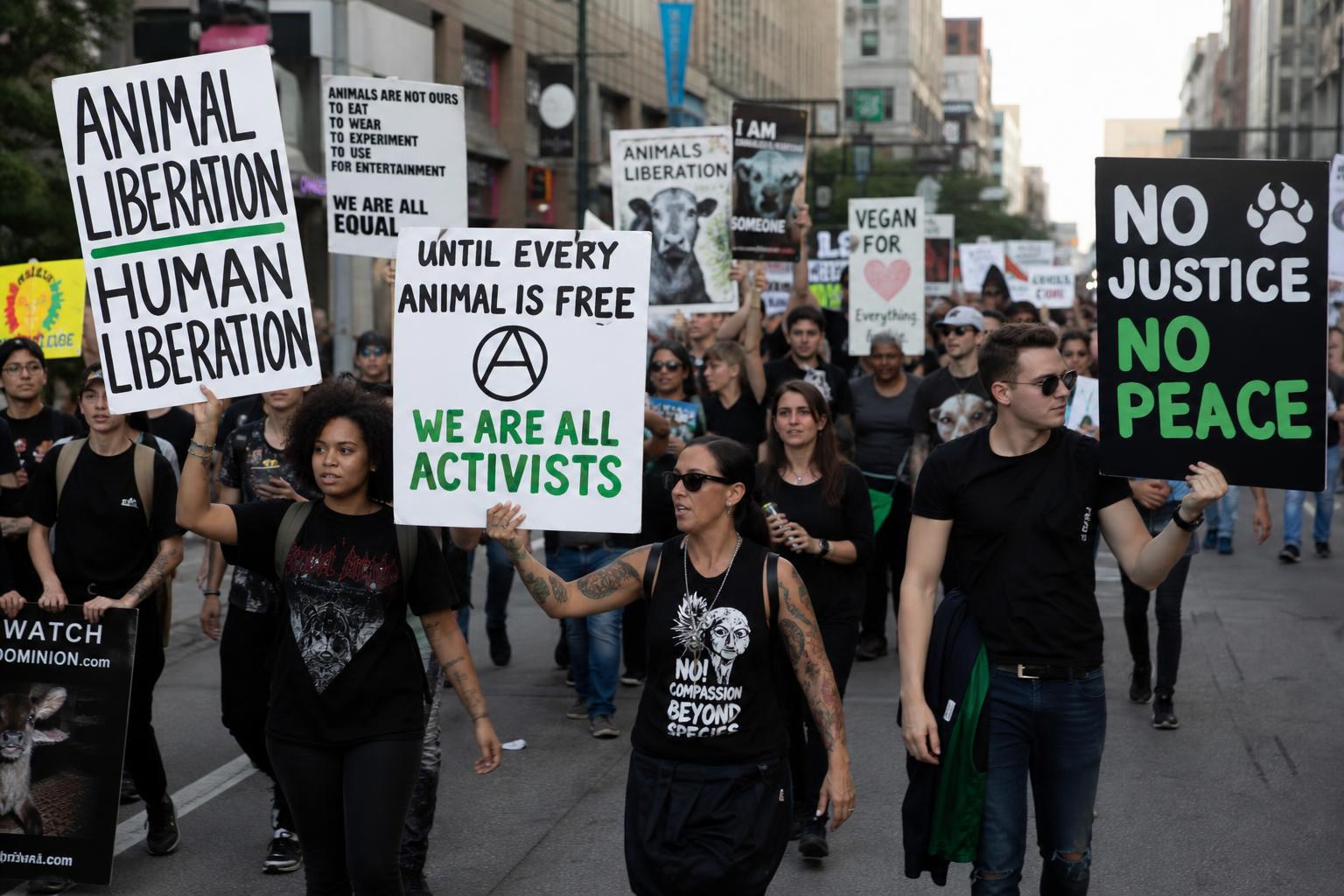
The system is enormous, and the urge to feel powerless is intelligent. But movements are not built by people who feel certain — they are built by people who act anyway. Here are six places to start, in rough order of leverage.
The single most direct, repeatable action available to almost any human being on earth. Three meals a day, every day, is a vote — for one kind of world or another.
Movements travel at the speed of conversation. One honest, kind, unflinching conversation with a friend or family member does more than any social media post.
Almost every major vegan resource exists only in English, Spanish or Chinese. If you read this site in your own language, you already have a rare skill. Translate one paragraph. Send it to us.
Every plant-based dish you order at a local restaurant or buy from a local vendor tells the market: this is what we want. Markets follow money. Show them yours.
Most cultures had rich plant-based traditions before industrial meat displaced them. Cook one. Photograph it. Share it. You are recovering your own.
'Local meat is fine.' 'Humane slaughter exists.' 'We need dairy for calcium.' None of it stands up to scrutiny. Learn the honest answers and refuse the comfortable lies.
Nobody changes their plate without a few real questions first. These are the ones that come up the most, answered the way we'd talk to someone we love.
It's normal to feel awkward at first. Here's a soft map of what most people describe in the first four weeks — not a prescription, just so you know what to expect.
You spend the first week figuring out three or four breakfasts and three or four lunches that work for your real life. Once those are decided, the rest of the week takes care of itself.
Things start tasting cleaner. Vegetables you found bland become interesting. This is real — the dulling effect of heavy fats and salt fades faster than people expect.
If you noticed bloating from the extra fibre in week one, it usually calms by now. Most people report feeling lighter, sleeping a little better, and steady energy without afternoon crashes.
By the end of the month, you're not 'trying' anything. It's just how you eat. The mental load drops to nearly zero, and the decision feels less like a diet and more like a quiet preference.
Most of the hard moments aren't with strangers — they're at family dinners, with parents who took pride in feeding you, partners who feel judged, friends who fear losing a shared ritual. None of that is solved by an argument. It's solved by warmth and patience.
Once you have understood why you avoid animal products in food, the question of consistency in other areas of life tends to arise on its own. None of these extensions are required to be meaningful — removing animal products from your diet is already a substantial act. But the logic is the same, and the options are increasingly practical.
Leather, wool, silk, and down all involve animal use. The scale is smaller than food but the suffering is not absent: the leather industry is closely linked to the beef and dairy industries; wool shearing in commercial operations involves significant stress and routine injury; down is frequently live-plucked. Alternatives are now practical at most price points: cotton, linen, hemp, Tencel and recycled synthetic textiles for clothing; synthetic fills or recycled down for outerwear. Second-hand and vintage is often the lowest-impact choice for any material.
Two separate questions apply here: are animal-derived ingredients present (common ones include lanolin from wool, beeswax, carmine from beetles, and squalene from shark liver), and is the product tested on animals. These are independent — a product can be animal-ingredient-free but animal-tested, or contain animal-derived ingredients from cruelty-free supply chains. The Leaping Bunny and PETA's Beauty Without Bunnies databases are reliable references for cruelty-free certification. Vegan and cruelty-free options exist at every price point in most markets.
Zoos, aquariums, circuses with performing animals, elephant sanctuaries where tourists ride or bathe elephants, and some traditional festivals involve animal use that is difficult to justify on welfare grounds. The distinction worth making is between facilities that rescue and rehabilitate animals with no performance or interaction component (these can be genuinely valuable) and those where animals perform or are handled by tourists for revenue. The former merits support; the latter merits scrutiny.
The research on attitude change is fairly consistent: moral lecturing increases resistance, not openness. People change their positions when they feel respected, not judged. This is not a reason to stay silent — it is a reason to choose your moments and your register carefully. The most effective advocates are those who live their values visibly and explain them warmly when asked.
Elite athletes, special-ops soldiers and scientists upend the myth that meat is required for strength, endurance and recovery.
 YouTube
A documentary about animal agriculture and the environment, focused on why mainstream environmental organisations were not addressing it. Best shared with people who are already environmentally motivated.
Focuses on plant-based eating and athletic performance. Accessible to people who are health-motivated or interested in sport. Some claims are overstated; its core point — that you can perform at elite level on plants — is solid.
The health case for whole-food plant diets, centred on the work of T. Colin Campbell and Caldwell Esselstyn. Conservative and data-focused. Best for people who are health-motivated and open to long-form documentary.
The environmental impact of the fishing industry. Some journalistic shortcuts; the core data on wild fisheries and bycatch is well-sourced. Useful for people who consider fish a 'safe' option environmentally.
Jonathan Safran Foer
A personal and journalistic investigation into animal agriculture, written by someone who is not a vegan activist but a novelist trying to decide what to feed his child. One of the most accessible entry points for people who read literary non-fiction.
Michael Greger
A survey of the evidence connecting diet to the fifteen leading causes of death, written by a physician. Dense with research; best for people who trust scientific authority and want citations.
Peter Singer
The 1975 philosophical text that launched the modern animal rights movement. Best for people who engage with moral philosophy and want to understand the ethical foundations of veganism.
That is how many lives one person, eating differently, withdraws from the system in a single year. Multiply by a community. Then a country. The arithmetic of liberation is not complicated.
Concrete ways to act for farmed animals — most take under an hour:
Why animal rights belong to no party — and what political capture cost the movement.
Continue →