Veg.ac · 25 languages

For Planet, Animals, and Humans —
against factory farms and cruelty.

A global transition to plant-based living is a movement for justice, health, and our shared future. Available in your language, for your community.

Global Flavors
PlanetAnimalsHumans
One movement, three reasons

For the Planet, the Animals, and our fellow Humans.

Three intertwined harms come from one industry. Three intertwined goods come from one daily choice.

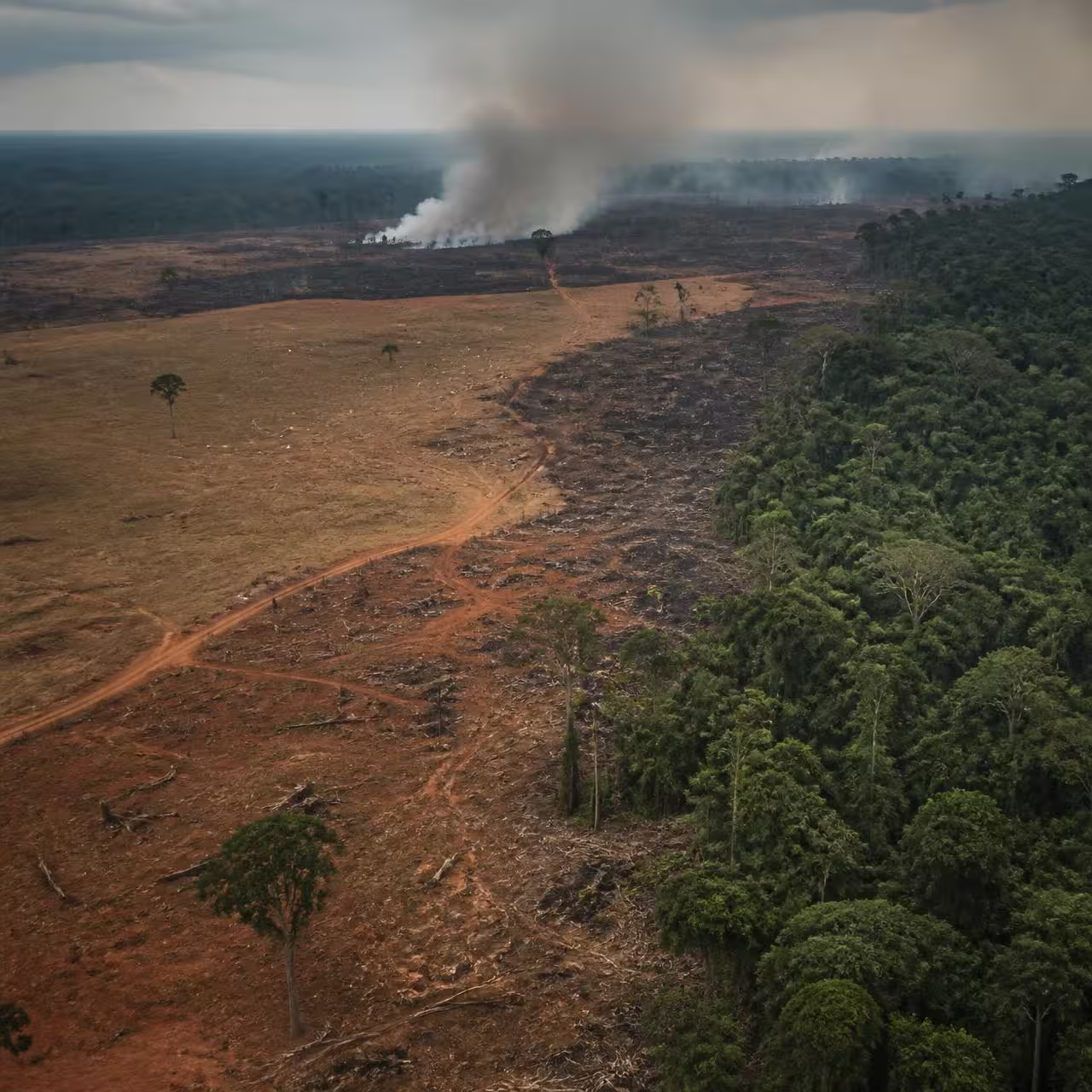
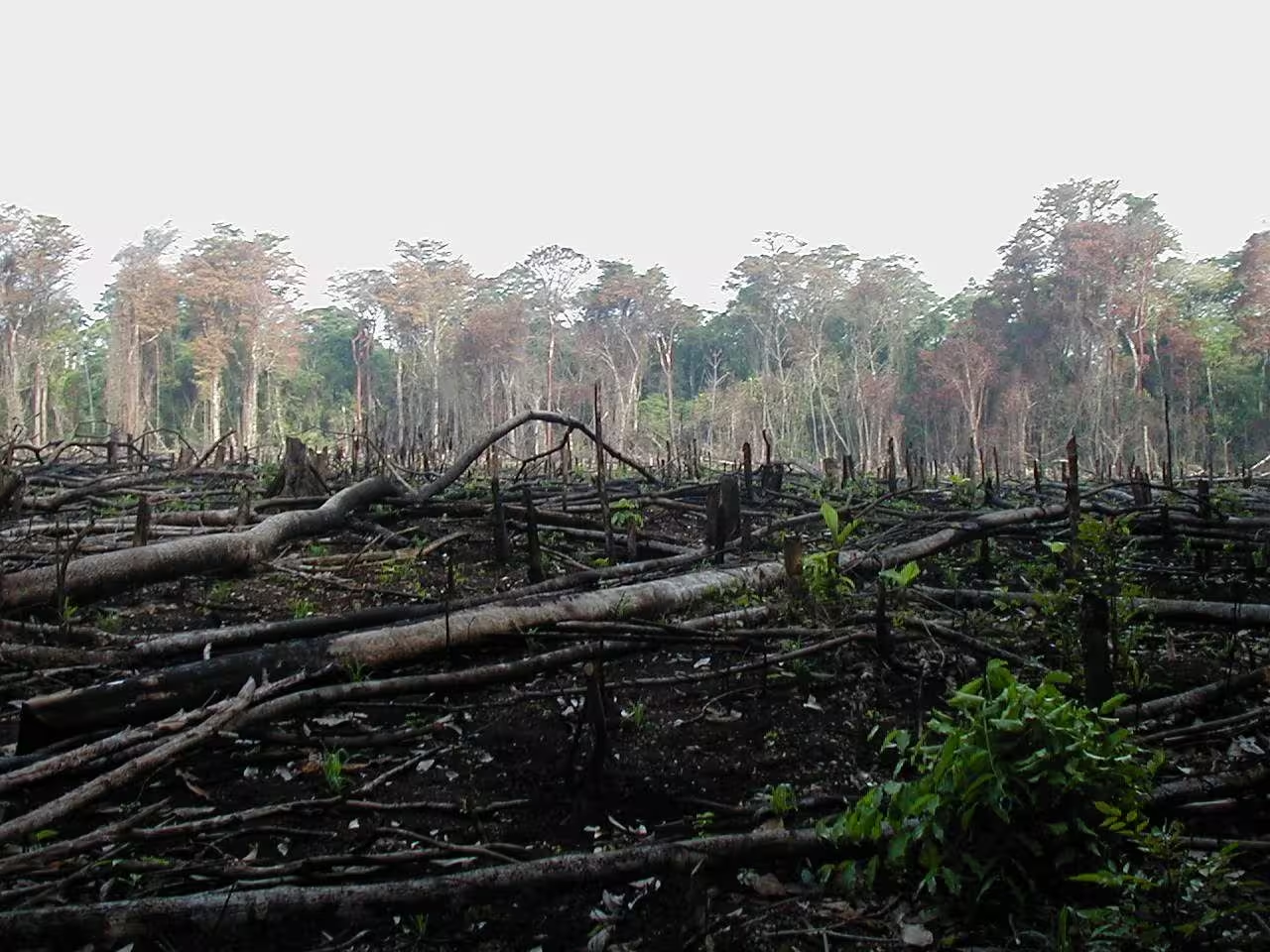
Smoke rising from a burned Amazon forest clearing
For the Planet

A livable Earth begins on the plate.

Animal agriculture drives roughly a third of human-caused greenhouse emissions, the majority of Amazon deforestation, and most freshwater pollution. A plant-forward shift is the single largest lever an individual holds against the climate and biodiversity crises.

A mother pig nursing her piglet outside an industrial barn
For the Animals

Every life on that plate had a face.

More than eighty billion land animals — and trillions of fish — are killed for food each year, most inside windowless industrial sheds. They feel pain, form bonds, recognize their young. Choosing plants is the simplest daily act of mercy available to us.

Volunteers harvesting vegetables in a community garden
For Humans

Health, dignity, and food sovereignty.

Whole-food plant diets cut the risk of heart disease, type 2 diabetes, and several cancers. Slaughterhouse workers face some of the highest injury and trauma rates of any industry. Plant-based eating is also climate justice for the communities first hit by pollution and pandemics.

The scale, in numbers

The hidden cost of what's on the plate.

Twelve numbers the food industry would rather you didn't see. Every figure is sourced — hover or scroll to verify.

0 L

Water for 1 kg of beef

Animal agriculture consumes roughly a third of all freshwater on Earth.

Water Footprint Network

0%

Amazon deforestation from cattle

Cattle ranching is the single largest driver behind the destruction of the world's largest rainforest.

Yale E360 · IPAM

0%

Farmland used for livestock

Yet livestock provide only 18% of humanity's calories and 37% of its protein.

Poore & Nemecek, Science 2018

0B

Land animals killed for food / yr

And 99% of them endure life inside a factory farm.

FAOSTAT 2022

1–2.8T

Sea animals killed each year

Most are not even counted in animal-agriculture statistics.

fishcount.org.uk

0%

Of antibiotics fed to livestock

Driving the rise of antibiotic-resistant superbugs in human medicine.

WHO · CDC

0%

Of methane emissions

From animal agriculture — a gas 80× more potent than CO₂ over 20 years.

UNEP · IPCC AR6

0%

Of biodiversity loss

Linked to food production, with animal agriculture the leading driver.

WWF Living Planet 2022

0%

Of farmland could be freed

If the world shifted to plant-based diets — an area the size of the US, China, and the EU combined.

Our World in Data

1,048M t

Grain fed to livestock / yr

Enough calories to end global hunger several times over.

FAO

0

Animals one vegan spares per year

Plus thousands of fish and shellfish — every plant-based meal counts.

PETA · Counting Animals

1/3

Of all human-caused emissions

Come from the global food system — and animal products are the lion's share.

Nature Food 2021

Our Position

The Justice Paradox

Industrial animal agriculture disproportionately harms under-served communities through climate instability and resource depletion. Choosing plants is an act of resistance.

01.

For the Planet

Conserving water and protecting soil biodiversity in regions most vulnerable to the climate crisis.

02.

For the Animals

Ending the cycle of exploitation and recognizing our kinship with every living being on earth.

03.

For the People

Securing food sovereignty and reclaiming traditional plant-based diets from global industrial food systems.

The Scale

The numbers are not the argument. They are the evidence.

Twelve verified data points behind the case for plants. Sources at the foot of each card.

92B

Land animals killed every year

And 99% of them spend their lives in factory farms — the largest, most concealed system of suffering in human history.

FAO, 2023

1–2.8T

Sea animals killed annually

Most are not even counted in animal agriculture statistics. They die suffocating on decks, in nets, or in industrial tanks.

fishcount.org.uk

15,000 L

Water for 1 kg of beef

Animal agriculture consumes roughly one third of the world's freshwater — much of it in regions already running dry.

Water Footprint Network

80%

Amazon deforestation from cattle

Cattle ranching is the single largest driver of rainforest loss on the planet — feed crops account for most of the rest.

Yale E360 / WRI

77%

Of farmland feeds livestock

Yet livestock provides only 18% of the world's calories and 37% of its protein. The math does not work — and never has.

Poore & Nemecek, 2018

37%

Of methane from animal agriculture

Methane is roughly 80× more potent than CO₂ over 20 years. Cutting livestock is the fastest lever we have on near-term warming.

IPCC AR6

80%

Of antibiotics used on farm animals

Routine antibiotic use in crowded sheds is the primary engine of antimicrobial resistance — projected to kill 10 million people a year by 2050.

WHO

60%

Of biodiversity loss linked to food

Animal agriculture is the single largest driver of species extinction on land and in the sea.

WWF

1.04B t

Of grain fed to livestock yearly

Enough to end global hunger several times over. Meanwhile, more than 730 million people go to bed hungry.

FAO / WFP

75%

Of farmland could be returned to nature

A global shift to plant-based diets would free an area the size of the US, China and the EU combined — for forests, for wildlife, for water.

Our World in Data

8M

Lives saved per year by 2050

Modelling a global shift to plant-based eating shows up to eight million premature deaths avoided every year — and $1.5T in healthcare savings.

Springmann et al.

200

Animals spared per person, per year

That is what one ordinary person, eating differently, withdraws from the system in a single year. Multiply by a community. Then a country.

Counting Animals

The Animals

Six species. Trillions of individuals. One pattern.

Browse all species profiles →

Chickens

More chickens are slaughtered than all other land animals combined.

Cows

Dairy is not a peaceful alternative to beef — it is its mother.

Pigs

Cognitively comparable to a three-year-old child. Treated as a unit.

Fish

The largest, least counted, least protected group of farmed animals.

Sheep & Goats

Live export — by truck and by sea — is built around their bodies.

Wild fish & shellfish

The ocean is being emptied faster than it can refill.

The Industries

Four industries, hiding the same machinery.

The dairy industry

Milk is a mammal's milk. Producing it at industrial scale requires a system of forced reproduction and family separation.

Read more about this industry →
What we stand against

Against factory farms. Against cruelty by the billion.

Over 90% of farmed animals worldwide now live and die inside industrial confinement systems — cages, crates, sheds, and slaughter lines built for speed, not life. The same machine clears forests, poisons rivers, fuels pandemics, and brutalizes the workers it employs.

We don't dress this up. We document it, we name it, and we offer a way out — one meal, one habit, one shop at a time.

See what they endure
Hens packed into battery cages
A young calf inside a transport trailer
An industrial trawler hauling a massive net
A rescued chick in human hands
Why this site exists

Most advocacy talks past the people who could actually be reached.

The loudest voices in plant-based advocacy tend to speak English, publish in Western contexts, and assume their audience already knows what tofu is. The result is content that reaches people who are already almost there — and misses the billions of people who eat largely plant-based already without calling it anything, and the millions more who would change if they encountered the case in their own language, through their own food traditions.

Veg.ac exists to close that gap. We publish the same honest, evidence-led case across dozens of languages, rooting each version in the plant traditions of the communities we're speaking to. This is not translation for translation's sake. It is the belief that where you are born and what language you speak should not determine whether you have access to clear information about food, animals, and the planet.

What we stand for

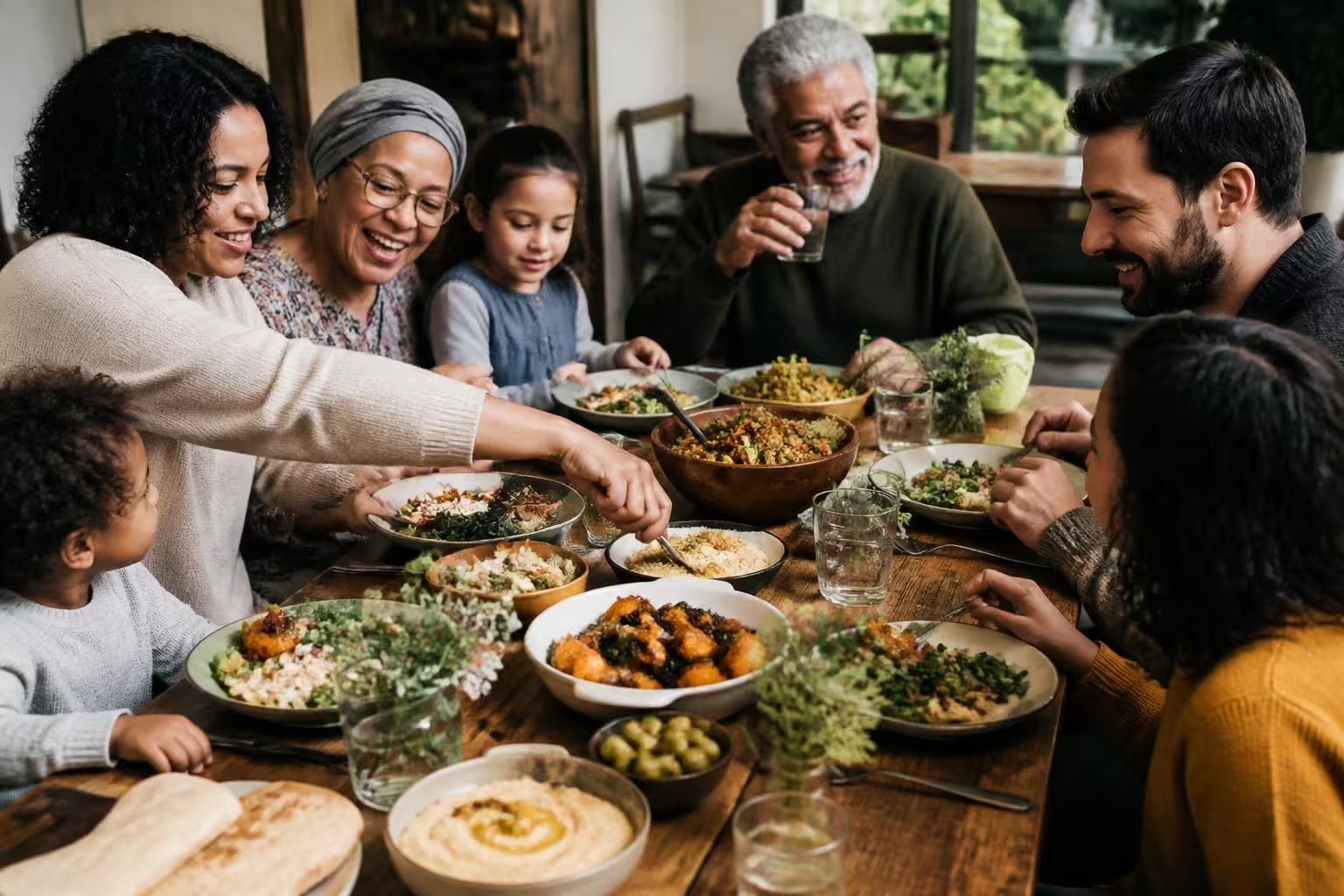
A table wide enough for everyone.

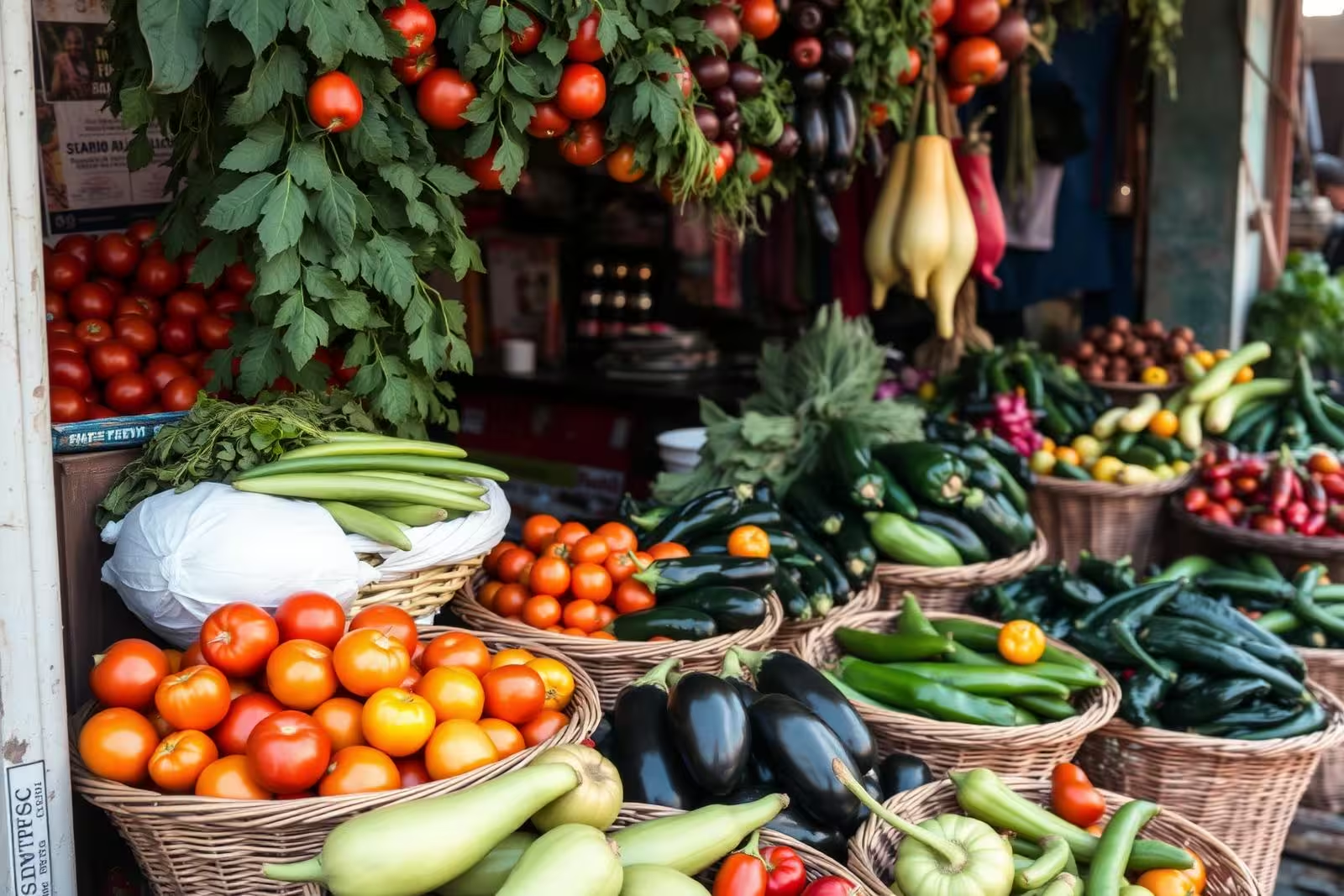
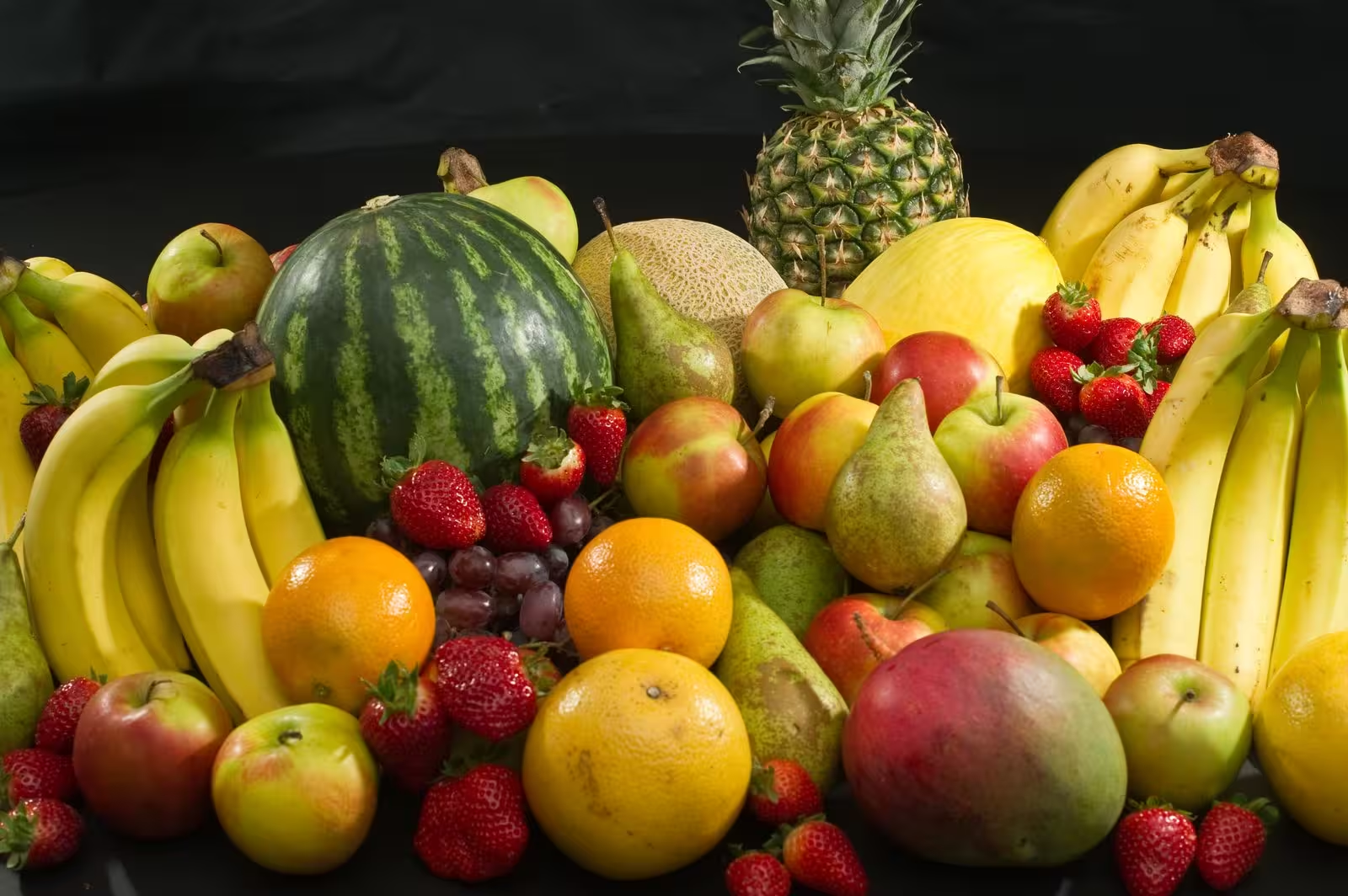
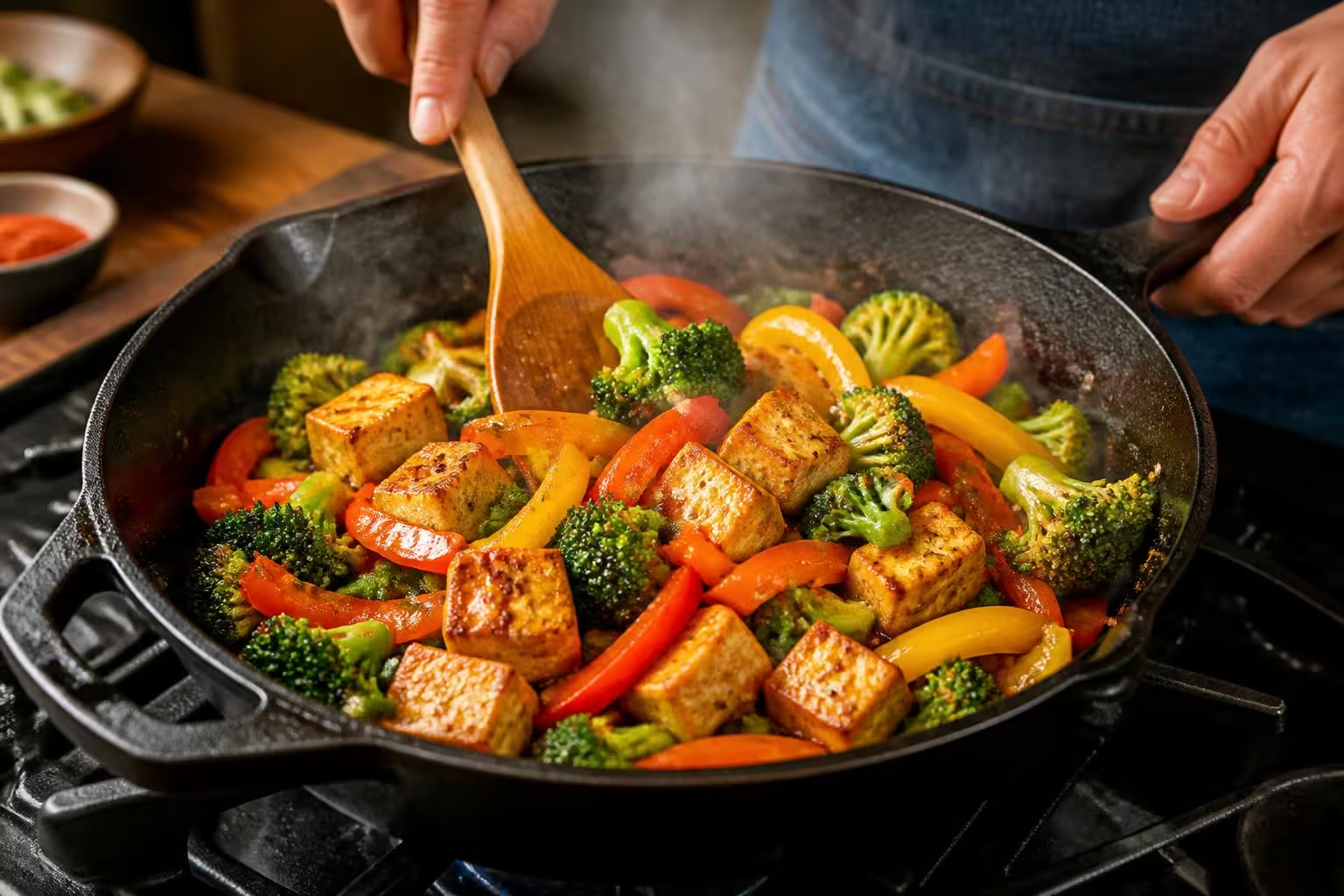
Plant-based eating isn't deprivation — it's the oldest, richest, most colorful way humans have ever fed themselves. From grain bowls in Addis to lentil stews in Lahore, abundance is already on the menu.

Open-air market stall overflowing with fresh produce
Glass jars filled with colorful beans, lentils, and grains
Vibrant spread of seasonal fruits
Hands tossing vegetables in a hot wok
What you will find here

A map of the site.

The case for plants

Four interlocking reasons — animals, planet, health, justice — explained without jargon, with sources you can verify.

The animals

Species-by-species records of who these animals are and what is done to them in standard industrial practice. No graphic imagery; clear language.

The planet

The environmental data on animal agriculture — land use, water, greenhouse gases, biodiversity — translated from the research literature into plain numbers.

Health

What the peer-reviewed consensus actually says about plant-based eating for adults, children, athletes, and people managing chronic conditions.

A 7-day starter

A soft, practical guide for the first week — grounded in the staples and traditions of wherever you are.

Recipes

Dishes from plant-rich traditions around the world: Ethiopian, Senegalese, Japanese, Mexican, Lebanese, Indonesian, and many more.

Common questions

The things people ask before they read anything else.

These are the questions that come up in messages, at dinner tables, and in comment sections. We have tried to answer each one the way we would answer a thoughtful friend.

Your move

For Planet, Animals, and Humans. Today, on your plate.

You don't need to be perfect. You need to begin. Pick one meal, one swap, one day this week — and let the rest follow.