01
Animals
More than 70 billion land animals are killed for food each year. Each one is an individual with a will to live. We owe them, at minimum, our refusal to participate.
Four reasons that converge into one choice. The case for veganism is not one argument — it is many, reinforcing each other.
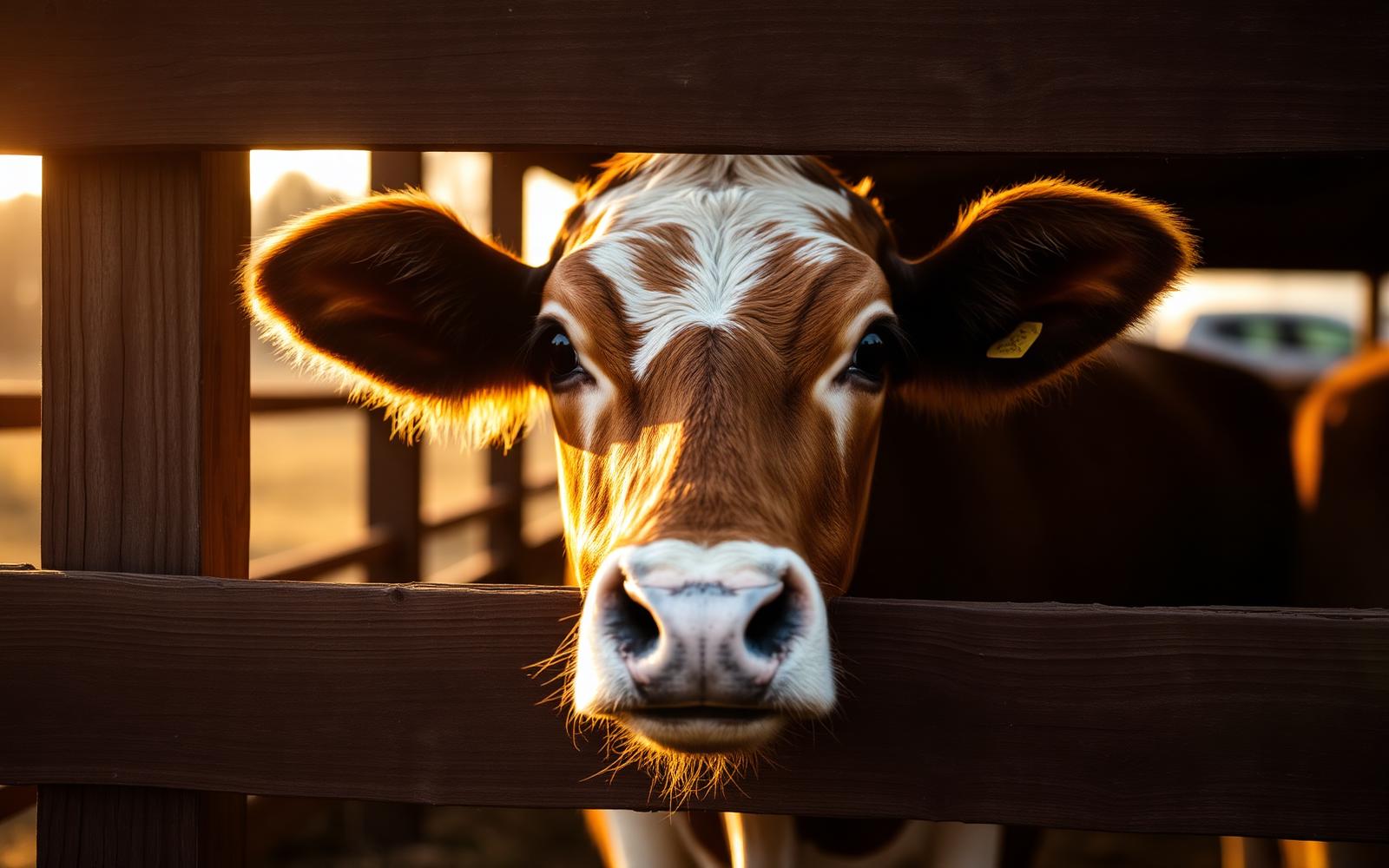
More than 70 billion land animals are killed for food each year. Each one is an individual with a will to live. We owe them, at minimum, our refusal to participate.
Animal agriculture is the leading driver of deforestation, ocean dead zones, and freshwater depletion. The shift to plants is the single largest reduction an individual can make to their environmental footprint.
Whole-food plant diets reduce the risk of heart disease, type-2 diabetes, and several cancers — particularly important where healthcare is least accessible.
The communities feeling climate change first and worst are the same ones least responsible for it. Food sovereignty and traditional plant-based eating are tools of resistance.
These are not edge cases or rogue operators. This is standard, audited, regulated practice in the four largest animal-product industries on earth.
Behind a clean supermarket label sits the largest, most concealed system of animal suffering in human history.
Calves, piglets and chicks are separated from their mothers within hours of birth. Most never feel grass, sunlight or open air. Selective breeding has pushed their bodies past the point of functional health.
Dehorning, branding, castration, beak-trimming, tail-docking — all routinely performed without anaesthesia. These are not abuses by bad actors. They are standard industry practice.
Livestock accounts for roughly 15% of all greenhouse emissions — more than the entire global transport sector. It is the leading driver of deforestation and ocean dead zones.
Processed meat is classified as a Group 1 carcinogen by the WHO — the same category as tobacco. Slaughterhouse work has among the highest injury rates of any industry.
Milk is a mammal's milk. Producing it at industrial scale requires a system of forced reproduction and family separation.
Dairy cows are inseminated each year. Their calves are taken within hours so the milk meant for them can be sold. Female calves enter the same cycle. Male calves are sold for veal or shot at birth.
A cow's natural lifespan is around twenty years. Dairy cows are slaughtered at four or five, their bodies broken down by repeated pregnancy and udder infections.
Dairy is one of the most water- and land-intensive foods on earth. Manure lagoons leak nitrates into waterways. Methane from dairy herds is a major contributor to near-term warming.
Most adults globally are lactose-intolerant — it is the default human state. Calcium needs are easily met by leafy greens, legumes, sesame and fortified plant drinks.
Even 'free-range' and 'cage-free' eggs come from a system built on routine killing.
Male chicks of laying breeds cannot lay eggs and grow too slowly for meat. Hundreds of millions are macerated alive or suffocated within hours of hatching every year.
Most laying hens live two years in cages with less space than a sheet of paper. 'Cage-free' typically means tens of thousands of birds packed into a shed.
Once egg production drops, hens are sent to slaughter at around two years old. Their natural lifespan is eight. They have been bred to lay around 300 eggs a year — their wild ancestors lay 10 to 15.
The forgotten animals of the food system — and the largest source of animal death on earth.
Almost no welfare laws cover fish. They are pulled from depth so fast their swim bladders rupture, gutted while still conscious on deck, or boiled alive in canneries.
More than a third of assessed wild fish stocks are overexploited. Bottom trawlers strip the seafloor of life — every pass destroys ecosystems that took centuries to form.
Farmed fish are kept in disease-ridden cages where sea lice eat them alive. Many farmed species require wild-caught fish as feed.
Most people who change how they eat do so because of one reason that reaches them personally — and only later encounter the others. All four pillars are real. You don't need to believe all of them to act on any one of them.
More than 92 billion land animals are killed for food each year. Each is a sentient individual capable of fear, pain, preference, and relationship. The question of whether to cause that suffering at industrial scale is the most direct ethical question the food system raises. It does not require any environmental or health argument to be answered.
Animal agriculture is responsible for 14.5% of global greenhouse gas emissions (FAO, 2013), 80% of Amazon deforestation, and 77% of global agricultural land use while providing only 18% of calories. It is the single largest driver of freshwater depletion, biodiversity loss, and ocean dead zones from agricultural runoff. No climate strategy that ignores food is complete.
The Academy of Nutrition and Dietetics, the British Dietetic Association, the WHO, and equivalent bodies in more than a dozen countries have stated that well-planned plant-based diets are appropriate for all stages of life and associated with lower rates of heart disease, type 2 diabetes, hypertension, and several cancers. The peer-reviewed evidence is unusually consistent.
Factory farming concentrates its harms on communities without political power: slaughterhouse workers — disproportionately migrants and low-income workers — living near feedlots, small farmers undercut by subsidised industrial competitors, and communities in the Global South bearing the worst of climate and land-use impacts they did not cause. The system is not neutral.
The word 'cruelty' in the context of animal agriculture is sometimes used to mean exceptional, rogue behaviour. It is not. The practices described below are standard, audited, and legal in most of the world's largest food-producing nations. They are not the result of bad actors; they are the result of systems optimised for throughput.
Understanding this matters because it means the problem is not fixable by better enforcement of existing rules. The practices are the rules. The solution, where one is available, lies in the structure of demand — which is why food choices are one of the few levers that individuals, families, and institutions can pull directly.
Battery cages for laying hens give each bird roughly the area of an A4 sheet of paper for its entire life. Gestation crates for breeding sows are too narrow for the animal to turn around. These are not outliers — they house the majority of egg-laying hens and breeding pigs in many countries.
Dairy calves are removed from their mothers within hours of birth so the cow's milk can be collected for human consumption. This causes acute distress in both animals — behaviour researchers have documented the calls cows make when calves are taken, sometimes for days. It is standard practice in every commercial dairy operation.
Debeaking (removing the tip of a chicken's beak), tail docking in pigs and cows, castration of male piglets and calves — these procedures are performed without anaesthetic in most jurisdictions. They are responses to the stress behaviours that emerge from overcrowding, not interventions that address the overcrowding itself.
Broiler chickens are selectively bred to reach slaughter weight in 35–42 days — a rate so fast that many cannot support their own body weight. Heart failure, leg deformities, and difficulty walking are common. The birds that arrive at slaughter already live in chronic discomfort.
A 47-minute documentary showing the standard practices of UK animal agriculture — including the so-called "high welfare" farms.
 YouTube
The largest meta-analysis of food's environmental impact to date — 38,000 farms, 40 food products, 119 countries. Found that animal products use 83% of agricultural land while providing 18% of calories, and that plant-based eating is the single most effective dietary change for reducing environmental impact.
The UN Food and Agriculture Organization's primary analyses of livestock's contribution to greenhouse gas emissions, land use, and water. The 2013 update estimated livestock at 14.5% of global GHG emissions.
The largest body of registered dietitians in the world affirming that appropriately planned plant-based diets are healthful, nutritionally adequate, and appropriate for all life stages.
The International Agency for Research on Cancer classified processed meat as a Group 1 carcinogen and red meat as a Group 2A probable carcinogen, based on review of over 800 studies.
The Intergovernmental Science-Policy Platform on Biodiversity assessed that land-use change — driven primarily by agriculture — is the leading cause of biodiversity loss, with animal agriculture as the dominant pressure.
"The case for veganism is not one argument. It is many — each strong enough to stand alone, and stronger together."
Start your 7-Day JourneyThe clearest case for going vegan — animals, health and planet on one page: