01
Greenhouse gases
Livestock accounts for around 15% of all human-caused greenhouse emissions — more than every car, truck, ship and plane combined. Methane from cattle is roughly 80× more warming than CO₂ over 20 years.
Animal agriculture is the single largest driver of deforestation, freshwater depletion and biodiversity loss on earth. It produces more greenhouse gases than every car, truck, ship and plane combined. The shift to plants is the largest single reduction an individual can make.
Animal agriculture consumes roughly one third of the world's freshwater — much of it in regions already running dry.
Water Footprint Network
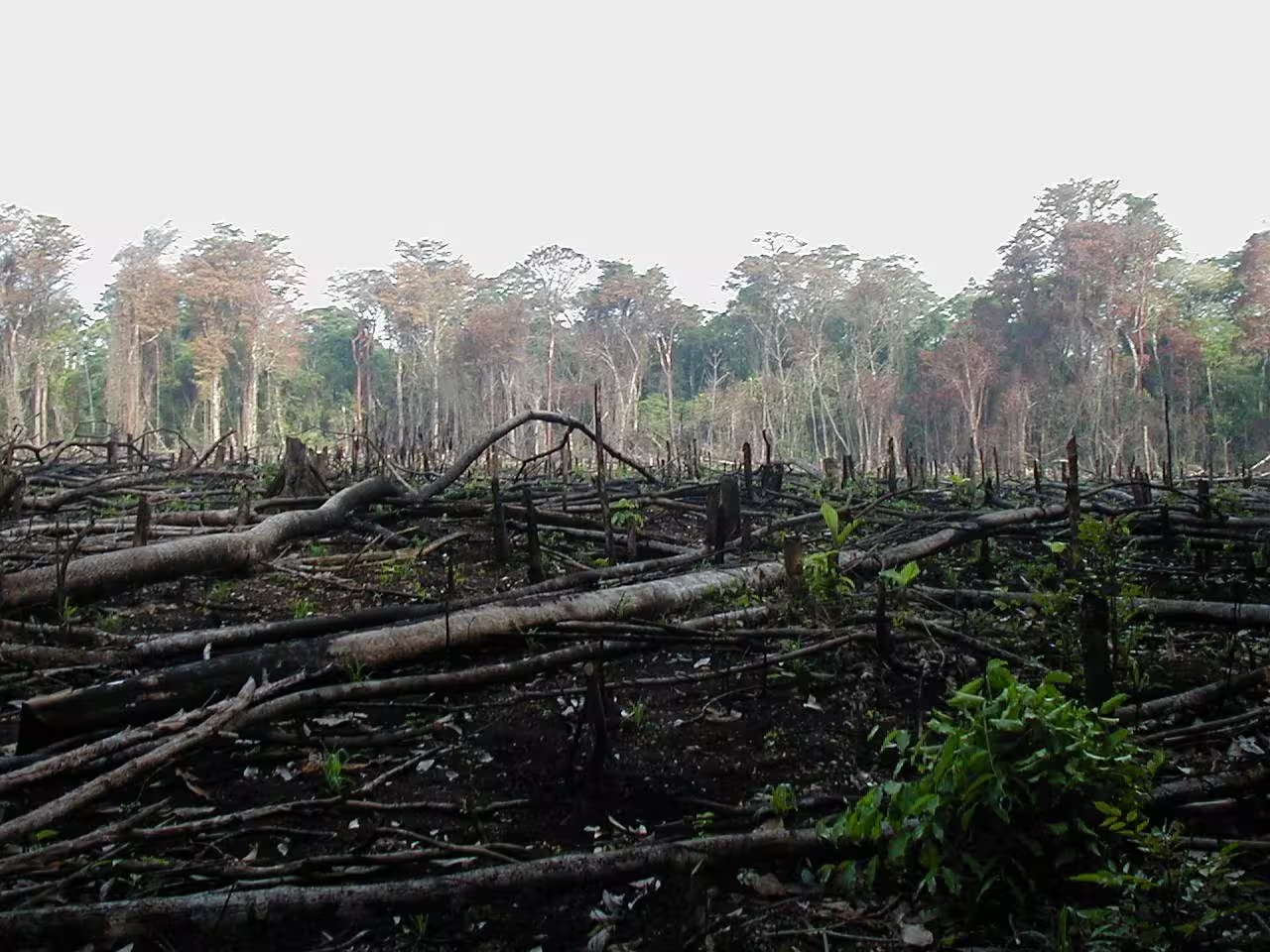
Cattle ranching is the single largest driver of rainforest loss on the planet — feed crops account for most of the rest.
Yale E360 / WRI
Yet livestock provides only 18% of the world's calories and 37% of its protein. The math does not work — and never has.
Poore & Nemecek, 2018
Methane is roughly 80× more potent than CO₂ over 20 years. Cutting livestock is the fastest lever we have on near-term warming.
IPCC AR6
Routine antibiotic use in crowded sheds is the primary engine of antimicrobial resistance — projected to kill 10 million people a year by 2050.
WHO
Animal agriculture is the single largest driver of species extinction on land and in the sea.
WWF
A global shift to plant-based diets would free an area the size of the US, China and the EU combined — for forests, for wildlife, for water.
Our World in Data
Livestock accounts for around 15% of all human-caused greenhouse emissions — more than every car, truck, ship and plane combined. Methane from cattle is roughly 80× more warming than CO₂ over 20 years.
Cattle ranching is the single largest driver of Amazon deforestation. Together with feed crops, animal agriculture accounts for most tropical forest loss worldwide.
Producing 1 kg of beef takes roughly 15,000 litres of water. Producing 1 kg of vegetables takes around 320. The world's freshwater crisis is, more than anything else, an animal agriculture crisis.
Animal agriculture is the leading driver of biodiversity loss on land and sea. We have replaced wild mammals with livestock at a ratio of roughly 15 to 1 by biomass.
Manure lagoons and fertiliser run-off from feed crops create oxygen-starved 'dead zones' in oceans and lakes worldwide.
If the world shifted to plant-based eating, around three quarters of current farmland could be returned to nature. The single largest opportunity for rewilding available to humanity.
Climate numbers can feel abstract. Reduced to a single meal, they get personal — and small daily choices add up to most of an individual's food footprint.
A typical beef patty produces around 6–7 kg of CO₂-equivalent emissions. A bean or lentil patty produces under 0.5 kg. That's a ten- to fifteen-fold difference, every time, for the same plate.
A glass of cow's milk uses around 120 litres of water and emits roughly three times the greenhouse gases of an equivalent glass of oat or soy milk. The taste and texture in coffee, cereal and baking is genuinely indistinguishable for most people within a week.
Farmed salmon carries hidden costs: wild fish caught to feed it, antibiotic use, and waste pollution in coastal waters. Tofu's footprint is a fraction of either farmed or wild fish, with comparable protein per gram.
These are conservative estimates based on the difference between an average omnivorous diet and a plant-based one, for one person, over one year. They are not the maximum — they are the floor.
Mostly water that would have grown feed crops for livestock, plus direct animal-drinking and processing water.
Roughly the size of a tennis court and a half — land that can be returned to forest, wetland, or wild grassland.
Comparable to a return flight between two continents, every single year, by changing nothing except your plate.
Mostly chickens and fish, because of how the industry is structured — but every one of them an individual.
Cattle, sheep and goats are major sources of methane, a greenhouse gas about 80 times more potent than CO₂ over a 20-year window. It also breaks down faster than CO₂ — meaning every kilogram of methane we stop emitting today translates into rapid cooling, not slow cooling decades from now.
That makes reducing animal agriculture one of the only climate interventions that pays off this decade, not in the second half of the century. It is the rare lever where the personal and the planetary point in the same direction, immediately.
Median values across thousands of producers worldwide.
Poore & Nemecek, Science (2018)
Mekonnen & Hoekstra, Water Footprint Network
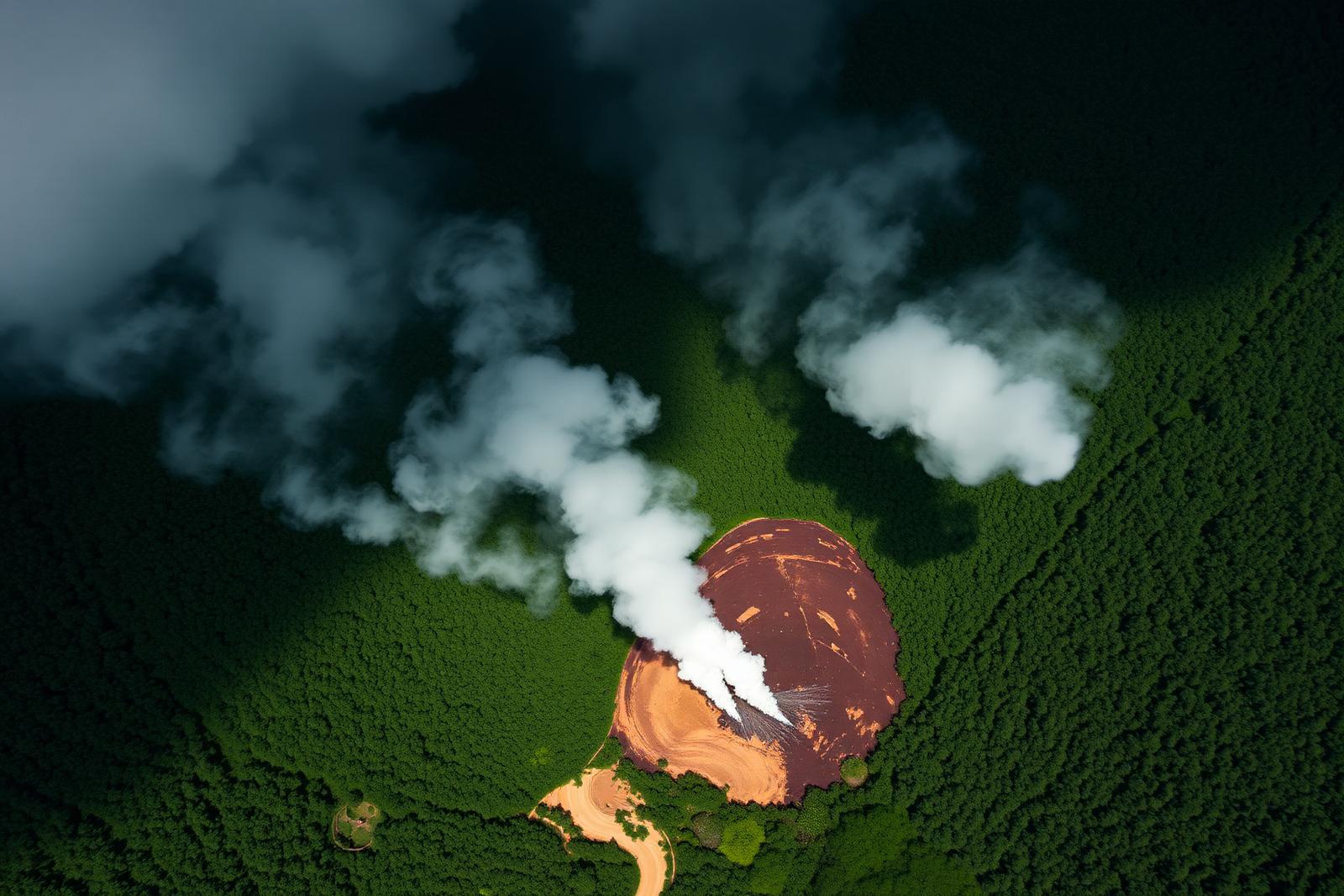
The most striking fact in the Poore and Nemecek (2018) analysis is the land-use disparity. Animal agriculture — including the crops grown to feed animals — occupies 77% of all agricultural land on earth. That land produces 18% of the world's calories and 37% of its protein. The arithmetic of this inefficiency is the foundation of the environmental case against the current food system.
Produces 6% of global calories from 60% of agricultural land. The land footprint of a kilogram of beef protein is 164 m² — compared to 2.2 m² for tofu. This is not primarily due to grazing land; most of it is the land required to grow feed crops.
Uses roughly 10 times the land per unit of protein compared to oat or soy milk. Much of this is indirect — land growing the feed crops that dairy cows eat, rather than pasture the cows graze directly.
Far lower land footprints than beef per gram of protein, but still 3–10 times higher than legumes. The comparison matters because the land freed by moving away from all animal products — not just beef — is what enables meaningful ecosystem restoration.
Poore and Nemecek estimated that a global shift to plant-based diets could free up 75% of agricultural land — an area roughly the size of the US, China, the EU and Australia combined — while still feeding the world's population more calories than are currently produced.
The IPBES Global Biodiversity Assessment (2019) found that around 1 million animal and plant species are currently threatened with extinction — more than at any point in human history. The primary driver is land-use change, with agricultural expansion accounting for 70% of deforestation globally. Animal agriculture — both the direct footprint of grazing and the indirect footprint of feed crop production — is responsible for the majority of that expansion.
The specific mechanism matters: when native habitat is converted to monoculture crops or pasture, the specialist species that depend on that habitat cannot survive. They have nowhere else to go. Generalist species thrive in disturbed landscapes; specialists die. The result is a steady replacement of biological complexity with biological simplicity. Reversing this requires land to be freed — and the most direct way to free land at scale is to shift food production toward plant-based systems.
Agricultural runoff — primarily nitrogen and phosphorus from fertilisers used on feed crops — flows into rivers and ultimately into coastal oceans, where it causes eutrophication: explosive algae growth that depletes oxygen and creates dead zones. There are currently over 400 documented oceanic dead zones globally, the largest covering roughly 70,000 km² at the mouth of the Mississippi river. These zones are expanding as feed crop production grows.
Aquaculture — fish and seafood farming — was long promoted as a solution to overfishing. In some forms it can be. But intensive salmon and tuna farming requires large quantities of wild-caught 'forage fish' as feed — meaning farmed salmon production drives the same overfishing it was supposed to replace. Sea pens also concentrate waste and disease in coastal waters, damaging adjacent wild fish populations. The best-performing aquaculture systems are shellfish and seaweed, which require no feed inputs and can improve water quality.
"Moving to diets rich in plant-based foods offers major opportunities for reducing environmental impacts, from farm to fork — across greenhouse gases, land use, water use, and pollution."
"Shifting to a global plant-based diet could reduce greenhouse gas emissions from food production by up to 70% by 2050."
"The food system is responsible for more than a quarter of global greenhouse gas emissions. Eating less animal products is one of the most powerful actions individuals can take."
"Land degradation, biodiversity loss and climate change are three different faces of the same central challenge: the increasingly dangerous pressures that human activities are putting on the planet."
"The single most important thing you can do for the planet is eat fewer animals."
— Joseph Poore, Oxford University (lead author of the largest analysis of food's environmental impact to date)
| Land use per 100 g protein | Animal | Plant |
|---|---|---|
| Square metres / year | Beef: 164 m² | Tofu: 2.2 m² |
| Freshwater (L) | Cheese: 5,605 L | Peas: 397 L |
| GHG (kg CO₂e) | Lamb: 19.9 | Lentils: 0.4 |
Poore & Nemecek, Science 2018
Food is the biggest climate lever most people have. The evidence, plainly laid out: