Legumes
Dry or canned lentils, chickpeas, black beans, kidney beans, white beans. The protein backbone of most meals and the cheapest filling food on the planet.
Change does not happen overnight. It starts with one week of conscious choices. Each day adds one new habit on top of what you already know.
Identify the plant staples already in your kitchen — grains, legumes, vegetables, spices. Most of what you need is already there.
Pick the animal product you eat most. Find one plant alternative — beans for ground meat, oats for milk — and commit to it for the week.
Rediscover a traditional plant-based dish from your culture. There are more than you think.
Build a list around whole foods: rice, lentils, oats, seasonal produce. Most of these are the cheapest items in the store.
Restaurant menus are not obstacles. Learn the questions to ask and the plant dishes hiding in plain sight.
Share what you are doing with one friend or family member. Movements grow at the speed of conversation.
Notice what changed — in your body, your bills, your sense of agency. Choose what to keep for week two.
You don't need specialty stores or imported ingredients. Almost every cuisine on earth has a plant-based backbone — here are the four categories that, between them, cover most weeknight cooking.
Dry or canned lentils, chickpeas, black beans, kidney beans, white beans. The protein backbone of most meals and the cheapest filling food on the planet.
Rice (any kind), oats, whole-grain pasta or noodles, bread, potatoes, sweet potatoes. Buy what you actually cook with already — there's no need to switch staples.
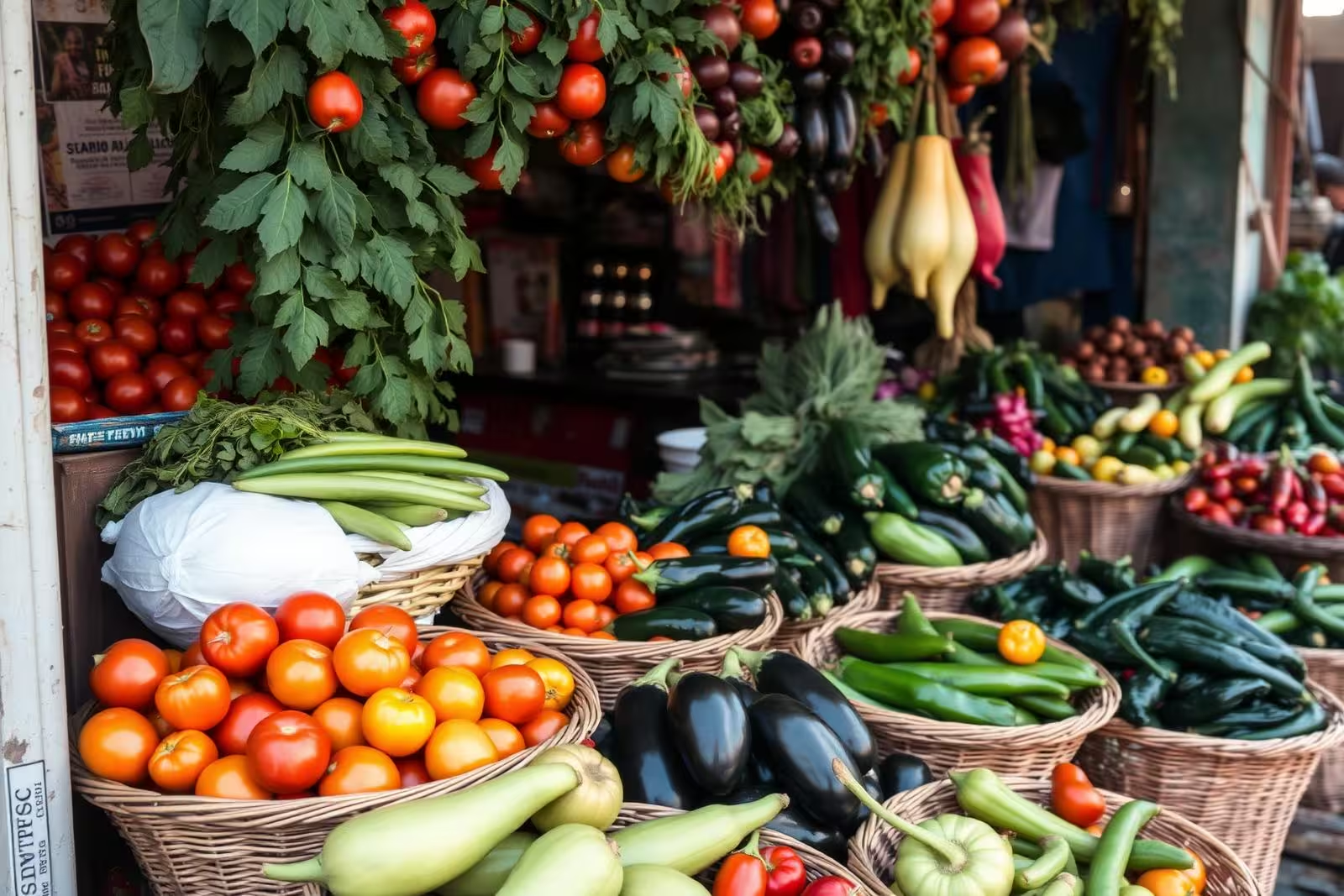
Onions, garlic, tomatoes, carrots and whatever leafy green is cheapest this week. A handful of in-season fruit. You're not building a Pinterest board — you're stocking a kitchen.
Good olive oil or your regional cooking oil, salt, black pepper, the spices your culture already uses, lemons or vinegar, soy sauce or its local equivalent, a jar of tahini or peanut butter, nutritional yeast if you want a cheesy edge.
Anyone who's done this remembers these three. Knowing about them in advance turns them from a wall into a speed bump.
Plants are less calorie-dense than meat and cheese. If you eat your old portion sizes you may feel hungry, tired or cold. The fix is simple: eat more. Bigger bowls, a slice of bread, an extra spoon of oil, a handful of nuts.
Boredom is the biggest cause of giving up. After a week, deliberately try one new cuisine — Ethiopian, Indian, Mexican, Lebanese, Vietnamese — all of which have rich plant traditions you can lean on for variety.
A birthday, a wedding, a dinner at a parent's house. These don't need to be perfect. Eat what's there, eat beforehand, eat afterwards — the goal is a long arc, not an unbroken streak.
In the first few days, the only real change most people notice is a slight increase in fibre intake — which can mean a livelier digestive system for a few days, then a quieter and more comfortable one. Drink a bit more water and that smooths out quickly.
Within two to three weeks, the more commonly reported effects show up: steadier energy through the afternoon, less heaviness after meals, better sleep, clearer skin for some people, and a gradual drop in blood pressure and cholesterol if those were elevated. None of this is magic. It's the predictable response of a human body to more vegetables, more fibre, less saturated fat, and less ultra-processed meat.
Plant-based eating is not a Western concept — it is rooted in every food tradition on earth. These regional lists are built around what already exists in local markets, not around imported specialty products. You do not need a health food shop to eat plants well.
Your foundation is already plant-based: ugali or injera, lentils (misir), split peas, black-eyed peas, irio, sukuma wiki, matoke, avocado, sweet potatoes, and coconut milk for coastal cooking. Add groundnut oil or ghee-replacement, dried red chilli, and the spice pastes your region already uses. Fermented porridges like uji are nutritional staples requiring nothing more than millet or sorghum and time.
The subcontinent has the world's longest and most sophisticated plant-based cooking traditions. Dal (every variety), chana, rajma, aloo, brinjal, saag, rice, roti, idli, dosa, sambar — you are already most of the way there. The work is mostly removing dairy from dishes where it can be replaced (coconut milk for cream, oat milk in tea), not finding new ingredients.
Black beans, pinto beans, lentils, arroz, corn (masa, arepa, tortilla), chayote, plantain, yuca, potatoes in every variety, tomatoes, chilli, and a full herb vocabulary (cilantro, epazote, huacatay). The base of most traditional cooking in the region is already plant. Cheeses and meats are often additions to dishes that predate them.
Chickpeas (hummus, tagine, pasta e ceci), lentils, white beans (fagioli, fasolia), tomatoes, olive oil, garlic, aubergine, courgette, flat-leaf parsley, za'atar, sumac, freekeh, bulgur wheat. The Mediterranean diet as originally described by Ancel Keys was mostly plant-based, with modest fish and very little meat. Most traditional home cooking in the region still is.
Tofu, tempeh, edamame, miso, soy milk, rice, noodles, bok choy, daikon, lotus root, seaweed (nori, wakame, kombu), shiitake and oyster mushrooms, pickled vegetables of every kind. Buddhist vegetarian cooking across the region has a millennium-long tradition of plant-based eating — temples have been solving this problem since before the words 'protein' or 'nutrition' existed.
Black-eyed peas (akara, moin moin), groundnuts (peanut soup, groundnut stew), yams, cassava, plantain, okra, leafy greens like gbegiri, palm oil in moderation, tomatoes, scotch bonnet, and the fermented locust bean paste (dawadawa or iru) that gives depth to many dishes without any animal product. The core pantry for West African plant cooking is inexpensive and widely available within the region.
Eating plant-based at restaurants is easier than most people expect once you know a few practical principles. You don't need to find a vegan restaurant — you need to know how to find plant-based options in any restaurant.
The cheapest diets on earth are plant-based. Rice, lentils, dried beans, oats, cabbage, carrots, onions, garlic, and seasonal vegetables are the most affordable foods in any market — considerably cheaper than meat per calorie and substantially cheaper per gram of protein than the popular imagination suggests. The expensive version of plant-based eating is the one with artisanal nut cheeses and cold-pressed everything. That version is optional.
The practical principles for budget plant eating are the same as they have always been: buy dry rather than canned where possible (dried lentils and beans cost a fraction of tinned, and cook from dry is not difficult once it's a habit), buy in season, cook in batches, and build meals around legumes and grains rather than expensive substitutes. A pot of dal or black bean stew made on Sunday will feed four or five adults for under the price of a single restaurant meal.
| Swap | Instead of | Try |
|---|---|---|
| Breakfast | Cow's milk on cereal | Soy or oat milk |
| Lunch | Cheese sandwich | Hummus + roasted veg wrap |
| Dinner | Chicken curry | Chickpea & spinach curry |
| Snack | Yogurt | Fruit + peanut butter |
| Dessert | Milk chocolate | Dark chocolate (70%+) |
A free 7-day vegan starter guide with a shopping list and 21 meals:
Why animal rights belong to no party — and what political capture cost the movement.
Continue →