Kiswahili·Kenya · Tanzania
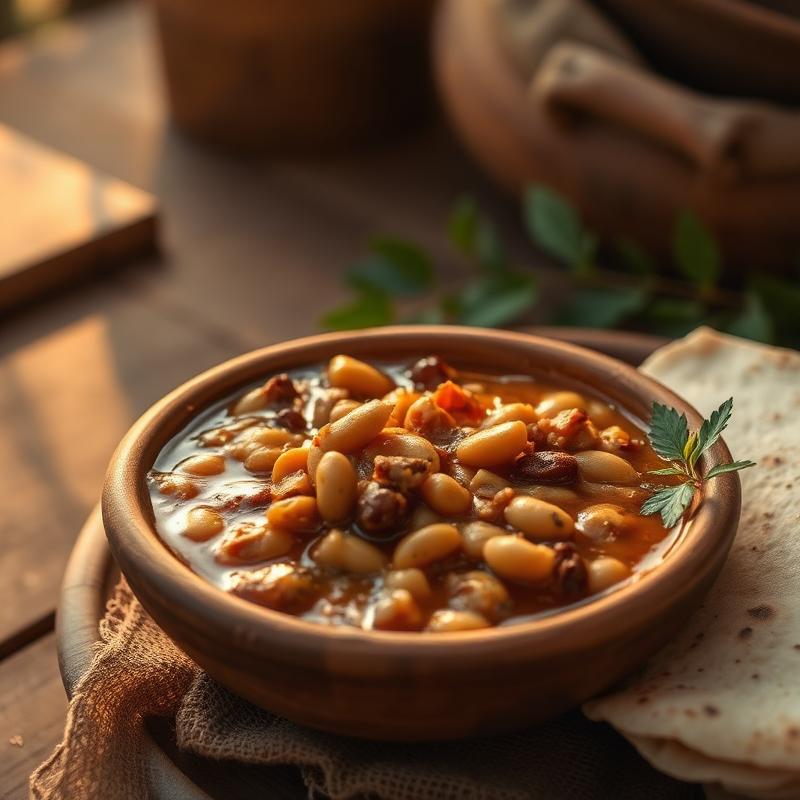
Maharagwe ya Nazi
Slow-cooked beans simmered in coconut milk with onion, tomato, and a finishing handful of fresh coriander. Served with chapati or ugali.
Veganism is not invented here. These dishes have fed families for centuries. We are simply giving them the platform they deserve.
Plant cooking isn't a Western invention or a recent trend. It is the deep cuisine of most cultures — the everyday food, the festival food, the food of grandmothers. Lentil stews from the Levant, bean and corn dishes from Mesoamerica, rice and dal across South Asia, vegetable curries through East and West Africa, tofu and noodle traditions across East Asia. The recipes below are not substitutes. They are the originals.
Slow-cooked beans simmered in coconut milk with onion, tomato, and a finishing handful of fresh coriander. Served with chapati or ugali.
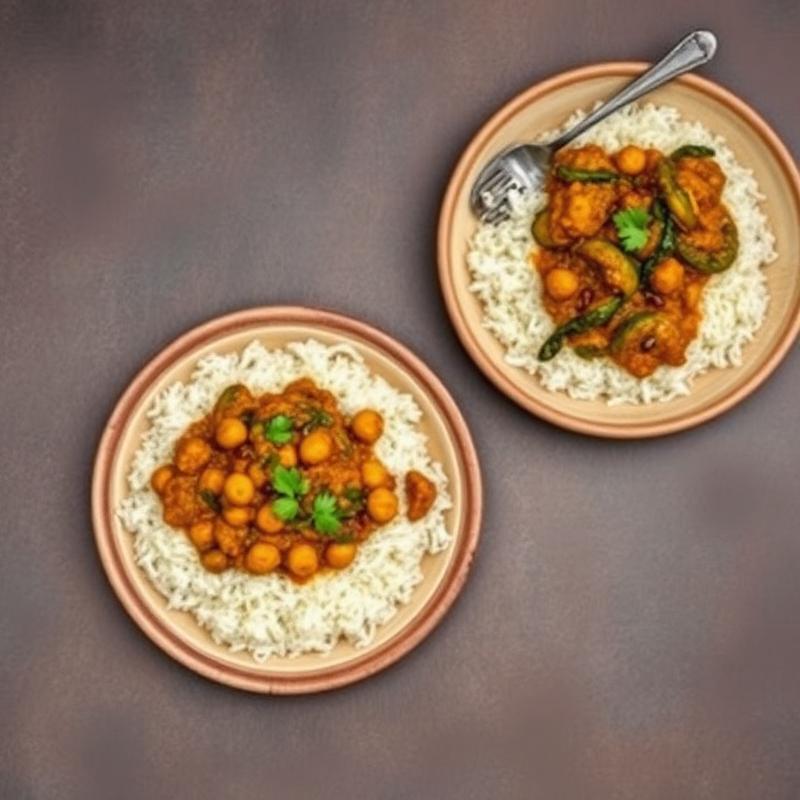
Masoor dal cooked with garlic, ginger, and a tempering of cumin and dried chili. The everyday plate for millions.
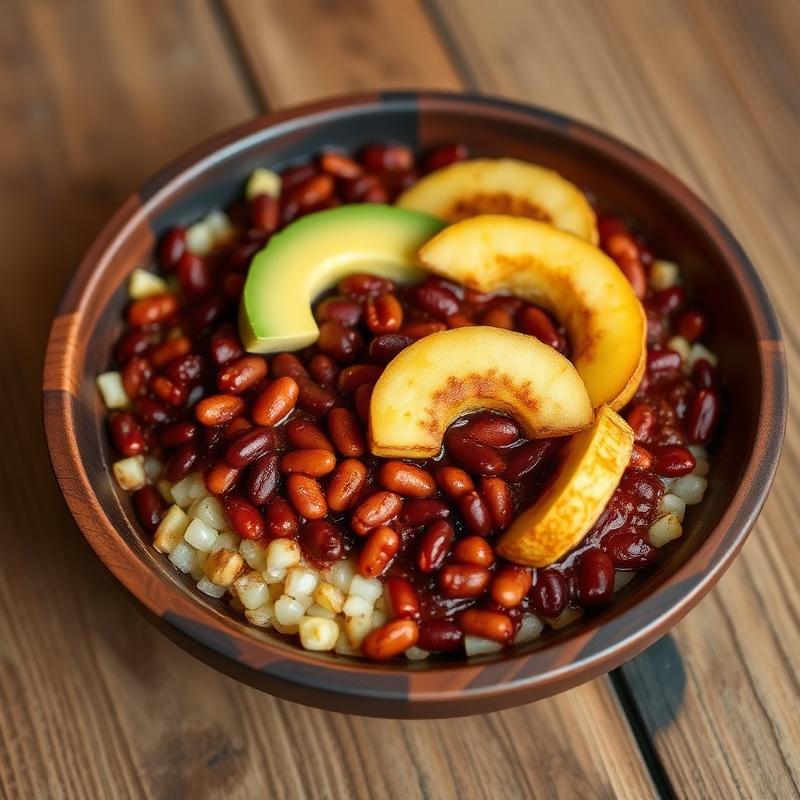
King oyster mushrooms grilled over open flame, topped with the bright, fierce pikliz that defines the Haitian table.
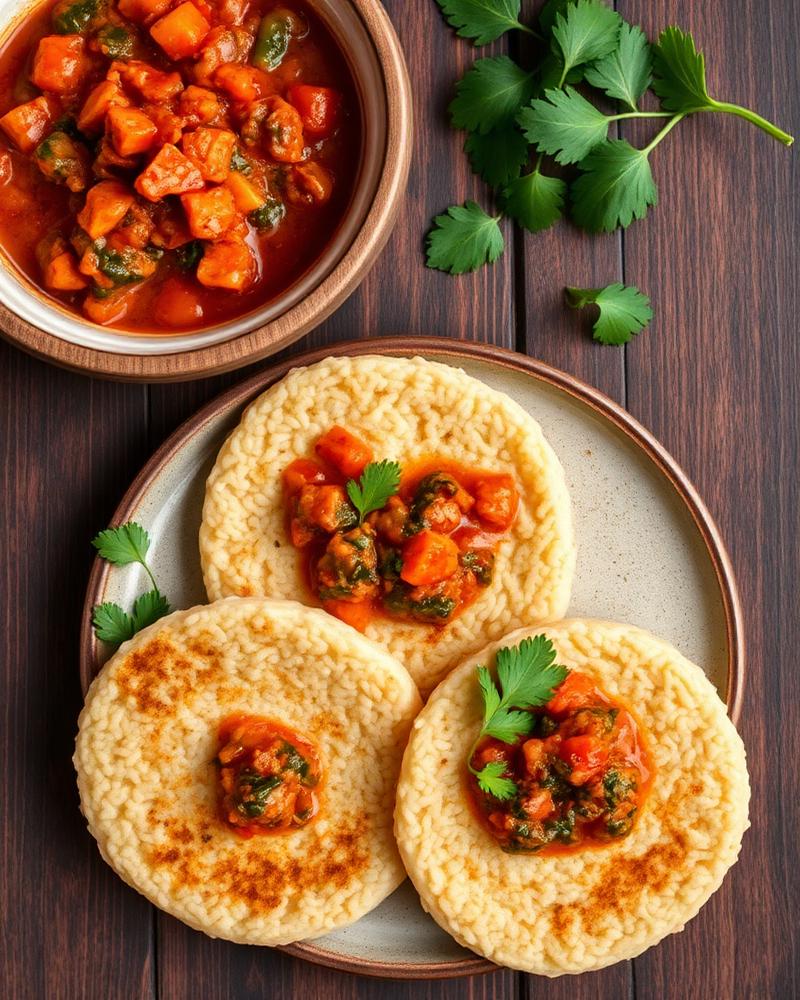
Fermented rice cakes cooked in a cast-iron pan, served with a fiery tomato and red pepper sauce — a Friday-morning staple.
Rice vermicelli with crispy tofu, fresh herbs, pickled vegetables, and a clear lime-soy dressing. Light, sharp, alive.
Rice and moong dal cooked together with ginger and warming spices. The dish you eat when you need to feel held.
Most traditional dishes don't need substitutions — they're already plant-based or trivially adapted. For the ones that do, here are the swaps that actually work in the pan, not just on paper.
Soy is closest in protein and behaves best in coffee and baking. Oat is creamiest. Almond is lightest. Any of them work in cereal and sauces without you noticing.
For most savoury cooking, olive oil is an upgrade. For baking, refined coconut oil or a block-style plant butter holds structure the way dairy butter does.
One tablespoon ground flax + three tablespoons water = one egg, for binding in burgers, muffins, pancakes. Chickpea flour mixed with water makes excellent omelettes and frittatas.
For melted dishes, store-bought has improved enormously. For sauces and toppings, blended cashews with lemon and nutritional yeast carry a depth most people prefer once they get used to it.
Lentils for bolognese and chilli. Mushrooms for depth and umami. Jackfruit for pulled textures. Tofu and tempeh for grilling and stir-fries. Seitan when you want a chew close to meat.
Plant-based cooking is not a recent invention. The following recipes come from food traditions that have been feeding people on plants for centuries or millennia. Each description doubles as a loose method — enough to cook from, not a rigid instruction set.
Misir Wat is the red lentil stew at the heart of Ethiopian cooking — slow-cooked with berbere spice blend, caramelised onion, and niter kibbeh (clarified butter, which can be replaced with good olive oil for a fully plant-based version). Onions go in dry first, cooked down until almost caramelised before any fat is added — this is the technique that builds depth. Berbere, garlic, and ginger go in next, then washed red lentils and enough water to cook them through. The result should be thick, almost paste-like, eaten with injera or bread. It is one of the most flavourful dishes in any food tradition and accidentally one of the most nutritionally complete.
Thiéboudienne is the national dish of Senegal — traditionally made with fish, but the vegetable version, called Thiébou Yapp bu Weex by some cooks, is equally beloved. Long-grain broken rice is cooked in a tomato and onion base enriched with tomato paste, then layered with whatever root vegetables and squash are in season: sweet potato, cassava, turnip, aubergine, cabbage. The rice absorbs the tomato base as it cooks, turning a deep warm orange. The technique requires patience but little technique: the vegetables go in first to flavour the broth, the rice goes in last to absorb it.
Kenchin-jiru is a Buddhist temple soup from the Kenchoji monastery in Kamakura — fully plant-based by tradition, developed by monks following a vegetarian code. Root vegetables (burdock, taro, daikon, carrot) and firm tofu are sautéed in sesame oil until the tofu is golden at the edges, then simmered in kombu dashi with soy sauce and mirin. The result is warming and austere in the best sense — deeply flavoured without relying on richness. Konnyaku (konjac) is often added for texture. This soup has been made in essentially the same form since the 13th century.
Tinga is traditionally a shredded chicken dish from Puebla, but the garbanzo version has become a staple of Mexican home cooking for plant-based eaters. Chipotle peppers in adobo, tomatoes, and onion form a smoky sauce; drained and rinsed chickpeas go in and cook until they absorb the sauce and begin to break down slightly at the edges. Served in warm corn tortillas with avocado, pickled onion, and salsa, this is one of the most approachable and satisfying plant-based dishes for people who are new to eating this way — it is familiar in flavour and deeply satisfying.
Mujadara is one of the oldest recorded dishes in the world — a mixture of lentils and bulgur wheat or rice topped with deeply caramelised onions that are cooked low and slow until almost jammy. The dish requires almost no technique but a great deal of patience for the onions, which should take 30–45 minutes over medium-low heat to reach the right depth. Served at room temperature with yogurt (or tahini for a fully plant-based version) and a salad of chopped parsley and lemon, it is simultaneously the simplest and most satisfying thing in the Levantine repertoire.
Gado-gado is an Indonesian salad of cooked and raw vegetables — boiled potato, blanched green beans, bean sprouts, cucumber, and often hard-cooked egg (omit for vegan) — brought together by a peanut sauce made from ground roasted peanuts, palm sugar, garlic, lime, and chilli. The sauce is the dish: complex, sweet, sour, and spicy simultaneously. Every region of Indonesia has its own version of the peanut sauce, ranging from smooth to chunky and from mild to very hot. It is served at room temperature and is one of the most complete plant-based meals in terms of protein, fat, and carbohydrate balance.
Cooking, not recipe collecting
People rarely abandon plant-based eating because of ethics or nutrition. They abandon it because the food became boring. The fix is structural: learn a small number of techniques that make plants taste good, then apply them to whatever is cheap and in season. Recipes become variations rather than instructions.
Meat brings fat, salt, glutamate and browning to a dish automatically. Plant ingredients supply those only if you add them deliberately. The four levers are heat (real browning, not steaming), salt (earlier and more than feels right), umami (soy sauce, miso, tomato paste, mushrooms, nutritional yeast) and acid (a squeeze of lemon or vinegar at the end). Almost every disappointing plant-based dish is missing at least two of the four.
A plate of uniformly soft food reads as unfinished regardless of flavour. Contrast is created by pressing and roasting tofu rather than simmering it, toasting nuts and seeds, keeping some vegetables raw, adding crisped chickpeas or breadcrumbs, and finishing with fresh herbs. Texture is also why the same stew feels better with rice and a pickle than alone.
A meal built on vegetables and grains alone leaves people hungry two hours later and they blame the diet. Anchor every main meal with a legume, tofu, tempeh, seitan, or a substantial portion of nuts or seeds, aiming for roughly 20–30 g of protein at lunch and dinner. Satiety follows protein and fibre, both of which are abundant if you plan for them.
Grain or starch, plus legume or tofu, plus two vegetables, plus a sauce, plus a crunchy topping. That single formula produces Mexican bowls, Indian thalis, Levantine plates, Japanese donburi and Mediterranean lunches depending only on which spices and sauce you use. Cooking becomes assembly with three components made ahead.
Two hours on one day — a pot of legumes, a tray of roasted vegetables, a grain, and one sauce — produces five to six meals with ten minutes of work each. This is the single most reliable predictor of whether people sustain a diet change past the second month.
Each makes about a cup, keeps 5–7 days refrigerated and transforms the same base ingredients.
| Sauce | Core ingredients | Best with | Keeps |
|---|---|---|---|
| Tahini-lemon | Tahini, lemon, garlic, water, salt | Roasted vegetables, falafel, grain bowls | 1 week |
| Peanut-lime | Peanut butter, lime, soy, chilli, ginger | Noodles, tofu, cabbage slaw | 5 days |
| Salsa verde | Parsley, capers, garlic, vinegar, olive oil | Beans, potatoes, grilled vegetables | 4 days |
| Miso-maple | Miso, maple, rice vinegar, sesame oil | Aubergine, tofu, squash | 2 weeks |
| Cashew cream | Soaked cashews, lemon, garlic, salt | Pasta, soups, baked dishes | 4 days |
Standard culinary technique
Chickpeas, lentils or black beans. Salt the water; it does not toughen them and it seasons from the inside.
Whatever vegetables need using, tossed in oil and salt, at a genuinely high oven temperature until browned at the edges.
Rice, farro, bulgur or couscous. Cooked grains freeze perfectly in portions.
Any of the five above. This is what makes leftovers taste like a new meal rather than a repeat.
Seeds, nuts or spiced chickpeas. Five minutes of work that changes every plate for the rest of the week.
Almost always insufficient salt, no browning, no umami source and no acid at the end. Fix those four before changing recipes.
Press it, cut it thick, coat lightly in cornflour, and cook it in a hot pan or hot oven until the surface is genuinely crisp before adding any sauce.
A heavy pan that holds heat, a sharp knife, a large roasting tray and a blender. Nothing else changes results much.
Roughly 20–30 g for most adults, which is about a cup of cooked legumes, 150–200 g of tofu or tempeh, or a combination with grains and nuts.
No. Nutritional yeast, miso and tahini are useful and inexpensive; everything beyond that is optional.
Cooked legumes and grains keep 4–5 days refrigerated and 3 months frozen; roasted vegetables 4 days; most sauces 4–7 days.