Ash vs Khoresht: Iranian Stews
Explore the comforting world of Iranian vegan stews: Ash vs Khoresht, two distinct culinary traditions that nourish and delight.
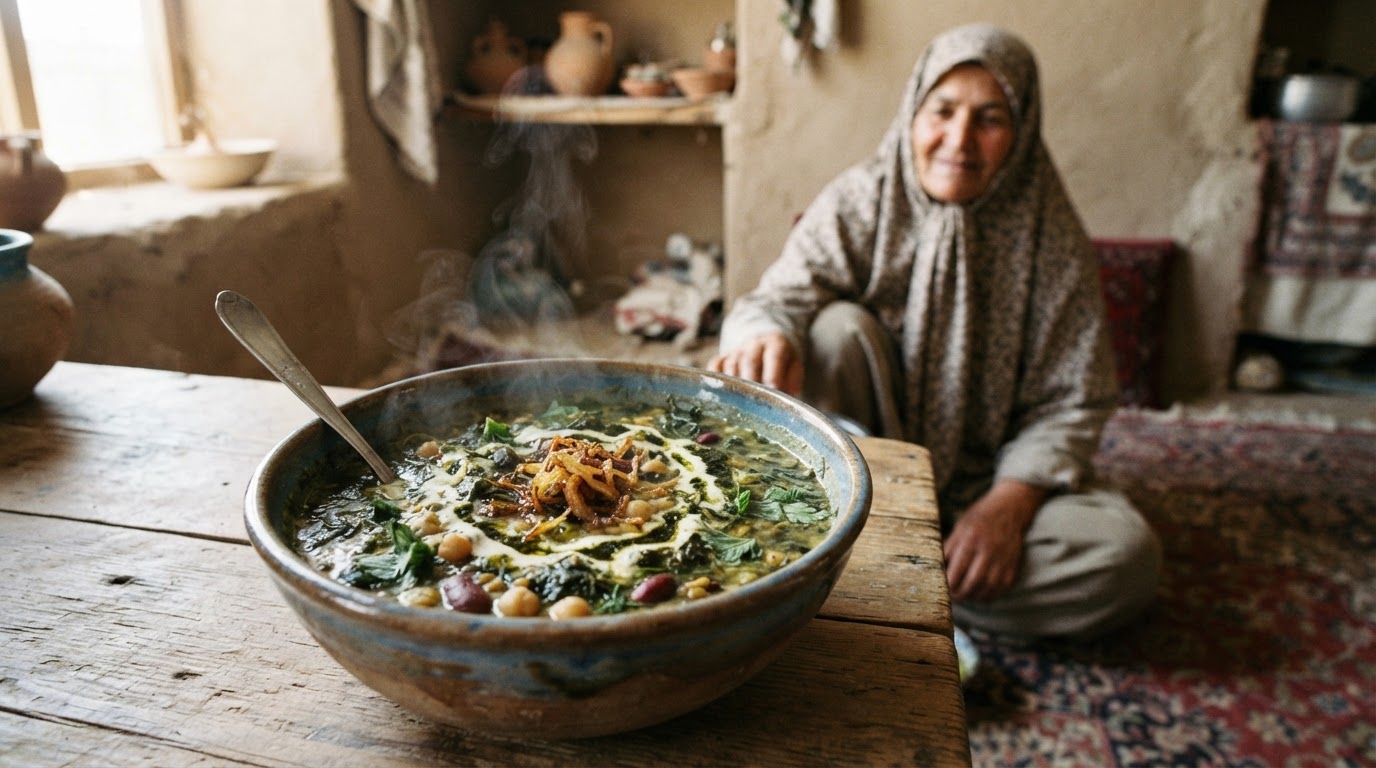
When exploring the heart of Iranian vegan cuisine, two categories of dishes stand out for their depth of flavour and comforting nature: Ash and Khoresht. These are not merely dishes but culinary narratives, each with its own history, ingredients, and preparation methods. Understanding Ash vs Khoresht reveals the rich tapestry of Persian plant-based cooking, offering distinct yet equally compelling experiences for the palate. Ash typically manifests as a thick, nourishing soup, often featuring a medley of legumes, grains, and generous amounts of fresh herbs. Khoresht, on the other hand, represents the quintessential Persian stew, known for its slow-cooked, concentrated flavours, usually served alongside fluffy rice.
The Case for Ash: Hearty Soups
Ash is a broad category encompassing a variety of thick soups and porridges, often considered a complete meal in a bowl. The most famous is Ash Reshteh, a national treasure of Iran. Its foundation is a rich broth simmered with a diverse array of pulses like chickpeas, lentils, and kidney beans, alongside barley or wheat. The defining characteristic of Ash Reshteh, and many other ash varieties, is the generous inclusion of fresh herbs – typically parsley, cilantro, spinach, and fenugreek – which lend a vibrant green hue and a complex, earthy aroma. Noodles, known as 'reshteh', are a common addition, transforming the dish into a substantial meal. The preparation of ash is often a communal affair, with families gathering to chop the vast quantities of herbs required. Vegan versions are traditional, relying on the inherent richness of legumes and vegetables, often finished with a drizzle of kashk-e bademjan (a vegan yogurt alternative made from fermented grains or nuts) and a sprinkle of fried onions and dried mint.
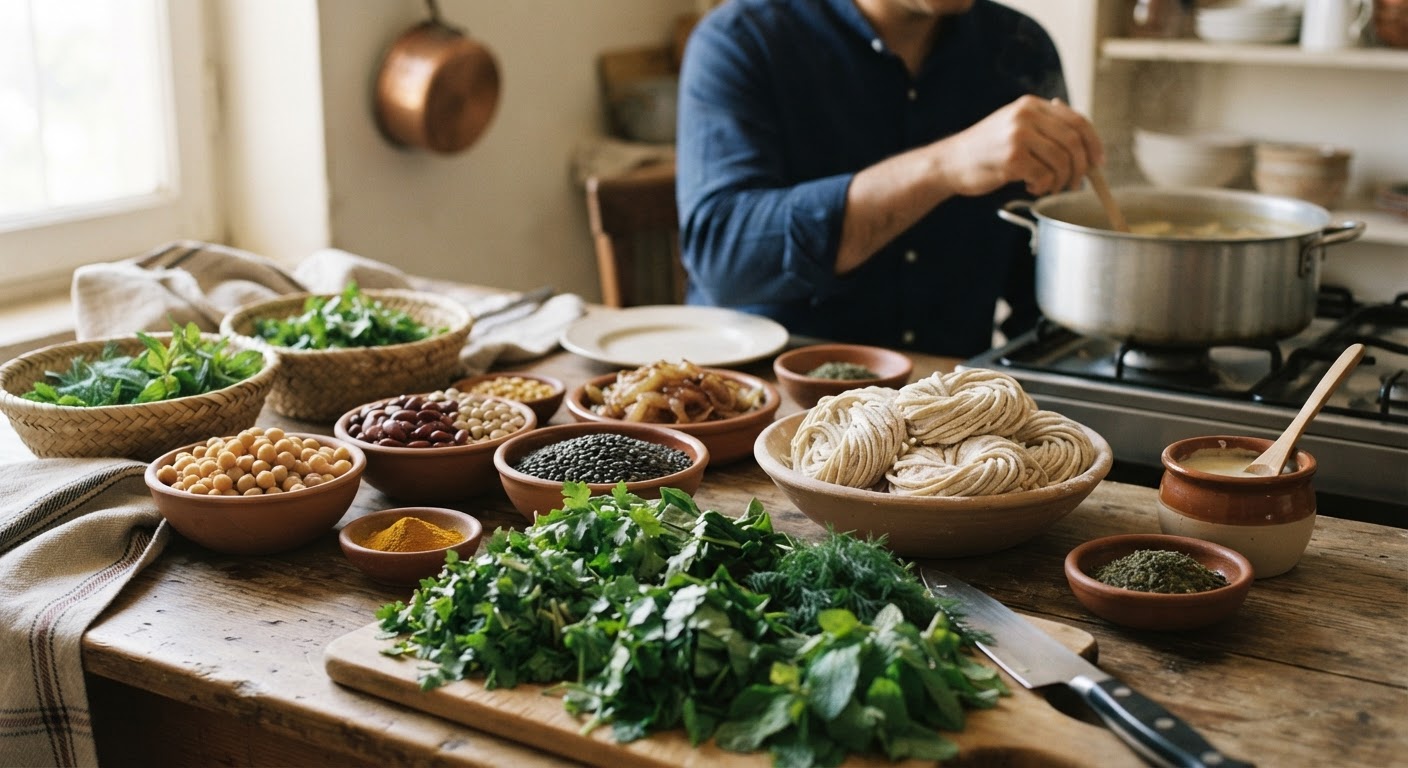
Varieties of Ash
- Ash Reshteh: The iconic noodle and legume soup, celebrated nationwide.
- Ash Ghooreh: A sour ash featuring grape juice, often with barley and greens.
- Ash Sholeh Ghalamkar: A dense, multi-grain porridge with a deep flavour profile.
- Ash Palkaneh: A simple yet flavourful soup made with lentils and spinach.
“Ash is more than sustenance; it's a testament to the resourceful use of seasonal produce and pantry staples, creating deeply satisfying vegan meals.”
The Case for Khoresht: Rich Stews
Khoresht refers to the category of slow-cooked stews that form the backbone of Persian main courses, traditionally served with chelow (steamed rice). While many khoreshts prominently feature meat, a rich and diverse tradition of vegan Khoresht exists, built upon the deep umami flavours extracted from vegetables, fruits, and spices. These stews are characterized by their long simmering times, allowing ingredients to meld and flavours to intensify. The base is often a sautéed onion and garlic mixture, to which vegetables, dried fruits (like plums, apricots, or raisins), and spices (turmeric, cinnamon, cardamom, saffron) are added. The liquid base can be water, vegetable broth, or fruit juice, and the stew is left to thicken and reduce. Vegan versions often star ingredients like aubergine (eggplant), mushrooms, okra, or leafy greens, creating complex flavour profiles that are both comforting and sophisticated. The act of slow cooking is key, transforming humble ingredients into something extraordinary.
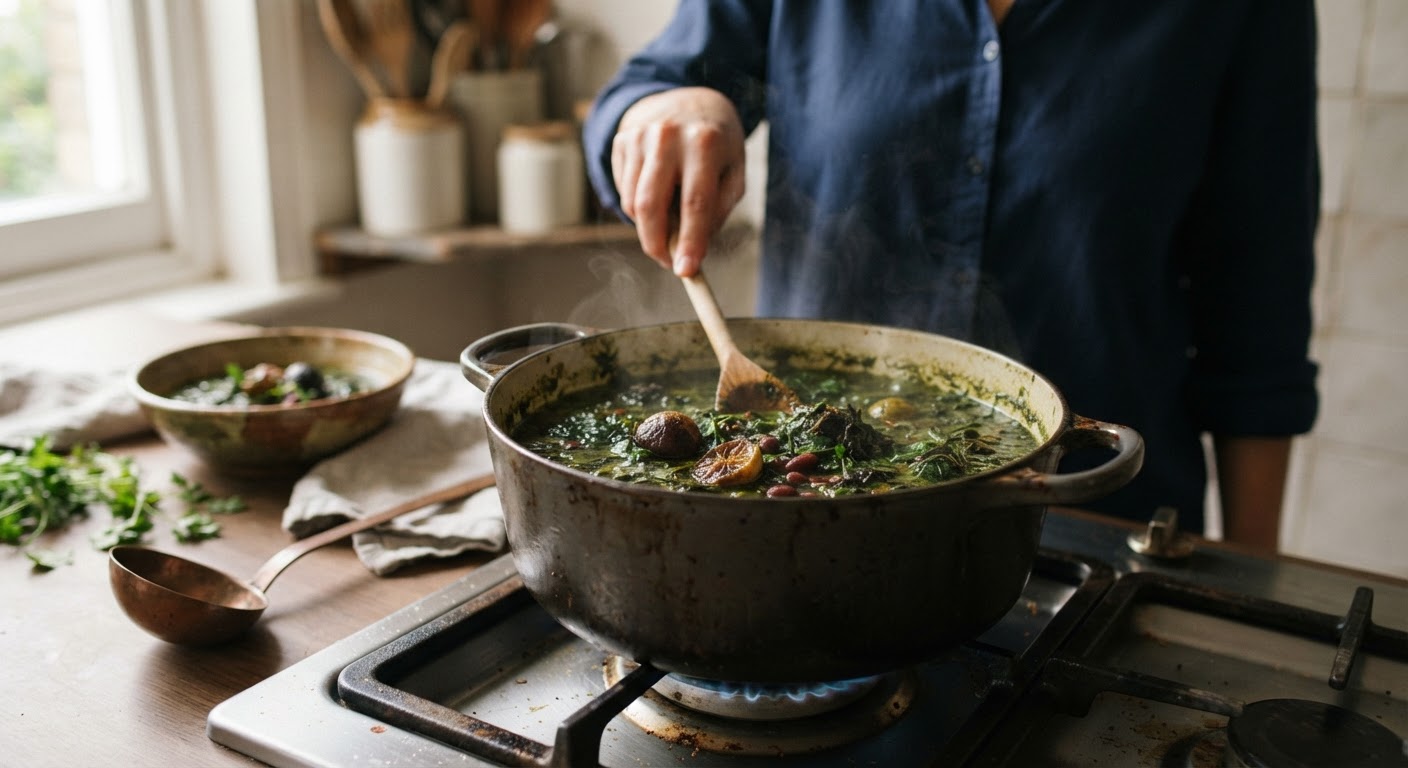
Popular Vegan Khoresht Examples
- Khoresht Bademjan (Aubergine Stew): Richly spiced aubergine stew, often with tomatoes and turmeric.
- Khoresht Albaloo (Sour Cherry Stew): A sweet and tart stew featuring sour cherries and sometimes prunes.
- Khoresht Fesenjan (Walnut and Pomegranate Stew): A luxurious, deep-flavoured stew with ground walnuts and pomegranate molasses. (Vegan versions omit chicken.)
- Khoresht Lugmeh (Mushroom Stew): A hearty stew featuring mushrooms, herbs, and spices.
Key Ingredient Comparison: Ash vs Khoresht
Typical ingredient emphasis for Ash dishes.
Key Ingredient Comparison: Ash vs Khoresht
Typical ingredient emphasis for Khoresht dishes.
Head-to-Head Criteria
- Texture: Ash is soup-like, often thick and hearty, while Khoresht is a richer, more viscous stew.
- Preparation Time: Ash can be quicker to prepare once ingredients are gathered, whereas Khoresht relies on slow simmering for hours.
- Serving Style: Ash is typically eaten on its own or with bread, Khoresht is almost always served with rice.
- Flavour Profile: Ash often features bright, herbaceous, and sometimes sour notes, while Khoresht is known for deep, complex, sweet-sour, or savoury profiles.
- Nutritional Density: Both are nutrient-rich, but Ash often boasts a higher concentration of diverse legumes and grains, while Khoresht can be richer in healthy fats from nuts and slow-cooked vegetables.
The choice between Ash and Khoresht often depends on the occasion and personal preference. Ash is the ultimate comfort food, perfect for cooler days or when a quick, nourishing meal is desired. Its versatility allows for endless variations based on regional availability and household traditions. Khoresht, with its lengthy cooking process, evokes a sense of occasion and communal dining. It's a dish that rewards patience, offering layers of flavour that are both profound and comforting. Both traditions highlight the sophistication of Iranian plant-based cooking, proving that vegan meals can be incredibly diverse, flavourful, and deeply satisfying, aligning with principles of sustainable eating as promoted by organizations like the EAT-Lancet Commission.
Verdict
Ultimately, Ash vs Khoresht isn't about declaring a winner, but appreciating two distinct, yet equally valuable, pillars of Iranian vegan culinary heritage. Ash offers immediate comfort and vibrant herb-forward flavours, while Khoresht provides a deep, slow-cooked richness that is profoundly satisfying. Both are excellent representations of how plant-based ingredients can be transformed into complex, delicious, and culturally significant meals.
Frequently asked questions
Are Ash and Khoresht always vegan?
What is the main difference between Ash and Khoresht?
Can Khoresht be made without meat?
What are the most common vegan ingredients in Ash?
How is Ash typically served?
What makes Khoresht so flavourful?
Sources & further reading
- Our World in Data — Our World in Data
- EAT-Lancet Commission Summary Report — EAT-Lancet Commission
- Nature Food Journal — Nature Food
- Food and Agriculture Organization of the UN (FAO) — FAO