
A family sharing a heart-healthy plant-based meal
Health

Heart disease and plant-based diets

The disease diet built.

Heart disease kills more people worldwide than any other condition, and it is almost entirely a disease of lifestyle. Plant-based diets are the only diets that have been shown — in randomised trials with imaging — to halt and reverse atherosclerosis. The evidence is among the strongest in nutrition science.

What we know

EPIC-Oxford found vegetarians had 32% lower risk of heart disease than meat-eaters; vegans had the lowest risk of all. Adventist Health Study-2 found vegan men had 55% lower risk of dying from heart disease. The Lifestyle Heart Trial (Ornish, 1990, Lancet) and the Esselstyn cardiology series both showed atherosclerosis regression on whole-food plant-based diets with no added oil — the only diets in the literature with this result.
The four food groups that drive risk

Red and processed meat (saturated fat, haem iron, carnitine→TMAO pathway), full-fat dairy (saturated fat, IGF-1), eggs (cholesterol, choline→TMAO), and added oils and refined carbohydrates (endothelial dysfunction, oxidation). Removing the first three and limiting the fourth is the basis of every successful trial diet.

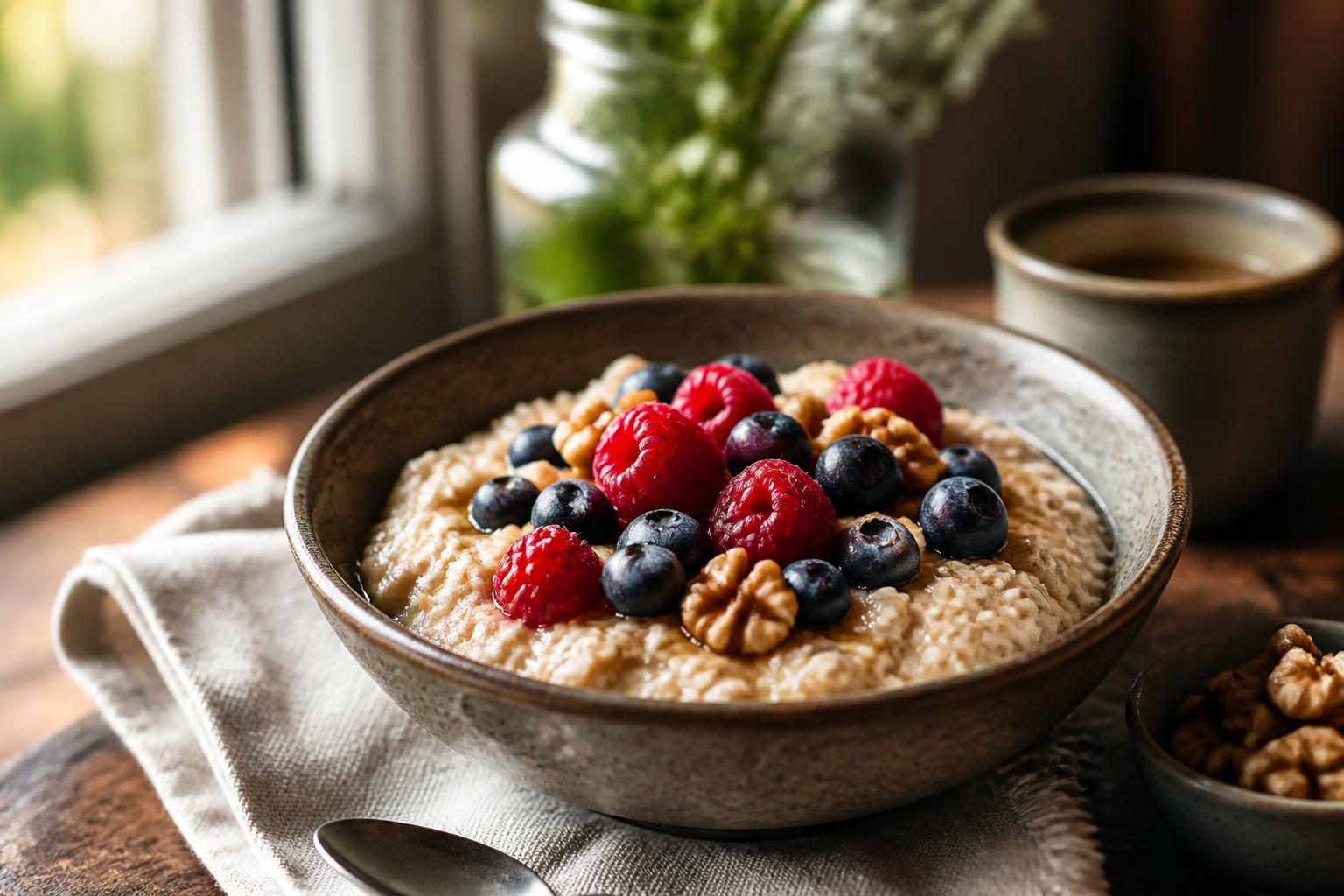
Oats with walnuts and berries — daily heart food
Oats and walnuts: trial-grade cardioprotective basics.

The four food groups that protect

Vegetables (especially leafy greens, for nitrates and folate), whole grains (oats, barley, brown rice — fibre and beta-glucan), legumes (soluble fibre, plant protein, magnesium), nuts and seeds (unsaturated fat, vitamin E, arginine). Berries, garlic and dark chocolate (≥85%) each have small additional benefits.

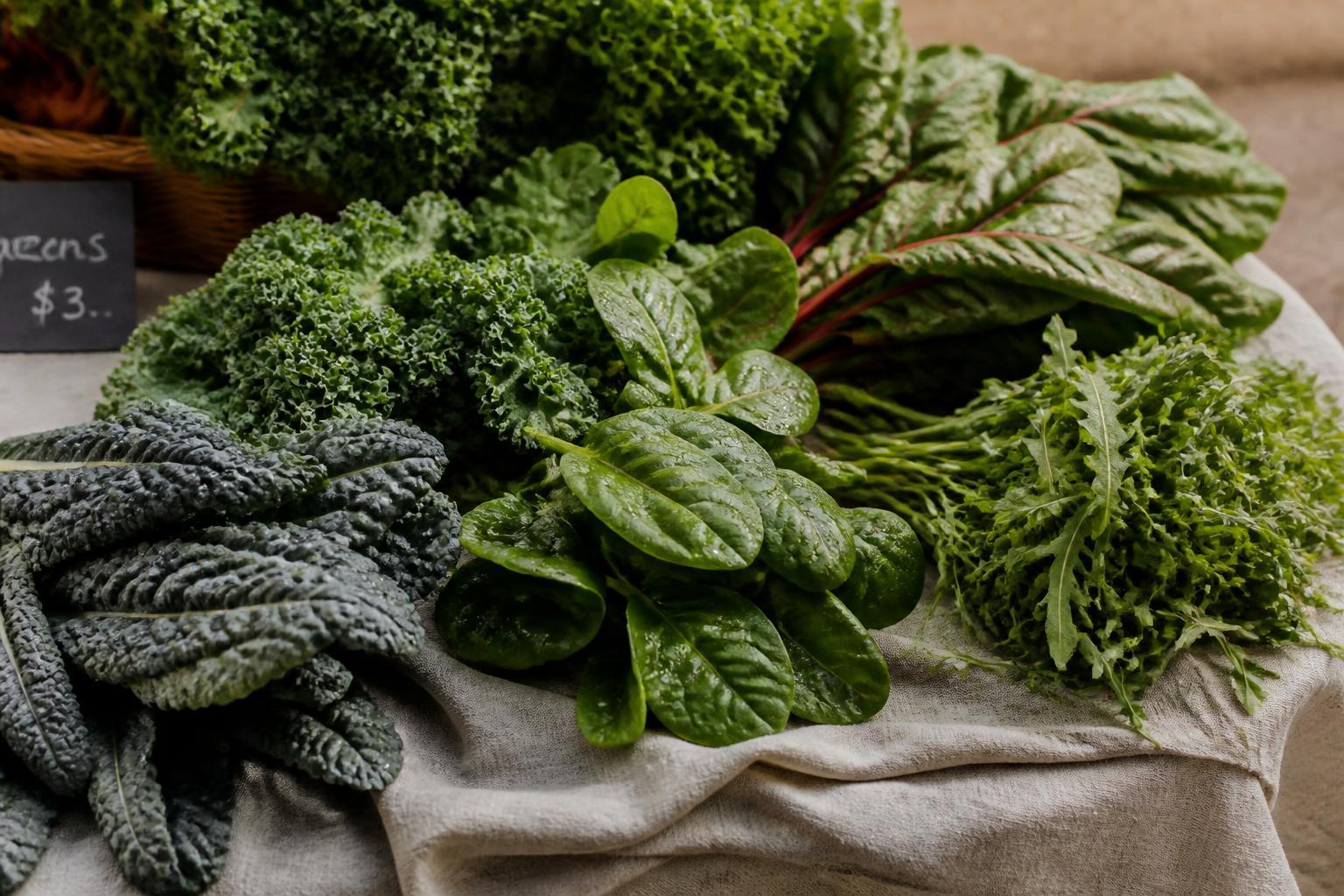
Leafy greens — nitrate-rich and protective
A leafy-green portion most days. One of the few habits with a near-unanimous evidence base.

"The Ornish and Esselstyn trials remain the only diets in the published literature shown to reverse heart disease without surgery."

What to eat day-to-day

Build meals around the four protective groups. Use herbs and spices instead of salt. Use lemon, vinegar, mustard or tahini for dressings; minimise added oil if you have established disease. Eat a handful of nuts daily. Eat oats most mornings. Have a leafy-green portion most days. Cook beans or lentils regularly. Walking 30 minutes a day amplifies every benefit.

A cardioprotective day

Morning

Oatmeal with berries, walnuts, ground flax and soya milk.

Midday

Big lentil-vegetable soup with sourdough; an apple and a few almonds.

Evening

Chickpea curry, brown rice, steamed broccoli with lemon and garlic; small square of dark chocolate.

Movement

30-minute walk; one strength session three times a week.

Sleep

7–8 hours. Sleep deprivation independently raises cardiovascular risk.

Coronary heart disease mortality by diet

Adventist Health Study-2, men, 5.79 years follow-up, adjusted hazard ratios. 1.0 = non-vegetarian baseline.

Orlich et al., JAMA Internal Medicine 2013

Heart disease, by the numbers

−32%
heart disease risk
vegetarians vs meat-eaters, EPIC-Oxford
−55%
CHD mortality (men)
vegans vs non-vegetarians, AHS-2
Reversal
Ornish & Esselstyn
the only diets with arterial-regression evidence
30 min
daily walk
amplifies every dietary benefit

Two plant-based patterns — same label, different outcomes

Healthful Plant-Based Index (hPDI) vs. Unhealthful Plant-Based Index (uPDI).

PatternCornerstone foodsCHD risk vs. average
Healthful plant-based (hPDI)Whole grains, fruit, veg, legumes, nuts−25%
Mixed conventionalMixedbaseline
Unhealthful plant-based (uPDI)Refined grains, sugar-sweetened drinks, fries+32%

Source: Satija & Hu 2017.

The disease of one food culture

Coronary heart disease is essentially absent in populations eating traditional whole-food plant-based diets (rural China pre-1990, Tarahumara, Okinawan pre-war, rural Papua New Guinea). Wherever Western diets arrive, coronary disease arrives within a generation. The Cornell-China Project (1983, T. Colin Campbell) documented this transition with population-level data.

The arteries can heal

Until the late 1980s the cardiology consensus was that coronary plaque could only stabilise, not regress. Ornish (1990) and Esselstyn (2014) overturned this with serial angiography showing that whole-food plant-based diets reverse stenosis. The mechanism: removing the dietary driver of endothelial dysfunction allows the artery to remodel.

What to do in the first month

Replace red and processed meat completely. Cut all added oils when possible (Esselstyn's protocol allows none; Ornish allows modest avocado, nuts, seeds). Build meals around oats, beans, leafy greens, berries, ground flax, walnuts. A baseline lipid panel, repeated at 6 weeks, will usually show 20–30% LDL reduction — proof the diet is doing what the data predicts.

Coronary heart disease incidence by diet

Pooled cohort, 200,000+ US health professionals, 25-year follow-up.

Source: Satija et al., JACC 2017.

Cardiology and the plant-based diet

  1. 1953

    Lester Morrison

    First clinical trial reducing recurrent MI with a low-fat plant-rich diet — eight years before statins existed.

  2. 1983

    Cornell-China Project

    Population-level data linking plant-based traditional diets with near-zero CHD.

  3. 1990

    Ornish Lifestyle Heart Trial

    Angiographic plaque regression on a whole-food plant-based diet.

  4. 2014

    Esselstyn 20-year series

    Advanced-disease patients event-free at 20 years on a plant-based diet.

  5. 2017

    Satija et al., JACC

    Population-level confirmation: healthful plant-based diet cuts CHD by 25%.

Common questions

Can heart disease really be reversed by diet?

Yes, in trials. Ornish and Esselstyn both demonstrated arterial regression with whole-food plant-based diets. Not everyone reverses, but many do, especially earlier in the disease.

What if I'm already on statins?

Continue them. Add the dietary change. Many people are able to reduce medication over time with their cardiologist.

Is the Mediterranean diet just as good?

Better than a standard Western diet; not as good for reversal as a whole-food plant-based diet. The most cardio-protective Mediterranean variants are heavy on vegetables, beans and olive oil and light on meat and cheese — closer to vegan than to typical.

What about saturated fat from coconut oil?

Coconut oil raises LDL the same way butter does. Limit it even on a vegan diet.

Cardiac-specific questions

What if I've already had a heart attack?

This is when diet matters most. Esselstyn's program is specifically designed for secondary prevention — every patient in his series who adhered avoided further events. Work with a cardiologist familiar with lifestyle medicine.

Is fish oil protective?

The evidence is weaker than once thought. Recent large trials (VITAL, ASCEND) found no cardiovascular benefit from fish oil supplements. Algae-based DHA/EPA achieves the same blood levels without the ocean's heavy-metal load.

What about red wine?

The 'French Paradox' was largely measurement artefact. Recent analyses (GBD 2019) suggest no safe level of alcohol for cardiovascular health. Polyphenols are better obtained from berries, grapes, dark chocolate and tea.

Can lifestyle alone replace medication?

Sometimes, with supervision. Many patients on plant-based diets reduce or stop statins, blood pressure medication and metformin. Always done with a cardiologist, never alone.

Start now, measure in three months

Of every chronic-disease change you can make today, this is the one with the strongest trial evidence. Eat, walk, sleep, retest.