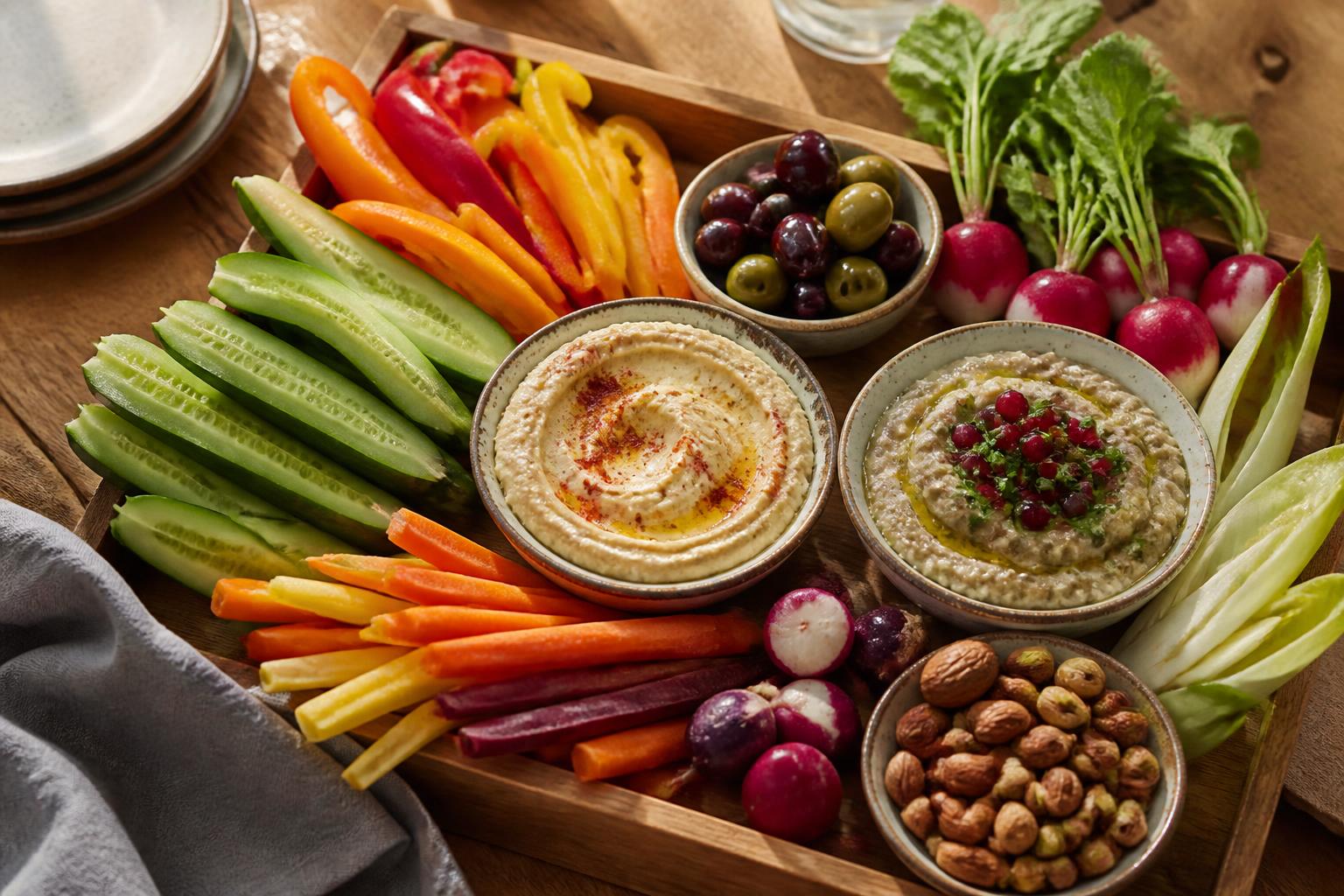
A wooden tray of fresh vegetables, hummus, olives and nuts
Health

Obesity and plant-based diets

The mechanism is calorie density.

Across long-term studies, vegans have the lowest average BMI of any dietary group, followed by vegetarians, then pescatarians, then meat-eaters. The difference is not willpower; it is calorie density. Plant foods, especially in their whole form, contain fewer calories per bite than animal foods — so you can eat to genuine satisfaction and still lose weight.

The data

EPIC-Oxford, Adventist Health Study-2 and the Nurses' Health Study all report the same gradient: vegans have BMIs roughly 2 points lower than vegetarians, who are about 1 point lower than meat-eaters. The 2014 BROAD study and several Physicians Committee trials show whole-food plant-based diets producing 5–8 kg weight loss over six months without calorie restriction.
Why calorie density matters

Vegetables are about 0.3 kcal/g, fruit about 0.6, beans and grains about 1.2, lean fish about 1.5, lean meat about 2.0, cheese about 4.0, oils about 9.0. People eat roughly the same weight of food per day; eating a lower-density diet means eating fewer calories without feeling restricted. This is one of the few diet effects with consistent long-term adherence.

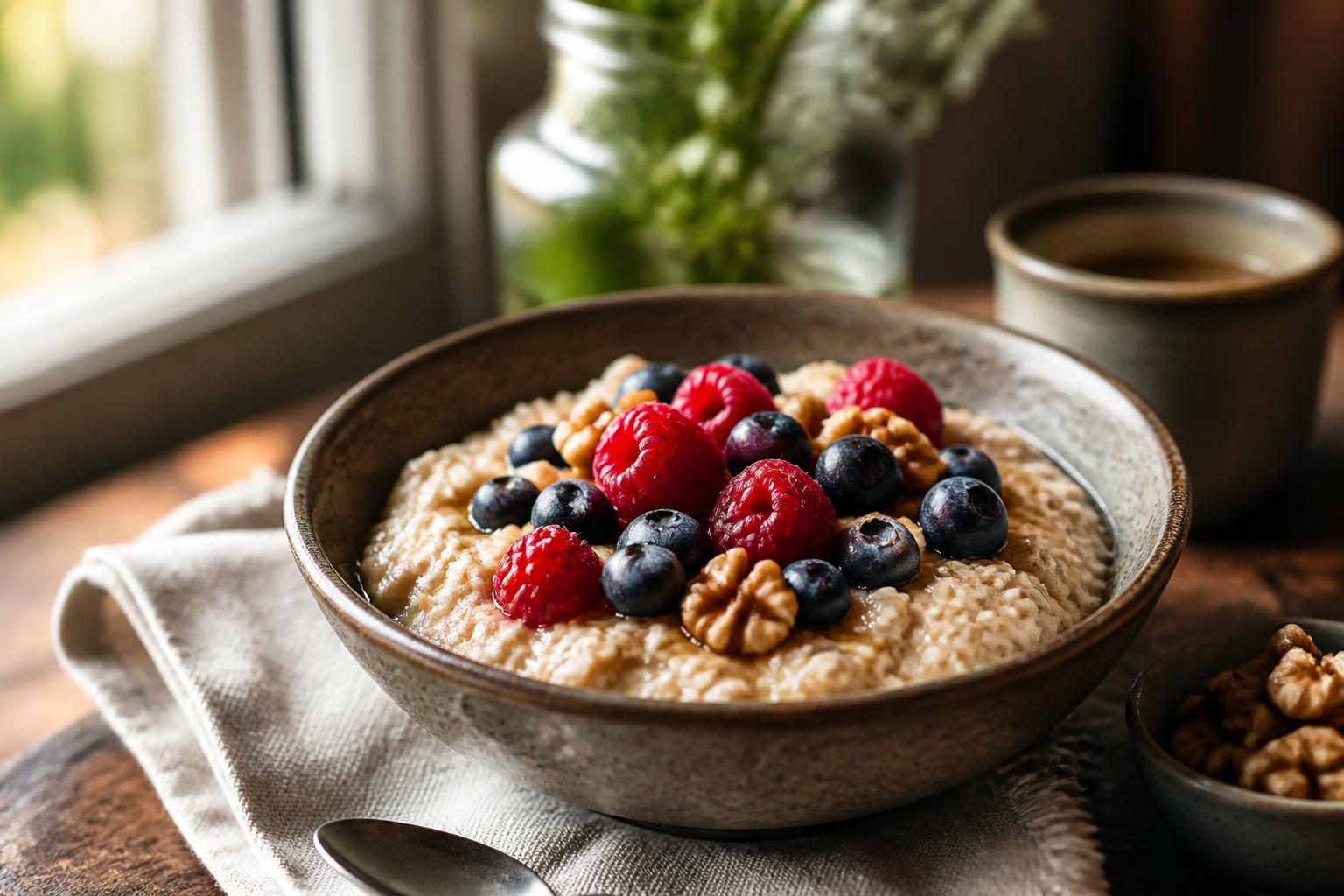
A bowl of oatmeal with berries and walnuts
Calorie density does the work. Hunger doesn't have to.

What to eat

Most of the plate should be vegetables and whole fruits, then beans and whole grains, then nuts and seeds, then minimally processed plant foods. Limit added oils, refined sugar and refined flour. Mock meats and ultra-processed vegan junk food undo the calorie-density advantage.

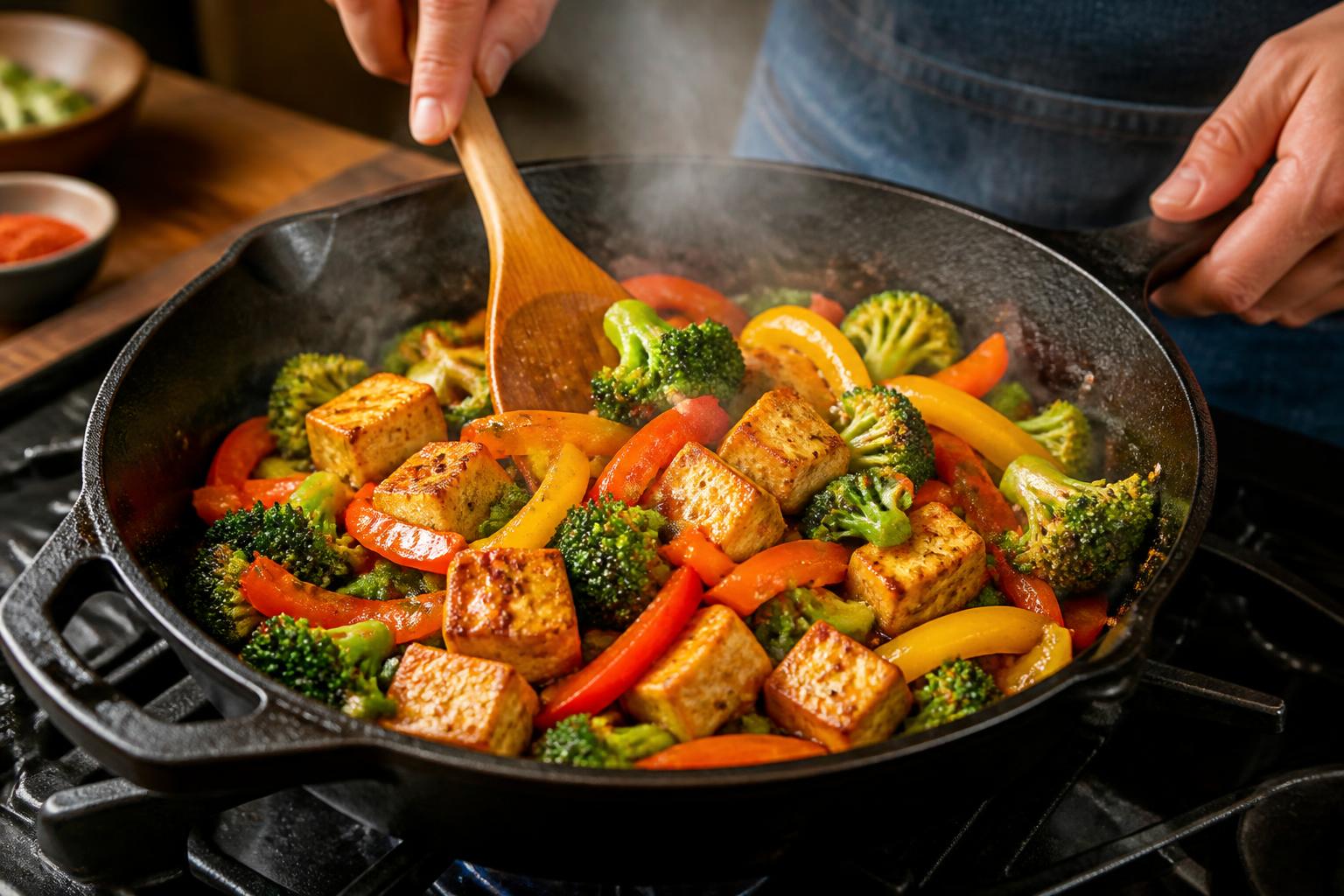
Tofu and vegetables in a cast-iron pan
Whole foods, in their whole form. The plate that holds its shape.

"Vegetables are about 0.3 kcal per gram. Cheese is about 4. Oils are 9. People eat roughly the same weight per day — let the food do the arithmetic."

What about exercise?

Exercise is essential for cardiovascular health and muscle, but it is a small lever for weight loss compared to diet. You can outwalk a poor diet only with serious endurance volume. The plate matters more for the scale; movement matters more for the rest.

A whole-food pattern for weight loss

Breakfast

Oats with berries and ground flax; or wholegrain toast with peanut butter and banana.

Lunch

A big salad with chickpeas, roasted vegetables and a tahini-lemon dressing; or lentil soup with bread.

Dinner

Stir-fried vegetables and tofu with brown rice; or vegetable curry with chapati; or hearty bean stew.

Snacks

Fruit, vegetables with hummus, a small handful of nuts, sourdough toast.

Drink

Water, tea, coffee. Calories from drinks are the single easiest place to add hundreds of unneeded kcal.

Average BMI by dietary pattern

EPIC-Oxford cohort, 65,000 adults in the UK. Lower lean tends to correlate with lower chronic-disease risk.

Spencer et al., Int. J. Obesity 2003 (updated 2013)

Trial-grade numbers

−7 kg
in 6 months
BROAD 2014, no calorie counting
−5 to −8 kg
Physicians Committee trials
vs ADA control diet
0
calorie counting required
in most whole-food plant-based protocols
2 BMI pts
lower than meat-eaters
on average, EPIC-Oxford

Caloric density: what a 500-calorie meal looks like

FoodVolume for 500 kcalTime to eat
Pepperoni pizza1.5 slices~3 min
Cheeseburger1 small~3 min
Cooked rice + lentils~3 cups~12 min
Vegetable stir-fry + tofu~5 cups~15 min
Mixed leafy salad + chickpeas~8 cups~18 min

Why plant-based is the only diet with weight loss as a side effect

Most diets force calorie restriction. A whole-food plant-based diet creates spontaneous calorie reduction because plant foods have lower caloric density: a stomach full of vegetables, beans and whole grains delivers fewer calories than the same volume of meat, cheese and refined carbs. The BROAD trial (2017) and Turner-McGrievy's 12-week trial both saw participants lose 6–9kg without counting calories or going hungry.

The fibre that does the work

Average daily fibre intake in Western countries is 15g; the recommended minimum is 25–38g. Vegans average 41g. Fibre slows gastric emptying (you stay full longer), feeds gut bacteria that produce short-chain fatty acids (which signal satiety to the brain), and physically displaces calorie-dense food on the plate. No supplement matches whole-food fibre.

The visceral fat question

Not all body fat is equal. Visceral fat — wrapped around organs — drives insulin resistance and cardiovascular risk. A 2017 study (Kahleova) showed plant-based diets reduce visceral fat 2× faster than weight loss alone would predict, likely because the same diet improves insulin sensitivity, which suppresses lipogenesis. The waist measurement drops faster than the scale.

Average BMI by diet pattern

EPIC-Oxford, n=37,875 adults across 5 diet groups.

Source: Spencer et al., Int J Obesity 2003.

Common questions

Can you gain weight on a vegan diet?

Yes — easily. Vegan biscuits, ice cream and mock meats are still ultra-processed. A vegan diet of refined carbs and oils will put on weight.

Do I have to count calories?

Generally no. Whole-food plant-based diets self-limit because of fibre and calorie density. If you build it around oils, refined flours and processed foods, you may need to track.

What about intermittent fasting?

Compatible with veganism. Useful for some, hard for others. Not magic; the calorie deficit is what matters.

Will I lose muscle?

Not with adequate protein and resistance training. Plant-based weightlifters maintain and gain muscle on lentils, tofu, tempeh, seitan and pulses.

Weight-loss specifics

How fast will I lose weight?

Most participants in plant-based trials lose 0.5–1 kg per week without calorie counting, with the curve flattening after 3–4 months as you approach a healthy weight. Aggressive deficits aren't necessary — and don't last.

What about vegan junk food?

Oreos, fries and seitan-burgers-with-fries are vegan but calorically identical to their omnivore versions. For weight loss, lean toward whole-food plant-based (potatoes, not fries; tofu, not faux-meat). Treats are fine, just not the foundation.

Can I lose weight without exercise?

Yes, on a whole-food plant-based diet alone. Adding 30 minutes of brisk walking accelerates results and protects muscle. The diet does the heavy lifting; movement protects what you keep.

Will I rebound when I stop?

That's the case with most diets — but a whole-food plant-based pattern is sustainable as a permanent way of eating, not a phase. The rebound problem comes from going back; if you don't go back, there's nothing to rebound from.

A diet that holds its shape

Crash diets fail. The plant-based pattern that supports a healthy weight is the same one that supports heart, blood-sugar and cancer outcomes. Pick once, eat for life.