Animal Welfare Labels Explained
Navigate the maze of animal welfare labels with our guide. Understand what they mean, what they miss, and how to make informed choices.
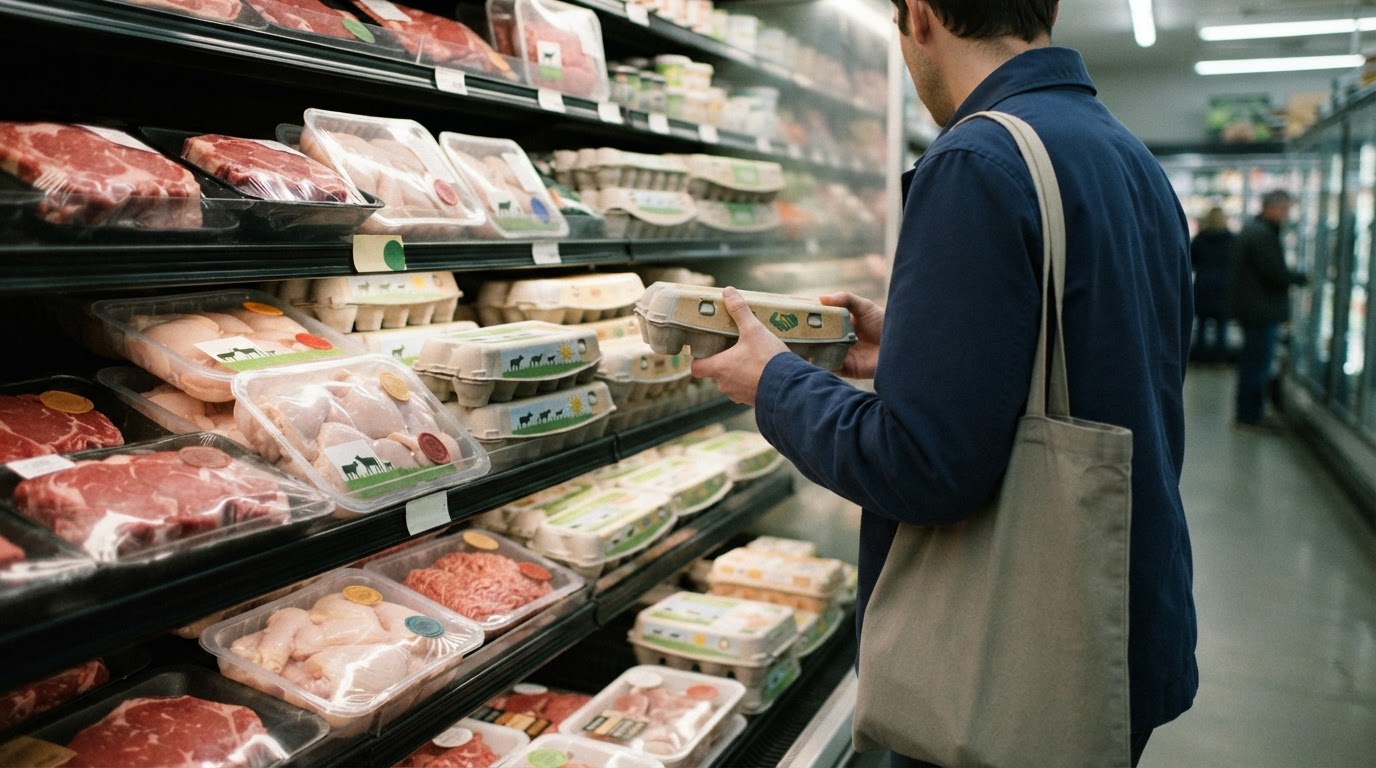
Navigating the supermarket aisle can feel like an ethical minefield, especially when confronted with a growing array of labels promising higher animal welfare. These certifications, appearing on everything from eggs to chicken to pork, are designed to help conscientious consumers make choices that align with their values. But what do these labels actually signify? The science and reality behind them are often complex, with standards and enforcement varying dramatically across different schemes and regions. Understanding the nuances of animal welfare labels is crucial for anyone seeking to support genuinely better practices for farm animals.
What the Research Shows
Consumer demand for ethically produced food has spurred the development of numerous animal welfare certification programmes. Research from institutions like the University of Bristol highlights that while these labels can influence purchasing decisions, their effectiveness hinges on clarity and consumer trust. A 2022 study published in the journal *Food Quality and Preference* found that consumers often overestimate the level of welfare provided by certain labels, assuming a higher standard than is actually guaranteed. This gap between perception and reality is a significant challenge for both producers and consumers.
Perceived vs. Actual Welfare Standards for Common Labels
Data represents average consumer perception of welfare levels compared to minimum certification requirements. Source: Adapted from *Food Quality and Preference* journal, 2023.
How It Works: Decoding the Labels
The core idea behind animal welfare labels is to provide a verifiable assurance that animals have been raised under specific conditions. These conditions typically address several key areas: space allowance, access to the outdoors, environmental enrichment, and restrictions on certain procedures like tail docking or beak trimming. However, the devil is in the details. A label might indicate 'free-range,' but the definition of 'range' can vary from a small patch of concrete with a door to extensive pastures. Similarly, 'crate-free' might apply to a specific life stage, not the entire animal's life.
Key Welfare Indicators
- **Space:** Adequate room to move, turn around, and express natural behaviours.
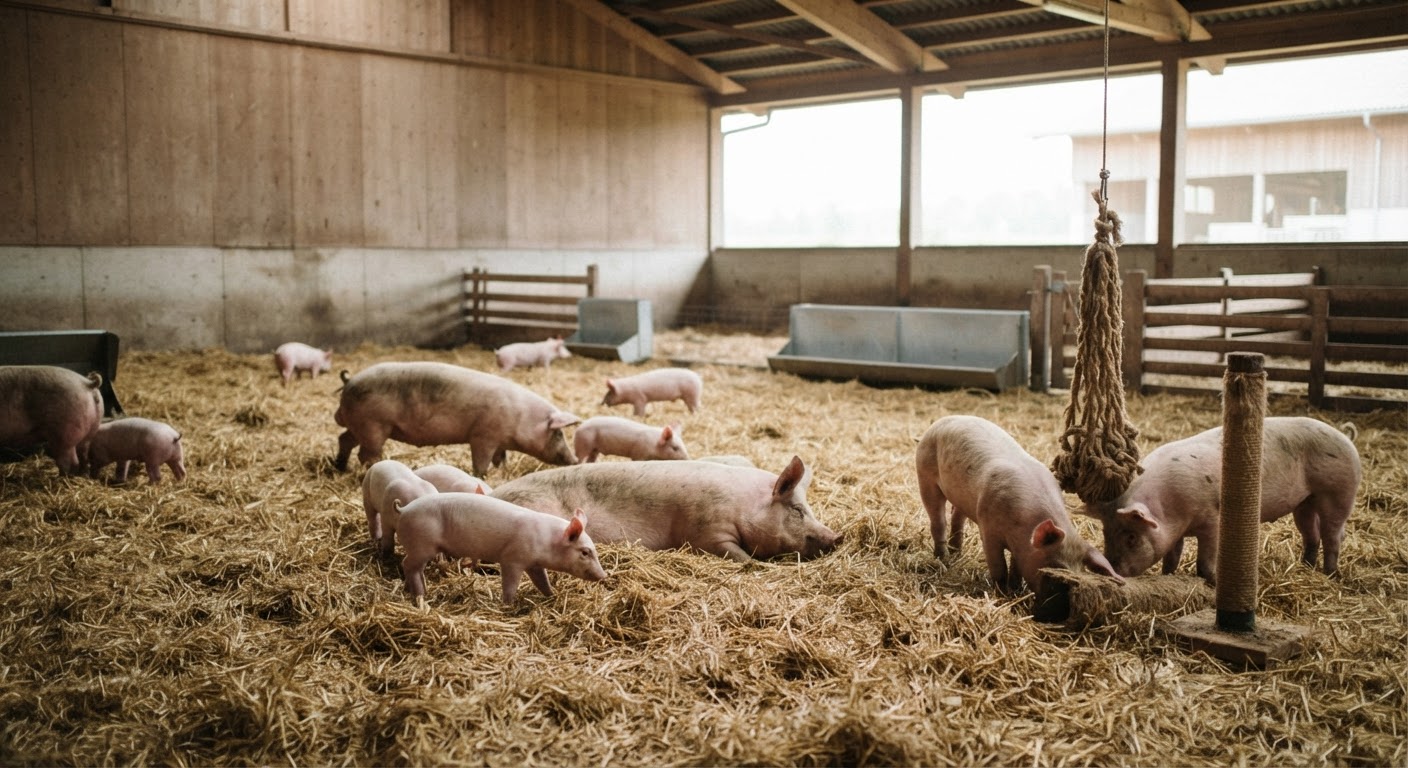
- **Environment:** Access to fresh air, natural light, and opportunities for exploration (e.g., straw, perches).
- **Outdoor Access:** Opportunities to go outside into natural environments.
- **Prohibitions:** Restrictions on painful procedures (e.g., castration without anaesthesia, beak trimming).
- **Diet:** Access to appropriate food and water.
Different certification bodies, such as the RSPCA Assured scheme in the UK or Certified Humane in North America, set their own criteria. The RSPCA Assured label, for instance, ensures animals are farmed under the RSPCA's strict welfare standards, which cover the ten welfare needs of animals. These standards are often developed with input from veterinary professionals and animal behaviourists, aiming to go beyond minimum legal requirements. Certified Humane, on the other hand, has specific standards for different species, focusing on aspects like the absence of cages and confinement systems.
What's Still Uncertain
Despite the proliferation of labels, significant gaps and uncertainties remain. Many labels do not cover all species of farm animals, or they may focus only on the final stages of production. Furthermore, the enforcement of these standards can be inconsistent. Auditing processes, while intended to ensure compliance, can sometimes be superficial, and the frequency of inspections may not be sufficient to catch all violations. The economic pressures on farmers can also lead to compromises, even within certified systems. The global nature of food supply chains adds another layer of complexity, making it difficult to trace the origin and ensure consistent welfare standards from farm to fork.
“The complexity of labels means consumers need to look beyond the logo to truly understand what they are buying.”
What It Means for You
For consumers, the journey to making ethically sound choices requires a degree of diligence. It's not simply about spotting a 'welfare-friendly' logo, but understanding what that logo represents. For example, 'pasture-raised' typically implies animals spend significant time outdoors on pasture, which is generally a higher welfare standard than 'free-range' alone. However, even 'pasture-raised' can have variations. Consumers interested in the highest standards might seek out labels that are independently audited and have comprehensive criteria, such as those developed by non-profit animal welfare organizations. These often provide more robust assurances than industry-led initiatives.

Beyond the Label: Other Considerations
- **Producer Transparency:** Look for brands that are open about their farming practices.
- **Local Sourcing:** Supporting local farmers can sometimes offer better insight into welfare.
- **Dietary Choices:** Reducing consumption of animal products inherently lessens demand for intensive farming.
- **Advocacy:** Supporting organizations that push for stronger legal protections for farm animals.
Ultimately, animal welfare labels are a tool, not a definitive answer. They can guide us towards better options, but they also highlight the ongoing need for clearer communication, rigorous standards, and a broader societal commitment to improving the lives of farm animals. By understanding what these labels mean – and what they don't – we can all contribute to a more compassionate food system.
Frequently asked questions
Are all 'free-range' labels the same?
What's the difference between 'free-range' and 'pasture-raised'?
Do animal welfare labels guarantee no animal suffering?
How can I be sure a label's claims are true?
Are there labels that cover all farm animals?
What is the most trustworthy animal welfare label?
Sources & further reading
- University of Bristol — University of Bristol
- Food Quality and Preference Journal — Food Quality and Preference
- Global Food Ethics Council (GFEC) — GFEC
- University of Wageningen — University of Wageningen
- RSPCA Assured — RSPCA Assured
- Certified Humane — Certified Humane