Carbon opportunity cost: 5 myths debunked
Discover the surprising truth about land use and climate change. 5 myths about carbon opportunity cost debunked, revealing land's true potential.

The land we allocate to feeding livestock represents a profound missed opportunity for climate action. While often overlooked, the vast tracts of land dedicated to grazing and growing animal feed could instead serve as powerful carbon sinks, absorb atmospheric CO2, and support biodiversity. This article debunks common myths surrounding the carbon opportunity cost of animal agriculture, revealing the true potential of our planet's land resources and the compelling case for plant-based diets as a climate solution.
Myth 1: Animal agriculture is an efficient use of land for food production.
The conversion of plant matter into animal products is inherently inefficient. For instance, it takes multiple kilograms of grain to produce just one kilogram of beef. This means that vast areas of land are used to grow feed crops, which are then fed to animals, with a substantial portion of the energy and nutrients lost in the process. When considering the total land footprint – including grazing land and land for feed production – the inefficiency becomes starkly clear. The United Nations' Food and Agriculture Organization (FAO) has highlighted that livestock takes up nearly 80% of global agricultural land but produces less than 20% of the world's supply of calories.
Land Use Intensity: Kilograms of Feed per Kilogram of Protein
Data is illustrative, based on synthesis of multiple studies. Feed requirements vary by production system. Source: Our World in Data, 2021.
Myth 2: Abandoning farmland for nature is economically unviable.
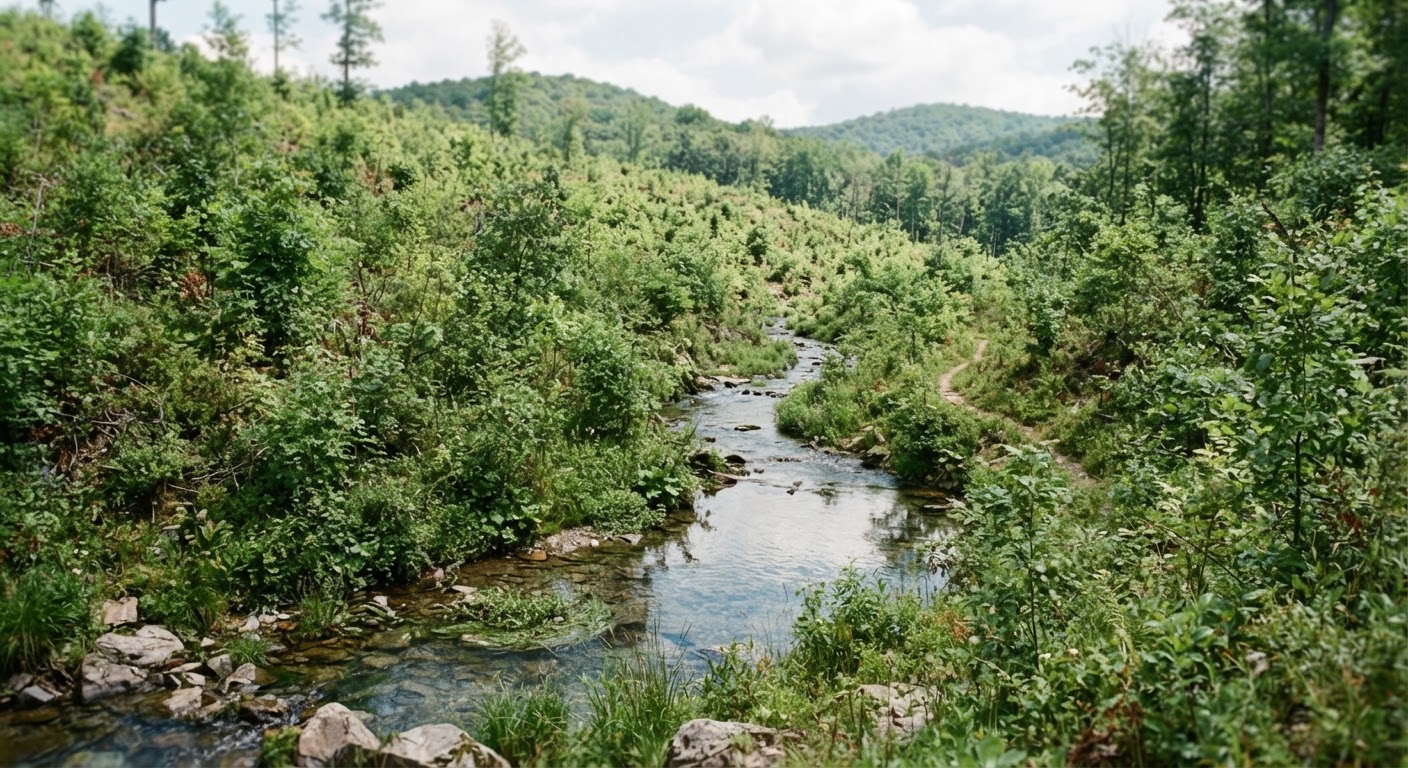
The concept of 'carbon opportunity cost' highlights that land currently used for animal agriculture could generate substantial economic and environmental value if repurposed for carbon sequestration through reforestation or rewilding. A 2021 study published in *Nature Food* estimated that global dietary shifts towards plant-based foods could free up millions of square kilometers of land. This freed land, if restored, could sequester billions of tonnes of CO2 annually. Beyond carbon, these restored landscapes offer invaluable ecosystem services. Clean water, flood regulation, pollination, and biodiversity preservation all have tangible economic benefits, often exceeding the short-term profits derived from intensive animal farming. Furthermore, the growth of plant-based food industries and ecotourism presents new economic opportunities.
Myth 3: Grazing animals are essential for maintaining healthy ecosystems.
The argument that grazing livestock is vital for ecosystem health is often oversimplified. While it's true that some grasslands evolved with large herbivores, the vast majority of land used for livestock farming today involves industrial-scale operations that often lead to overgrazing, soil erosion, and habitat destruction. This contrasts sharply with the nuanced ecological role of wild herbivores. Furthermore, the carbon sequestration potential of grasslands is often diminished by the presence of livestock, which release methane and require extensive land. Research from institutions like the Grassland Ecology Research Unit at Wageningen University suggests that in many contexts, allowing land to rewild naturally, or introducing managed herds of native wild herbivores, can be more beneficial for both carbon storage and biodiversity than conventional livestock farming.
- Overgrazing leading to soil degradation.
- Habitat loss for native species.
- Increased methane emissions from livestock.
- Reduced carbon sequestration capacity compared to natural vegetation.
Myth 4: Plant-based diets are nutritionally inadequate.
This persistent myth ignores the overwhelming scientific consensus. Leading dietetic associations worldwide, including the Academy of Nutrition and Dietetics in the US and the British Dietetic Association, affirm that well-planned vegan diets are healthful, nutritionally adequate, and may provide health benefits in the prevention and treatment of certain diseases. These diets are appropriate for individuals during all stages of the life cycle, including pregnancy, lactation, infancy, childhood, adolescence, older adulthood, and for athletes. The key is 'well-planned,' which involves ensuring adequate intake of vitamin B12 (often supplemented), vitamin D, calcium, iron, zinc, and omega-3 fatty acids, all of which can be readily achieved through fortified foods, supplements, or diverse plant-based sources. The environmental benefits of such a diet are substantial, directly addressing the carbon opportunity cost of land use.
Myth 5: Individual dietary choices have no real impact on climate change.
The cumulative effect of individual food choices is immense. When millions of people choose plant-based meals, the demand for animal products decreases. This reduction in demand signals to the agricultural industry that less land is needed for livestock and feed production. Consequently, land can be freed up for reforestation, rewilding, or more sustainable plant-based agriculture, thereby reducing the carbon opportunity cost. Studies by organisations like the EAT-Lancet Commission have demonstrated that widespread adoption of sustainable, plant-rich diets can significantly reduce greenhouse gas emissions and land degradation. A 2020 report by the University of Oxford highlighted that reducing meat consumption is one of the most effective ways an individual can lessen their environmental impact.
“Shifting to plant-rich diets is one of the most powerful levers individuals have to combat climate change.”
Greenhouse Gas Emissions per Kilogram of Food
Emissions include land use change, on-farm emissions, and processing. Source: Poore & Nemecek, Science, 2018.
The Path Forward: Embracing the Opportunity
The evidence is clear: the land used for animal agriculture represents a massive carbon opportunity cost. By embracing plant-based diets, we can collectively redirect this land towards restoring natural ecosystems, enhancing biodiversity, and mitigating climate change. This shift not only benefits the planet but also presents opportunities for healthier living and new economic ventures. Understanding and acting upon the carbon opportunity cost of our food choices is essential for building a sustainable future.
- Transitioning to plant-based diets significantly reduces land demand.
- Restoring land for forests and nature sequesters carbon effectively.
- Plant-based foods are generally more land-efficient and less emissive.
- Individual choices, when aggregated, drive substantial environmental change.
Frequently asked questions
What is the carbon opportunity cost of meat?
How much land is used for livestock globally?
Can rewilding land effectively reduce carbon emissions?
Are plant-based diets healthy?
What is the most impactful dietary change for the environment?
How does plant-based farming compare to animal agriculture in land use?
Sources & further reading
- Food and Agriculture Organization of the United Nations (FAO) — fao.org
- Nature Food — nature.com/natfood
- Our World in Data — ourworldindata.org
- Science Journal — science.org
- EAT-Lancet Commission — eatforum.org/eat-lancet-commission
- University of Oxford — ox.ac.uk