Checklist for Easy Vegan Recipes With Few Ingredients
Master easy vegan recipes with few ingredients using this 7-step checklist to cook healthy, low-cost dinners in under 20 minutes.
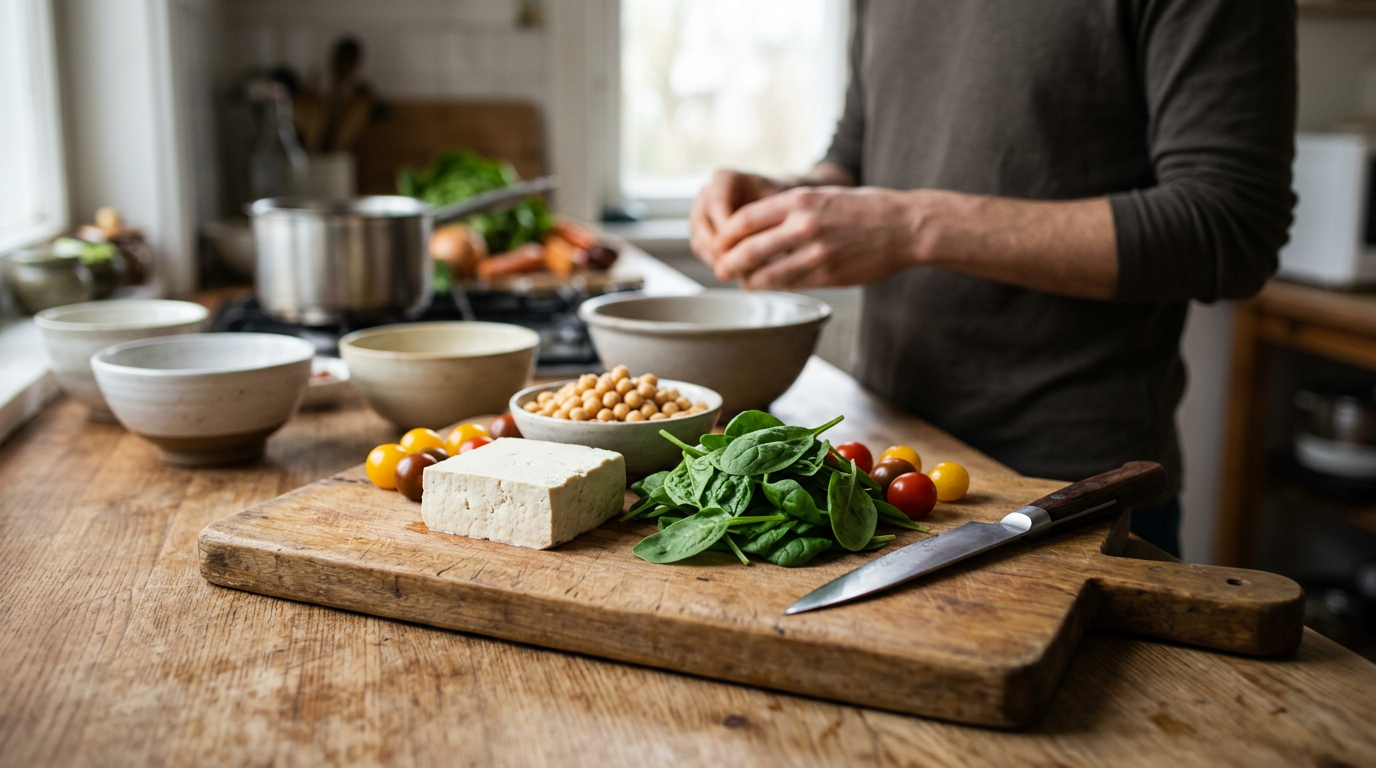
Cooking easy vegan recipes with few ingredients requires abandoning complicated kitchen rules in favor of a reliable, modular framework. When evening fatigue sets in after a long workday, nobody wants to peel ten different aromatics, toast bespoke spice blends, or manage four simmering pots simultaneously. The secret to effortless, plant-forward weeknight dinners is simplicity: combining a pre-cooked plant protein, two fast-cooking vegetables, a speedy carbohydrate, and a high-impact seasoning agent into a single harmonious meal.
Transitioning to plant-based dinners does not require specialty culinary training or expensive health-food products. A 2021 Oxford University study found that whole-food vegan diets can reduce individual food costs by up to 33 percent compared to standard omnivorous patterns. Furthermore, research published in Nature Food in 2023 demonstrated that switching to plant-based meals cuts personal dietary emissions by up to 75 percent. By stripping weeknight cooking down to five nutrient-dense, shelf-stable, or low-prep elements, you gain back valuable evening hours while improving both personal health and ecological impact.
1. Anchor Every Plate With a Ready-to-Cook Plant Protein
The foundation of stress-free weeknight dining is selecting a protein source that demands little to no advance preparation. Canned beans, pre-cooked brown lentils, vacuum-packed smoked tofu, and frozen edamame are supreme staples for quick assembly. Canned beans contain approximately 15 grams of dietary protein and 12 grams of soluble fiber per standard cooked cup. Because these proteins are already tender and safe to eat straight from the package, your sole objective during cooking is heating them through and letting them absorb your chosen seasoning.
2. Choose Two High-Yield, Low-Prep Vegetables
Do not overburden your weeknight cutting board with root vegetables that take 45 minutes to roast. Instead, pick two vegetables that cook in under seven minutes or can be tossed directly into heat with minimal chopping. Baby spinach, shredded purple cabbage, tenderstem broccoli, sweet cherry tomatoes, and frozen green peas require almost zero knife work. According to the Food and Agriculture Organization (FAO), integrating diverse whole vegetables into routine dinners provides essential micronutrients and dietary fiber that combat chronic inflammatory disease.

3. Select a Rapid-Cooking Complex Carbohydrate Base
Complex carbohydrates supply the sustained glucose release required to stay satiated until morning, preventing late-night pantry raids. Avoid whole brown rice or dry barley on weeknights, as both demand 40 to 50 minutes of active simmering. Instead, choose naturally rapid bases like whole-wheat couscous (5 minutes of off-heat steaming), Japanese soba noodles (4 minutes of boiling), parboiled microwavable grains, or rice vermicelli. Soba noodles deliver an earthy, nutty profile along with 6 to 8 grams of plant protein per serving.
Cooking Times for Weeknight Grain Bases (Minutes)
Source: International Grain Processing Standards and Culinary Test Kitchen averages.
4. Secure One Multi-Tasking Flavor Driver
When keeping recipes to five items, your seasoning element must carry intense savory depth, richness, and acidity in a single package. Rather than measuring seven spices, rely on concentrated artisanal staples: yellow miso paste, creamy hulled tahini, Thai red curry paste, unfortified nutritional yeast, or high-grade chili crisp. Whisking two tablespoons of white miso with hot pasta water, for example, creates an instant silky glaze that coats noodles with deep fermented umami.
5. Rely on One-Pan and Sheet-Pan Methods
True culinary ease includes the cleanup process after the meal has ended. Utilizing a heavy sheet pan or a single deep cast-iron skillet preserves the moisture of tender produce while keeping kitchen clutter minimal. Spreading drained chickpeas, chopped bell peppers, and red onion wedges across a parchment-lined baking tray produces caramelized fajitas in 18 minutes at 200°C. Data from Our World in Data indicates that legumes produce under one kilogram of greenhouse gas emissions per kilogram of edible protein, making them both ecologically and practically efficient.
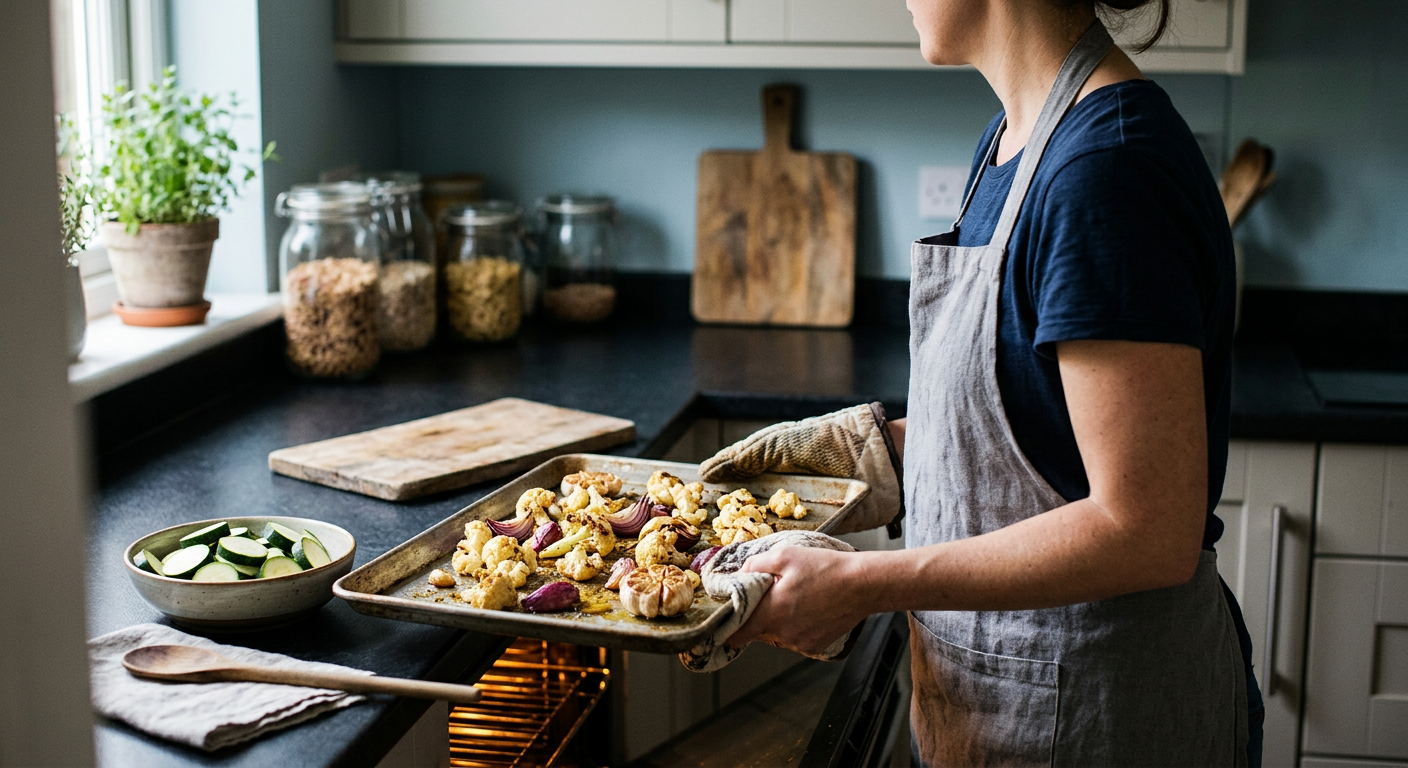
“Simple plant-based weeknight cooking does not demand culinary acrobatics; it requires five honest ingredients and high heat.”
6. Build a Streamlined Minimalist Vegan Pantry
A cluttered kitchen pantry creates decision fatigue, which often ends in ordering greasy takeout. A minimalist vegan pantry contains fewer than a dozen items that pair effortlessly in multiple combinations. Keeping full-fat coconut milk, canned cannellini beans, tamari, and whole sesame seeds ready on your shelf guarantees that you are never caught empty-handed when time is tight.
- Legume core: Canned chickpeas, French green lentils, and black beans.
- Quick grains: Rolled oats, whole-wheat couscous, and buckwheat soba noodles.
- Emulsifiers: Hulled tahini, natural peanut butter, and extra-virgin olive oil.
- Savory boosters: Shiro miso paste, nutritional yeast, and naturally brewed tamari.
- Frozen safety nets: Shelled edamame beans and chopped tender greens.
7. Assemble Core Easy Vegan Recipes With Few Ingredients
Putting the five-ingredient framework into practice is straightforward when you rely on repeatable templates. The British Dietetic Association confirms that well-planned vegan diets can support healthy living at every age and stage of life. Whether you are craving warming curries, refreshing noodle salads, or crisp oven roasts, these simple compositions take less than twenty minutes from pantry to plate.
- Creamy Coconut-Chickpea Stew: Simmer 1 can of drained chickpeas, 200 ml of full-fat coconut milk, 2 tablespoons of red Thai curry paste, and 2 generous handfuls of baby spinach; serve over 5-minute couscous.
- Sesame-Garlic Tofu Soba: Toss 150 grams of cooked soba noodles with seared cubed smoked tofu, blanched sugar snap peas, 1 tablespoon of tamari, and 1 tablespoon of toasted sesame oil.
- Rustic Mediterranean White Bean Skillet: Sauté 1 can of cannellini beans in extra-virgin olive oil with 200 grams of halved cherry tomatoes, 2 minced garlic cloves, and fresh baby kale; mop up juices with toasted sourdough.
Estimated Carbon Footprint per Dinner Serving (kg CO2e)
Source: Our World in Data / Poore & Nemecek (2018) meta-analysis.
By paring down the friction of weeknight dinners, you create a sustainable habit that endures through hectic work schedules and family commitments. Cooking nutrient-rich, plant-based food does not require elaborate recipes or rare specialty powders. A tin of beans, a handful of vibrant greens, a quick grain, and a scoop of savory paste are all you need to assemble a deeply restorative meal on any given weeknight.
- Rule 1: Never boil dry legumes on a Tuesday evening; rely on canned or vacuum-packed varieties.
- Rule 2: Choose quick vegetables that require slicing no more than once.
- Rule 3: Keep steam-in-the-bowl carbs on hand, such as couscous or soba.
- Rule 4: Let one fermented or nut-based ingredient deliver all the required savoriness.
- Rule 5: Keep your active skillet or oven time capped at 15 minutes.
- Rule 6: Cook double portions of your grain base to halve tomorrow's prep time.
- Rule 7: Finish every plate with an acid or raw crunch to heighten freshness.
Frequently asked questions
How do you make easy vegan recipes with few ingredients nutritionally balanced?
What are the best high-protein bases for minimalist plant-based meals?
Can 5-ingredient vegan cooking actually save money on groceries?
How do you add rich flavor to simple vegan dinners without long spice lists?
What are the most time-efficient cooking methods for busy weeknights?
Sources & further reading
- Springmann et al. (2021) - The global and regional costs of healthy and sustainable dietary patterns — The Lancet Planetary Health / Oxford University (ox.ac.uk)
- Scarborough et al. (2023) - Vegans, vegetarians, fish-eaters and meat-eaters in the UK show huge differences in environmental impact — Nature Food (nature.com)
- British Dietetic Association - Vegetarian, vegan and plant-based diet balance — British Dietetic Association (bda.uk.com)
- Poore & Nemecek (2018) - Reducing food’s environmental impacts through producers and consumers — Science / Our World in Data (ourworldindata.org)
- Food and Agriculture Organization - Dietary Guidelines and Micronutrient Intake — FAO (fao.org)