global-cuisines ·

10 High-Altitude Vegan Staples

Explore 10 resilient vegan foods that thrive at high altitudes, offering sustainable nutrition for mountain communities and beyond.
1,620 words · A Veg.ac daily essay
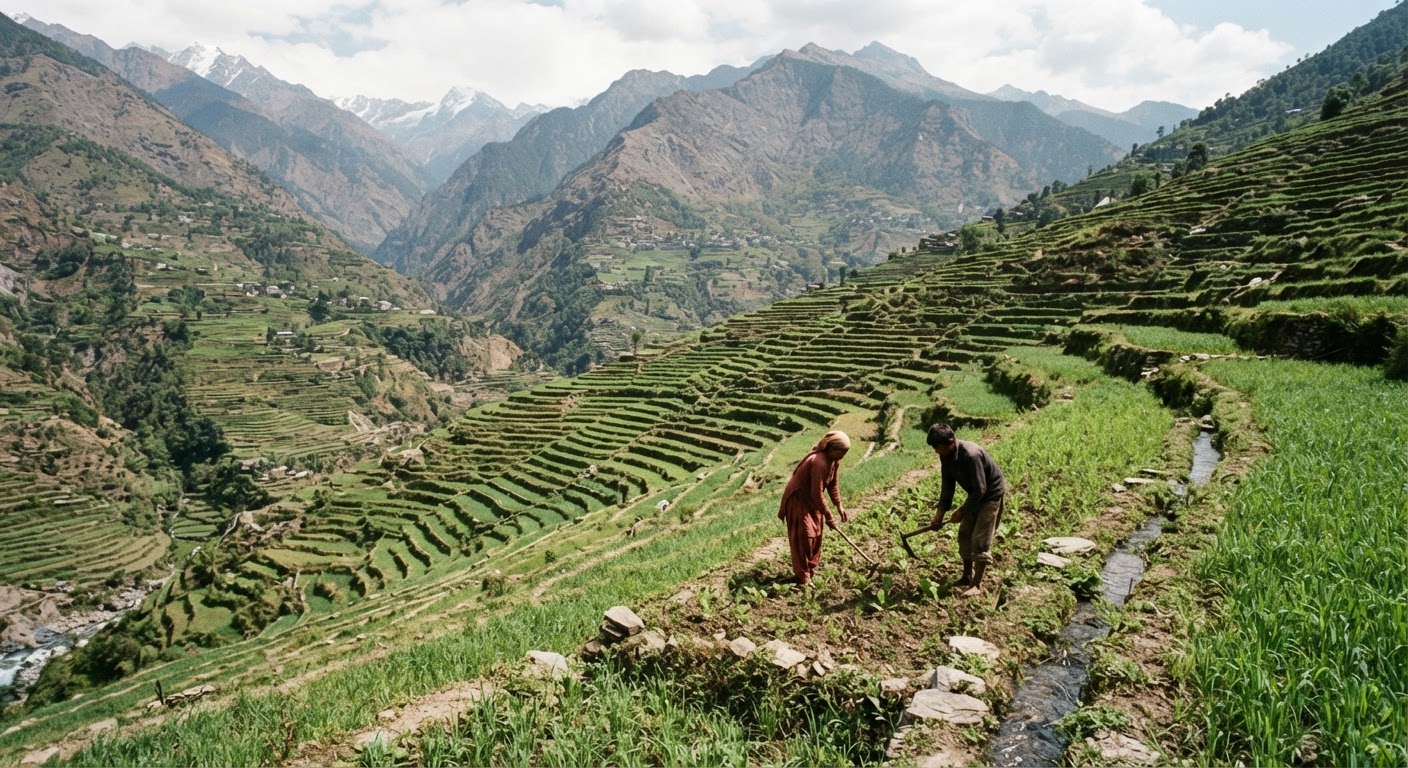
Sweeping view of terraced fields on a steep Himalayan mountainside under a clear blue sky.
Veg.ac · AI-generated illustration

For communities living at high altitudes, food security often depends on crops that can withstand challenging conditions: thin air, intense solar radiation, and fluctuating temperatures. Traditional diets in these regions, particularly in the Himalayas and the Andes, have long relied on hardy grains and tubers. As the world increasingly looks for resilient and sustainable food sources, these high-altitude vegan staples offer valuable lessons and practical solutions. This exploration delves into ten such foods, highlighting their nutritional benefits and adaptability.

1. Barley: The Resilient Grain

Barley (Hordeum vulgare) is one of the oldest cultivated grains and a cornerstone of diets in many mountainous regions, from the Tibetan Plateau to the Scottish Highlands. Its remarkable ability to grow in cold, dry, and nutrient-poor soils makes it ideal for high-altitude farming. Unlike wheat, barley is more tolerant of frost and requires less water, making it a dependable crop where other grains might fail. It's a significant source of dietary fibre, particularly beta-glucans, which are known for their health benefits, including cholesterol reduction.

~17%
Fibre content
USDA FoodData Central
~10-13%
Protein content
USDA FoodData Central

Nutritional Powerhouse

Beyond fibre, barley provides essential minerals like manganese, selenium, and magnesium. In regions like Tibet, roasted barley flour, known as tsampa, is a daily staple, often mixed with yak butter tea. While traditional tsampa includes dairy, modern vegan adaptations can use plant-based butter alternatives or simply water to create a nourishing porridge or dough. This adaptability underscores barley's role in both traditional and evolving diets.

2. Quinoa: The Andean Superfood

Hailing from the Andes mountains, quinoa (Chenopodium quinoa) has gained global recognition for its exceptional nutritional profile. It's a pseudocereal, meaning it's a seed prepared and consumed like a grain. Quinoa is unique among plant foods for containing all nine essential amino acids, making it a complete protein source – a rarity and a significant advantage for vegan diets, especially in areas where other protein-rich foods are scarce. It thrives at altitudes between 2,500 and 4,000 metres.

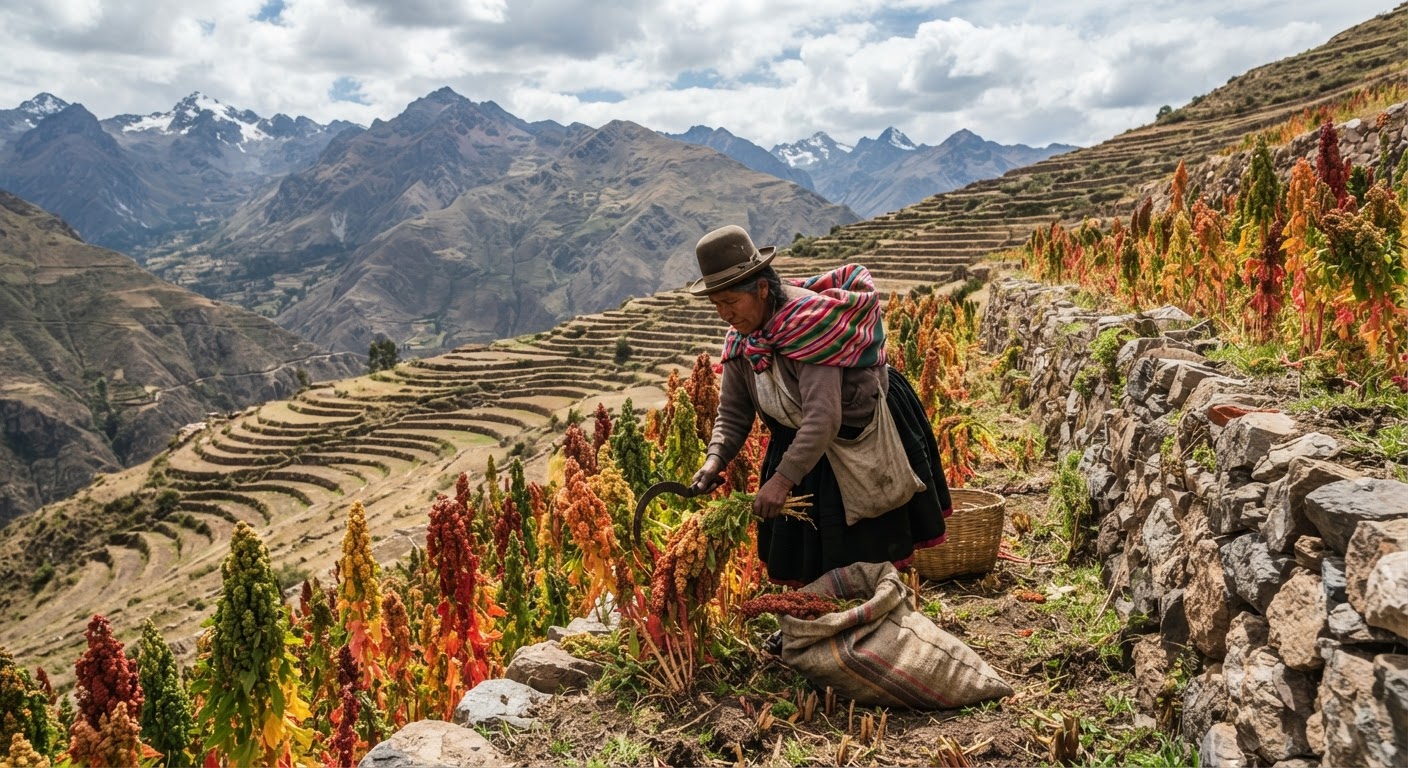
Quinoa plants flourish in the high-altitude agricultural landscapes of the Andes.
Quinoa plants flourish in the high-altitude agricultural landscapes of the Andes.Veg.ac · AI-generated illustration

Adaptable and Nutritious

Quinoa's resilience is evident in its ability to tolerate drought, frost, and saline soils. It's also relatively quick to mature, which is beneficial in regions with short growing seasons. Its versatility in the kitchen, from salads and porridges to side dishes, makes it an appealing staple. The International Year of Quinoa in 2013, declared by the United Nations, highlighted its importance for global food security and nutrition, particularly for indigenous communities in South America who have cultivated it for millennia.

Protein Content Comparison (per 100g cooked)

Unit: grams
Quinoa4.1 grams
Rice (White)2.7 grams
Barley2.5 grams

Data from USDA FoodData Central. Values are approximate and can vary.

3. Potatoes: The Calorie-Dense Staple

Potatoes (Solanum tuberosum) are a vital food source in many high-altitude regions, particularly in the Andes, where thousands of varieties have been developed and cultivated for centuries. They are incredibly versatile, nutritious, and calorie-dense, providing essential energy for populations in demanding environments. Potatoes are a good source of carbohydrates, vitamin C, potassium, and vitamin B6. Their ability to grow in diverse soil types and at elevations up to 4,000 metres makes them a cornerstone of food security.

Global Impact

The potato's journey from the Andes to the rest of the world has profoundly impacted global diets and agriculture. While often prepared with dairy in Western cuisines, potatoes are naturally vegan and can be a central component of plant-based meals, offering sustained energy and essential nutrients. Their ability to grow in marginal lands also makes them a sustainable crop choice for many ecological contexts.

4. Buckwheat: The Hardy Pseudo-cereal

Buckwheat (Fagopyrum esculentum), despite its name, is not related to wheat. It's a pseudocereal that thrives in cool climates and is well-suited to higher altitudes. It's known for its rapid growth cycle, often maturing in as little as 6-10 weeks, making it ideal for regions with short growing seasons. Buckwheat is a good source of protein, fibre, and minerals such as magnesium and manganese. Its amino acid profile is also quite favourable, offering a good balance of essential nutrients.

Fields of buckwheat, with their distinctive white flowers, indicate a crop well-suited to cooler climates.
Fields of buckwheat, with their distinctive white flowers, indicate a crop well-suited to cooler climates.Veg.ac · AI-generated illustration

Nutrient-Rich and Versatile

Buckwheat groats (known as kasha when toasted) can be prepared as a porridge or a side dish. Buckwheat flour is also used for pancakes, noodles (like Japanese soba), and bread. Its nutritional benefits include a range of antioxidants, such as rutin, which may contribute to cardiovascular health. The plant's ability to grow in less fertile soils also makes it an environmentally sound choice for challenging agricultural environments.

5. Amaranth: The Ancient Grain

Amaranth (Amaranthus spp.) is another ancient pseudocereal with a long history of cultivation in the Americas, including high-altitude regions of the Andes and Mesoamerica. It's remarkably hardy, tolerating drought and poor soils, and can grow at elevations up to 2,500 metres. Amaranth is prized for its high protein content, which is comparable to that of quinoa, and its good balance of essential amino acids. It's also a source of iron, magnesium, phosphorus, and manganese.

~7.5 mg per 100g (dry)
Iron content
USDA FoodData Central
~14-16%
Protein content
USDA FoodData Central

A Sustainable Choice

Both the grain and the leaves of amaranth are edible. The tiny seeds can be popped, cooked as porridge, or ground into flour. Amaranth leaves are highly nutritious, often containing more iron and vitamin C than spinach. Its ability to thrive with minimal inputs and its high yield make it an exceptionally sustainable crop for challenging climates, contributing significantly to food security for indigenous communities.

6. Yaks and Their Dairy Alternatives

While not a plant staple, the yak is intrinsically linked to the high-altitude vegan diet discussion due to its traditional role in providing sustenance in the Himalayas. Yak milk is a primary source of fat and protein, often churned into butter for tea and tsampa. However, as awareness of plant-based diets grows globally, and for those seeking to avoid animal products, finding alternatives is key. Plant-based milks and butters derived from nuts, seeds, or even fermented legumes can offer similar richness and functionality.

7. Highland Oats: Nourishment from the North

Oats (Avena sativa) are another grain that can be cultivated at moderate to high altitudes, particularly in cooler climates like those found in parts of Scotland, Scandinavia, and Northern Europe. While not as extreme as the Himalayas or Andes, these regions also present significant agricultural challenges. Highland oats are known for their hardiness and nutritional density, providing fibre, protein, and essential minerals. They are a staple in porridge and baked goods.

Traditional and Modern Uses

In traditional Scottish breakfasts, oats are a central component. For a vegan approach, they are prepared with water or plant-based milk. Oats are also a valuable source of beta-glucans, contributing to heart health. Their ability to grow on less fertile land makes them a sustainable option for many rural and highland communities.

8. Millet: Ancient Grains for Arid Lands

Millets (various species, e.g., foxtail millet, finger millet) are a group of small-seeded grasses that have been cultivated for thousands of years, particularly in arid and semi-arid regions, including high-altitude areas. They are incredibly drought-tolerant and can grow in poor soils where other grains struggle. Millets are rich in carbohydrates, fibre, and various micronutrients like calcium, iron, and magnesium. Finger millet, in particular, is known for its high calcium content.

Calcium Content Comparison (per 100g dry)

Unit: mg
Finger Millet364 mg
Oats52 mg
Quinoa47 mg

Data from USDA FoodData Central. Values are approximate and can vary.

A Sustainable Staple

Millets can be cooked into porridges, used as a base for pilafs, or ground into flour for baking. Their resilience makes them a critical crop for food security in many parts of Africa and Asia, including higher-elevation areas. As climate change impacts agriculture, the importance of these hardy grains is likely to increase.

9. Tepary Beans: Drought-Resistant Legumes

While often associated with desert regions, tepary beans (Phaseolus acutifolius) are exceptionally drought-tolerant and can grow in marginal lands, including higher elevations with arid conditions. These legumes are a valuable source of protein and fibre. Originating in the Americas, they were a staple for indigenous peoples. Their ability to fix nitrogen in the soil also contributes to soil health, a crucial factor in sustainable agriculture.

Protein Power from Arid Lands

Tepary beans offer a robust protein source for vegan diets, complementing carbohydrate-rich staples. They can be cooked and added to stews, salads, or served as a side dish. Their cultivation requires minimal water, making them an excellent candidate for regions facing water scarcity, including many high-altitude areas that also experience dryness.

10. Root Vegetables: Hardy and Versatile

Beyond potatoes, other root vegetables can thrive in high-altitude environments. Crops like carrots, parsnips, and various turnips and radishes (e.g., daikon) can tolerate cooler temperatures and are often grown in mountainous regions. These vegetables are valuable for their micronutrient content, fibre, and ability to be stored over winter. They provide essential vitamins and minerals that might be scarce from grains alone.

  • Carrots: Good source of Vitamin A.
  • Turnips: Contain Vitamin C and fibre.
  • Radishes: Offer a peppery flavour and digestive benefits.
  • Parsnips: Rich in fibre and potassium.

Winter Storage and Resilience

The ability of root vegetables to be stored for extended periods is a significant advantage for food security in regions with harsh winters or unpredictable growing seasons. They can be consumed raw, cooked, or pickled, adding variety and essential nutrients to the diet year-round. Their cultivation often requires less intensive farming practices, fitting well into sustainable land management.

High-altitude vegan staples are not just about survival; they represent a profound connection to the land and a testament to nature's resilience.

Magazine Editor

Sources & further reading

  1. FAOfao.org
  2. IPCCipcc.ch
  3. Nature Foodnature.com/natfood/
  4. USDA FoodData Centralfdc.nal.usda.gov