Live animal export by sea: the floating slaughterhouses
Explore the realities of live animal export by sea, from welfare concerns to environmental impacts, and discover plant-based solutions.
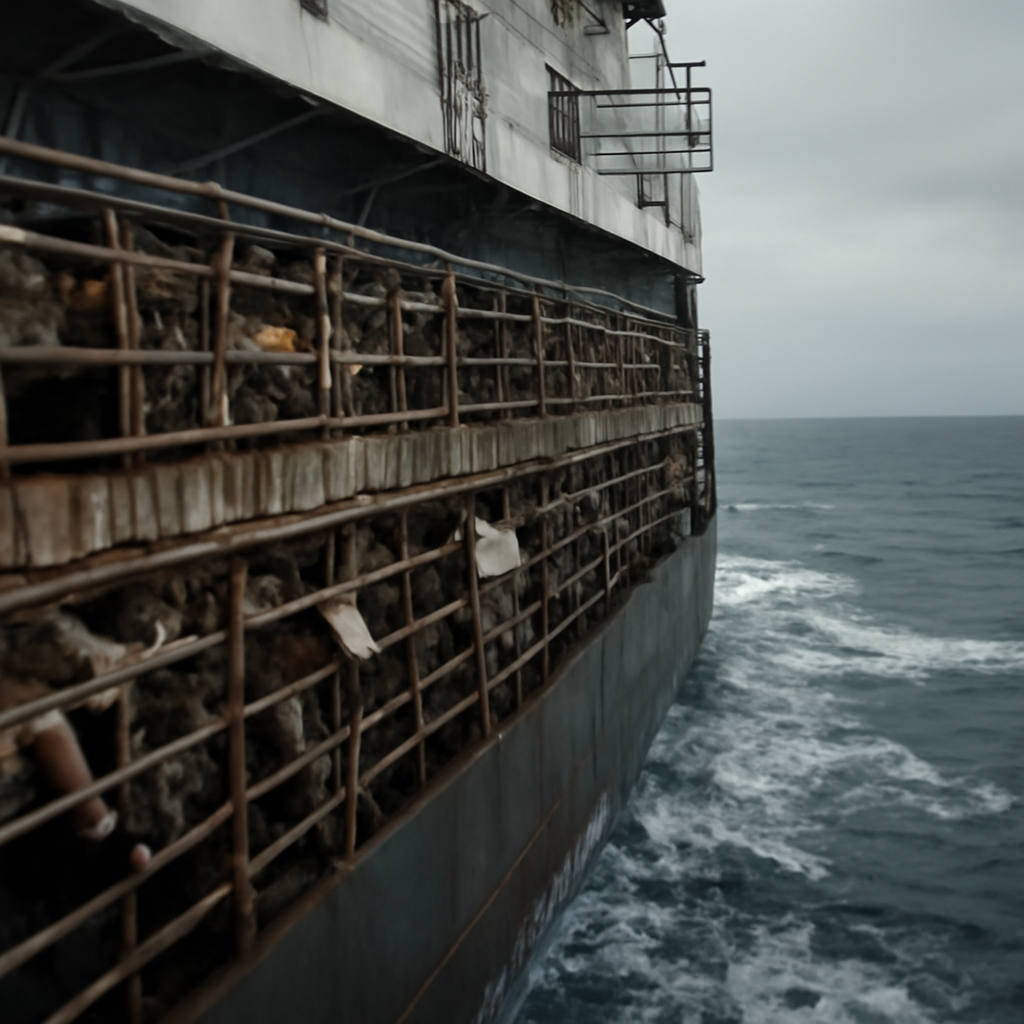
Every food system has a story it tells about itself and a second story it would rather keep out of view. Live animal export by sea: the floating slaughterhouses belongs to that second story. It is not only a question of individual taste, but of land, labor, climate, public health, and the daily lives of animals whose experiences are usually missing from the label. A vegan lens does not flatten those questions into a slogan. It asks us to look steadily at the evidence, then make choices that reduce harm where we actually have power.
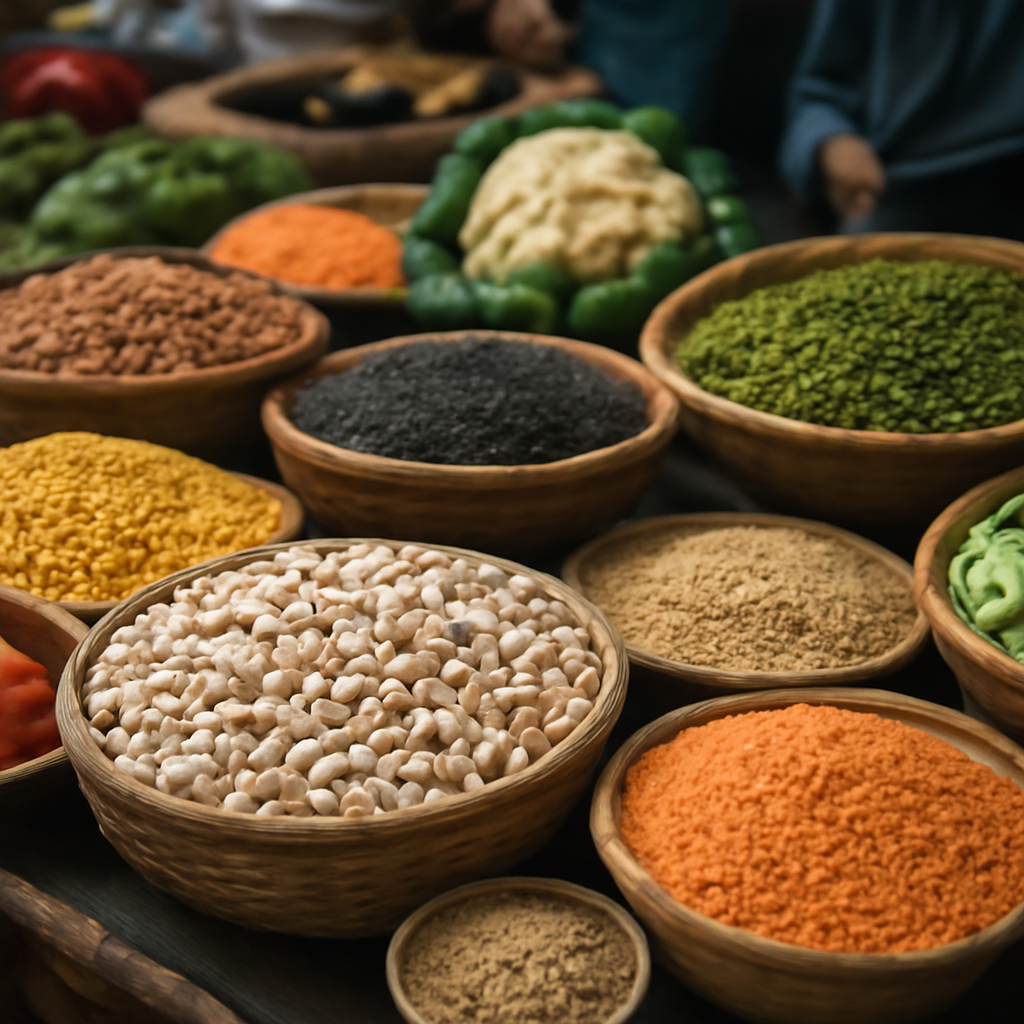
For readers arriving from different regions and traditions, the point is not to erase culture. It is to distinguish culture from the industrial systems that have attached themselves to culture. Beans, grains, roots, fruits, greens, spices, ferments, nuts, seeds, and mushrooms are not marginal foods; they are the foundation of many cuisines. When advocacy begins there, veganism becomes less like an imported identity and more like a practical recovery of foods communities already know how to grow, cook, share, and afford.
What the visible plate hides
The modern animal-food economy is built to separate appetite from consequence. Farms are placed far from cities, slaughter is hidden behind regulation and walls, feed crops are counted separately from meat, and pollution is treated as a local problem even when the benefits are sold globally. When people encounter the full chain at once — feed, confinement, transport, killing, refrigeration, advertising, waste — the ordinary meal becomes less ordinary. The central question is not whether consumers are perfect. It is whether institutions should keep normalizing the most resource-intensive and violent way to produce protein when abundant alternatives already exist.
This is why a magazine article about food has to move between scales. At the household scale, people need recipes, prices, substitutes, and reassurance. At the policy scale, they need public procurement, transparent labeling, farmer support, and honest climate accounting. At the moral scale, they need language for the discomfort many already feel when affection for animals collides with habits around eating them. Keeping those scales together prevents the conversation from becoming either too private or too abstract.
Animals are not abstractions
The ethical problem begins with a simple observation: cows, chickens, pigs, fish, sheep, and goats are not biological machines. They avoid pain, seek comfort, learn routines, recognize others, and struggle when confined or separated. Industrial systems depend on making these facts emotionally distant. The point of vegan advocacy is to close that distance without cruelty toward people. A person can inherit a diet, live inside economic constraints, and still deserve honest information about the beings whose bodies and reproductive systems are being used.
Language matters here. Calling an animal a unit, head, stock, yield, carcass, or input makes violence sound administrative. Calling the same animal a mother, a juvenile, a social being, or a patient creature can sound sentimental only because the industry has trained the public to treat distance as objectivity. A truthful vocabulary does not require exaggeration. It simply refuses to hide the living subject inside the commercial category.
“A kinder food culture begins when the animal is restored from product back into someone.”
The environmental ledger
The climate case is equally concrete. Ruminant methane warms the atmosphere quickly. Feed crops occupy land that could feed people directly or restore ecosystems. Manure lagoons and fertilizer runoff damage water. Fishing pressure and bycatch empty oceans while aquaculture often shifts pressure onto wild fish used as feed. None of these impacts disappears because a product is traditional, local, or marketed as natural. Scale changes the moral and ecological meaning of a practice.
Plant-based transitions also create room for restoration. Land no longer required for feed crops and pasture can produce food for direct human consumption, regenerate forests, protect watersheds, or support wildlife corridors. The exact answer differs by place; a dry region, a tropical forest frontier, and a dense city do not need the same plan. But the direction is consistent: reducing dependence on animal agriculture gives societies more ecological options, not fewer.
Typical greenhouse-gas footprint by protein source
Based on comparative food-impact research by Poore & Nemecek and Our World in Data summaries.
Health without exaggeration
A credible health argument does not claim that veganism is magic. It says something more useful: well-planned plant-based diets can provide adequate protein, fiber, iron, calcium, omega-3 fats, and other essentials while reducing exposure to processed meat and excessive saturated fat. Vitamin B12 must be supplemented or obtained from fortified foods. People with medical conditions should get individual advice. But the broad public-health direction is clear: more legumes, whole grains, vegetables, fruits, nuts, and seeds would improve diets in nearly every country.
The strongest version of this health message is humble and specific. It invites people to add protective foods before demanding that they memorize nutrition science. A pot of lentils, a peanut stew, a bean chili, a tofu stir-fry, a chickpea curry, or a bowl of fortified oats can do more for confidence than a perfect argument. Once people have two or three meals that satisfy them, the transition becomes practical enough to survive stress, family pressure, and busy weeks.
- Replace one default animal protein with beans, lentils, tofu, tempeh, peas, or chickpeas.
- Use fortified foods or a B12 supplement rather than guessing.
- Build meals around staples already common in the local cuisine.
- Treat perfection as less important than repeated, measurable harm reduction.
A practical response
The most useful response to live animal export by sea: the floating slaughterhouses is not despair. It is a set of ordinary decisions repeated until they become infrastructure: schools serving plant-forward meals, hospitals modeling prevention, families learning reliable swaps, restaurants labeling vegan dishes clearly, and campaigners making footage, research, recipes, and policy available in the languages people actually speak at home. Change becomes durable when it is easier to practice than to avoid.
That durability is the real goal. A single shocking documentary may open attention, but people need support after the credits end: shopping lists, community examples, affordable menus, religious and cultural conversations, and public institutions that make compassionate choices normal. The work is not only to persuade the already-convinced. It is to make the next compassionate step visible to someone who has never been invited into the movement before.
The measure of progress
Progress is not measured by how loudly a person identifies with a label. It is measured by fewer animals bred into suffering, fewer hectares cleared for feed, cleaner water, lower emissions, and more people discovering that compassion can be practical. The plate is not the whole solution, but it is one of the few places where ethics, ecology, health, and habit meet every day. That is why this topic matters, and why the next choice is never too small to count.
Beyond the Horizon: The Scale and Scope of Live Export
While often unseen by the consumer, the global trade in live animal export by sea is a significant undertaking, involving millions of animals annually. These voyages, which can last for weeks, transport cattle, sheep, and other livestock from exporting nations to importing countries for fattening and slaughter. The sheer logistics of housing, feeding, and watering vast numbers of sentient beings in confined spaces for extended periods raise profound welfare concerns.
The economic drivers behind this trade are complex, often linked to meeting demand for meat in regions where domestic production is insufficient or perceived as less cost-effective. However, the true cost extends far beyond the financial, encompassing animal suffering, disease transmission risks, and a significant carbon footprint associated with shipping and animal metabolism. Examining the destinations reveals key markets and the interconnectedness of global food systems.
- Millions of animals exported annually.
- Voyages can last several weeks.
- Key species include cattle and sheep.
- Driven by global meat demand.
The Unseen Costs: Welfare and Disease Risks
The conditions aboard live export vessels are a primary concern. Overcrowding, inadequate ventilation, and prolonged periods without access to food and water can lead to severe stress, injury, and death for the animals. Furthermore, the close proximity of animals from different origins on these ships can facilitate the rapid spread of diseases, posing risks to both the exported animals and the biosecurity of destination countries.
Recent investigations have highlighted instances of high mortality rates during transit, with animals succumbing to heat stress, pneumonia, and starvation. The lack of immediate veterinary care and the inability to intervene effectively in distressing situations underscore the inherent welfare challenges of this trade. The ethical implications of subjecting animals to such conditions for the sake of market convenience are increasingly being questioned.
- High risks of stress, injury, and death.
- Facilitates rapid disease transmission.
- Limited access to veterinary care.
- Concerns over heat stress and starvation.
| Year | Primary Exporter | Primary Importer | Volume (Approx.) |
|---|---|---|---|
| 2022 | Australia | China | 500,000 head |
| 2022 | Brazil | Turkey | 300,000 head |
| 2023 | New Zealand | China | 150,000 head |
| 2023 | Uruguay | Vietnam | 200,000 head |
Source: Various industry reports and government statistics (e.g., MLA, USDA Foreign Agricultural Service).
“The journey is often a cruel prelude to slaughter, with devastating consequences for animal welfare.”
Frequently asked questions
What are the main ethical concerns with live animal export?
Are there alternatives to live animal export?
How does live animal export impact disease spread?
What is the environmental impact of live animal export?
Sources & further reading
- Poore & Nemecek — Science: reducing food's environmental impacts through producers and consumers
- Our World in Data — Environmental impacts of food production
- Academy of Nutrition and Dietetics — Position on vegetarian and vegan diets
- FAOSTAT — Livestock and food production data
- Food and Agriculture Organization of the United Nations (FAOSTAT) — FAOSTAT Database (Accessed 2024)
- Meat & Livestock Australia (MLA) — Industry reports and market analysis (Various Years)
- US Department of Agriculture (USDA) Foreign Agricultural Service — Global Agricultural Information Network (GAIN) Reports (Various Years)
- Academic Research on Livestock Transport Emissions — Peer-reviewed journals (e.g., Journal of Animal Science, Environmental Science & Technology)