Octopus Intelligence: 5 Myths Busted
Explore the surprising intelligence of octopuses, challenging common misconceptions about these alien-like invertebrates and their capacity for sentience.
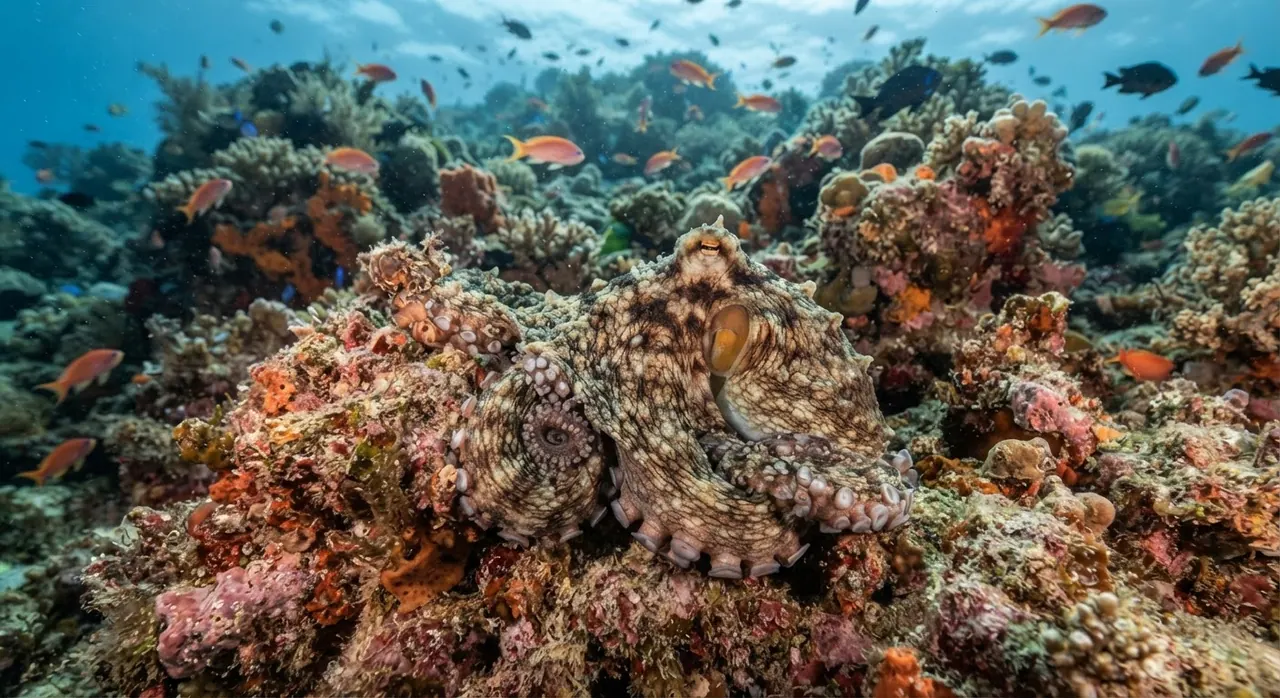
Myth 1: Octopuses are simple, instinct-driven creatures.
For decades, the prevailing view among many was that octopuses, despite their alien appearance, were essentially biological machines driven solely by instinct. This perspective was largely due to their evolutionary distance from vertebrates and a limited understanding of their nervous systems. However, a growing body of scientific research, particularly from the last two decades, has dramatically reshaped our understanding. Studies have shown that octopuses can learn from observation, remember solutions to problems, and adapt their behaviour based on past experiences. This capacity for flexible behaviour strongly contradicts the notion of simple instinctual responses.
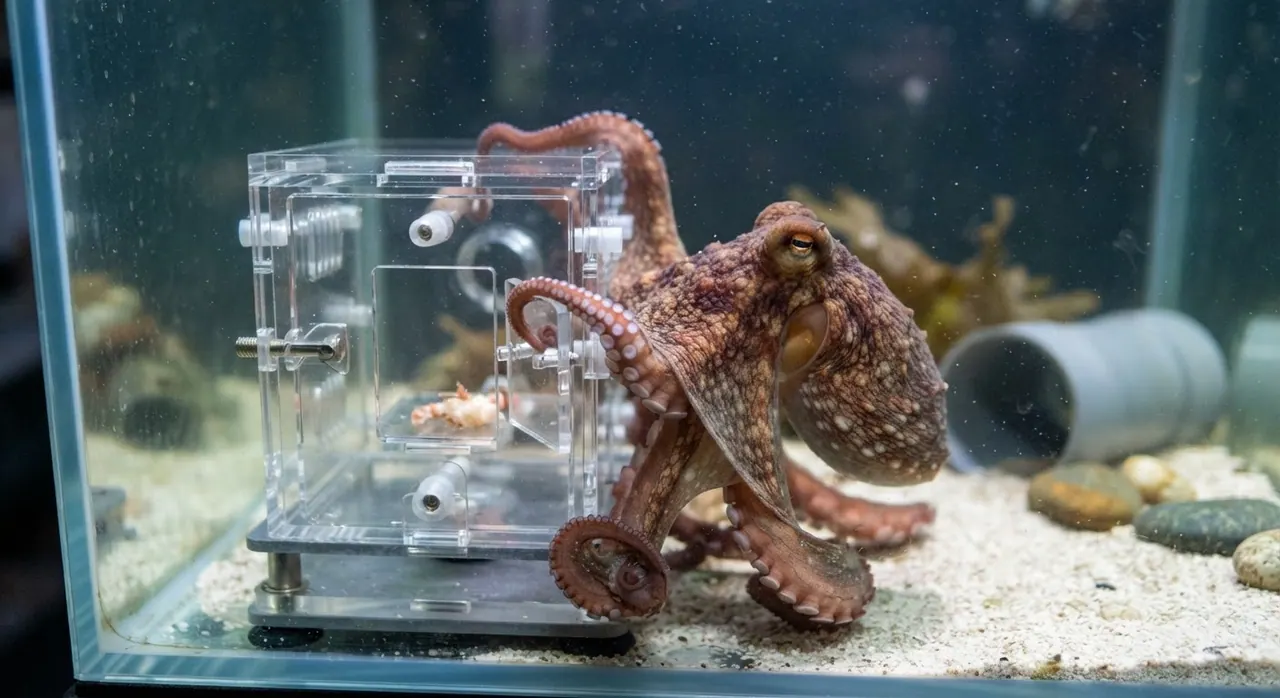
The Octopus Nervous System: A Decentralised Marvel
A key factor in understanding octopus intelligence lies in their unique nervous system. Unlike vertebrates, where the brain is a central control hub, approximately two-thirds of an octopus's neurons are distributed throughout its eight arms. Each arm can act semi-autonomously, processing sensory information and executing complex movements without constant input from the central brain. This 'distributed intelligence' allows them to explore their environment, manipulate objects, and react to stimuli with remarkable speed and dexterity, far exceeding what a purely centralised system might achieve for such a large organism.
Myth 2: Octopuses cannot learn or remember.
The idea that octopuses are incapable of learning is directly challenged by numerous laboratory experiments. Scientists have demonstrated that octopuses can learn to navigate mazes, distinguish between different shapes and patterns, and even solve complex puzzles to obtain food. For instance, studies have shown they can learn to open screw-top jars, a task requiring fine motor control and an understanding of cause and effect. Furthermore, some research suggests they can learn by observing other octopuses, a behaviour known as observational learning, which is considered a hallmark of advanced cognition. Their ability to recall solutions to these problems days or even weeks later indicates a robust capacity for memory formation.
Octopus Maze Navigation Times
Hypothetical data representing learning progression in maze tasks, adapted from general findings in cephalopod cognition studies.
Myth 3: Octopuses don't feel pain or experience emotions.
The question of whether octopuses feel pain or experience emotions is complex and deeply debated, especially given their unique physiology. While they don't possess a vertebrate-like brain or pain receptors, they do have nociceptors (sensory receptors that detect noxious stimuli) and exhibit avoidance behaviours when exposed to harmful substances or injuries. They also show protective responses to damaged body parts, which is often interpreted as a sign of pain. Furthermore, observations of their behaviour in captivity, such as engaging in play, showing curiosity, and even exhibiting signs of stress or boredom, suggest a richer inner life than previously assumed. The Cambridge Declaration on Consciousness, signed by neuroscientists in 2012, noted that non-human animals, including cephalopods like octopuses, possess the neurological substrates for consciousness.
Myth 4: Octopuses are solitary and lack social interaction.
It's commonly understood that many octopus species are solitary, preferring to live alone and interact only for mating. However, this doesn't mean they are completely devoid of social capacity. In environments where they are more densely populated, like the 'town' of octopuses discovered off the coast of Australia, some social interactions and territorial disputes have been observed. More strikingly, recent studies have provided evidence that octopuses can recognise individual humans. In controlled experiments, octopuses have shown preferences for interacting with certain researchers, even changing their behaviour based on past interactions, suggesting a form of social learning and individual recognition that challenges the 'solitary' label.
“Their capacity for individual recognition and unique personalities suggests a level of sentience we are only beginning to grasp.”
Myth 5: Octopus intelligence is irrelevant to their welfare.
As our understanding of octopus cognition deepens, so too does the ethical imperative to consider their welfare. In many parts of the world, octopuses are farmed or caught for consumption, and they are also used in scientific research. If these animals are capable of experiencing pain, stress, and complex problem-solving, then the methods of their capture, slaughter, and housing become critical ethical concerns. Organisations like the RSPCA in the UK and animal welfare bodies globally are increasingly advocating for stronger protections for cephalopods, including octopuses, based on their demonstrated intelligence and capacity for suffering. A 2023 review by the London School of Economics highlighted the increasing recognition of sentience in invertebrates, impacting policy discussions around animal welfare.
The Future of Octopus Welfare
The scientific community's evolving perspective on octopus intelligence is not just an academic curiosity; it has real-world consequences. As more people become aware of these remarkable creatures' capabilities, there's a growing movement to ensure their treatment reflects their complex nature. This includes advocating for more humane slaughter methods, designing aquarium environments that cater to their cognitive needs, and reassessing their use in research where alternatives might exist. The journey to fully comprehend octopus intelligence is ongoing, but the evidence is clear: these are not simple sea creatures, but beings with a rich and complex inner world that demands our respect and consideration.
- Octopus intelligence challenges our anthropocentric views of cognition.
- Their unique nervous system allows for sophisticated problem-solving.
- Evidence of learning, memory, and possibly emotions necessitates ethical consideration.
- Welfare concerns are growing for octopuses in research and food industries.
- Further research is vital to fully understand and protect these sentient invertebrates.
Frequently asked questions
Are octopuses considered sentient beings?
How intelligent are octopuses compared to other animals?
Can an octopus feel pain?
Do octopuses have individual personalities?
Is it ethical to eat octopuses?
Where do octopuses live?
Sources & further reading
- Cambridge Declaration on Consciousness — consciousness.arizona.edu
- Scientific American — scientificamerican.com
- RSPCA — rspca.org.uk
- London School of Economics — lse.ac.uk