Soy Milk vs Oat Milk: The Ultimate Plant Based Milk Guide
Which plant based milk is right for you? We compare soy and oat milk on protein, calcium, cost, and culinary performance to help you choose.
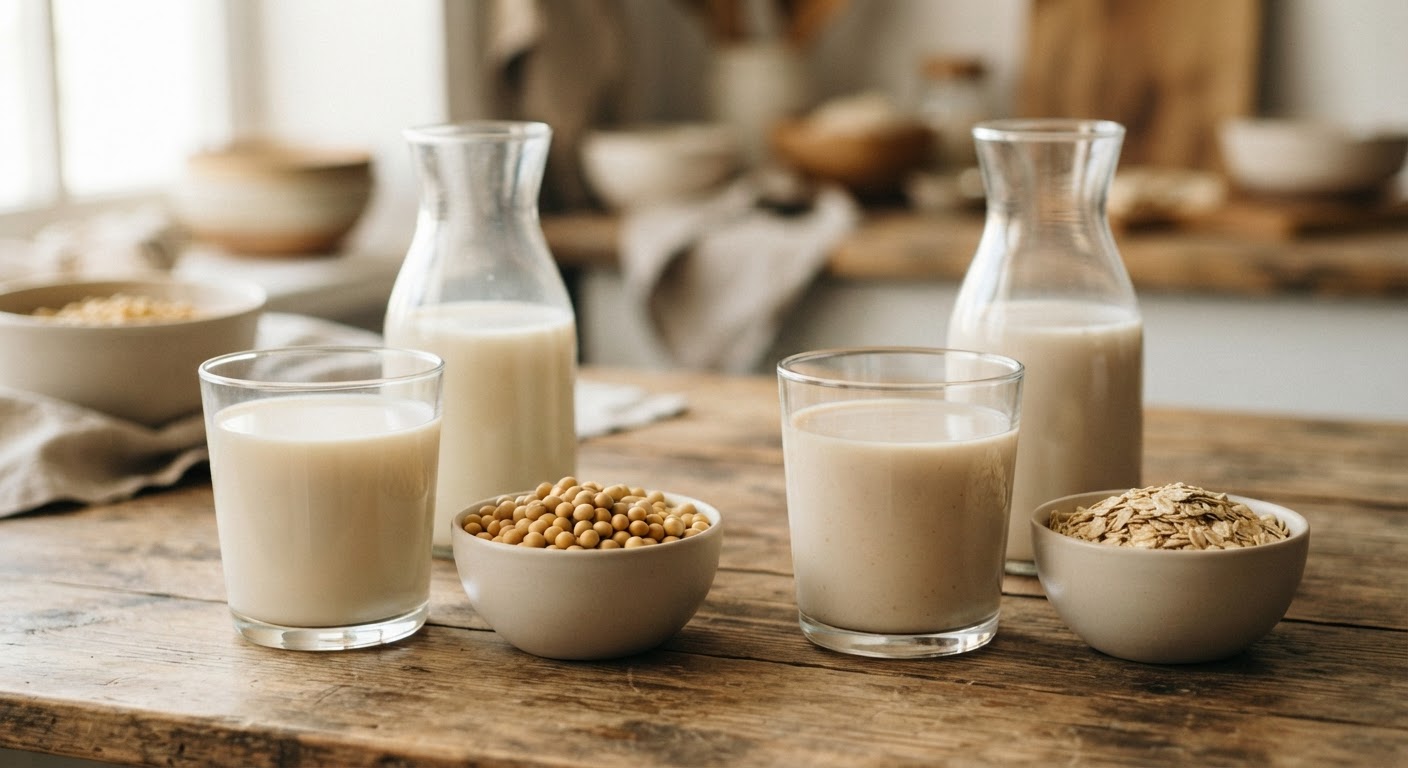
When searching for a plant based milk to suit your lifestyle, the decision often narrows down to a strategic choice between the nutritional reliability of soy and the culinary versatility of oat. Soy milk currently stands as the most direct nutritional equivalent to dairy milk, offering a robust protein profile that is rare among plant-derived beverages. In contrast, oat milk has experienced a rapid surge in popularity across cafes and home kitchens alike, primarily due to its naturally mild, neutral flavor and an exceptionally creamy mouthfeel that mimics whole milk. Whether you are looking to balance your macros or simply seeking the perfect foam for a morning latte, understanding these differences is essential. While soy is often the go-to for those prioritizing protein intake, oat milk has become the preferred choice for those sensitive to the distinct flavor notes of legumes. By examining the functional and nutritional trade-offs, you can easily determine which option serves your specific dietary goals, budget, and daily usage patterns.
The case for soy milk
Soy milk remains the gold standard for those seeking a plant-based alternative that closely mirrors the comprehensive protein profile of cow’s milk. According to the FAO, soy is a high-quality protein source containing all nine essential amino acids necessary for human health, a trait that sets it apart from many other nut or grain-based milks. For individuals transitioning away from dairy, soy milk provides a seamless nutritional swap, as it is often fortified with calcium and vitamin D to match the micronutrient density typically found in bovine milk. This fortification is vital, as the WHO highlights that adequate calcium intake is crucial for bone health, and plant-based drinkers must ensure their alternatives are nutritionally comparable. By opting for a fortified soy beverage, you are not just choosing a dairy replacement; you are selecting a functional food that supports muscle maintenance and skeletal integrity. In a practical sense, using soy milk in your morning porridge or protein shakes ensures you are hitting your daily amino acid targets without needing to supplement your breakfast with additional protein powders.
Beyond its impressive nutritional profile, soy is a remarkably stable and efficient crop. Data from Our World in Data indicates that soy production is highly land-efficient, often requiring significantly less land to produce the same amount of protein compared to animal-based agriculture. In many English-speaking regions, the infrastructure for soy production is well-established, making it a widely available and generally affordable option at most major supermarkets. Its natural ability to emulsify makes it highly suitable for a variety of culinary applications, from baking dense muffins to creating savory white sauces where a thicker consistency is desired. However, it is worth noting that some consumers find the distinct 'beany' flavor profile of soy less desirable when paired with delicate teas or light, floral coffees. If you find the flavor too intense for your palate, consider using soy milk in recipes where it is masked by other ingredients, such as in spicy curries, hearty soups, or smoothies blended with frozen berries and nut butters, which effectively balance the natural earthiness of the soybean.
The case for oat milk
Oat milk has fundamentally transformed the modern café industry, largely due to its remarkable natural sweetness and thick, creamy consistency that mimics the mouthfeel of whole dairy milk. If you are searching for a plant based milk that performs reliably in your morning brew, oat milk is frequently the top recommendation. Unlike soy, which can occasionally curdle when introduced to the high acidity of certain coffee roasts, oat milk often contains added dipotassium phosphate or other stabilizers that allow it to steam and create a stable, micro-foam texture ideal for latte art. While it is naturally lower in protein than soy, typically providing around 3 grams per cup compared to soy's 7 to 8 grams, it remains the preferred choice for those with soy allergies or individuals seeking a milder, grain-based flavor profile that does not overpower cereal or tea. Furthermore, oat production is often highlighted for its lower water footprint; according to data from Our World in Data, oat milk production requires significantly less water per liter than almond milk, making it a popular choice for environmentally conscious consumers in the UK and North America who prioritize sustainability alongside texture.

Nutritional Comparison (per 240ml)
Data derived from average manufacturer labels for unsweetened, fortified varieties (2023).
Head-to-head criteria
When evaluating these popular dairy alternatives for your pantry, consider how they stack up across four key metrics to ensure they align with your nutritional and culinary needs. First, assess the protein content; soy milk is widely recognized as a complete plant-based protein source, containing all nine essential amino acids necessary for human health, whereas most oat milks offer negligible protein unless specifically fortified. Second, examine the calcium and vitamin fortification levels, as the World Health Organization emphasizes the importance of consistent nutrient intake for bone health, especially when replacing dairy in a diet. Third, look closely at the price point and availability in your local supermarket; while private-label oat milks have become more competitively priced, organic or barista-grade versions often command a premium. Finally, consider the culinary application, as the distinct flavor profile of soy can be savory and robust, making it suitable for cooking curries or béchamel sauces, while the subtle sweetness of oat milk is better suited for baking, smoothies, or breakfast bowls. By balancing these factors against your own dietary priorities, you can determine which option best serves your household.
- Protein Content: Soy provides a complete amino acid profile; oat is significantly lower.
- Calcium Fortification: Both must be checked for added calcium, as raw plant milks are naturally low in this mineral.
- Culinary Performance: Oat milk holds up better in high-heat coffee beverages.
- Environmental Impact: Both have significantly lower greenhouse gas emissions compared to dairy, according to the 2018 Nature study by Poore and Nemecek.
“Plant-based diets are one of the most effective ways to reduce your environmental impact on the planet.”
Greenhouse Gas Emissions (kg CO2e per liter)
Source: Poore and Nemecek (2018), Science. Figures represent global averages.
Verdict
Frequently asked questions
Is plant based milk as healthy as cow's milk?
Does oat milk cause blood sugar spikes?
Are there environmental concerns with soy milk?
Can I make these at home easily?
Which milk is best for children?
Sources & further reading
- Poore and Nemecek (2018) Study — Nature (science.org)
- FAO Plant-based Protein Report — fao.org
- USDA FoodData Central — fdc.nal.usda.gov
- Our World in Data — ourworldindata.org