The Perfect Vegan Shepherd's Pie
Discover how a hearty vegan shepherd's pie can be a sustainable and delicious choice, outperforming beef in key environmental metrics.
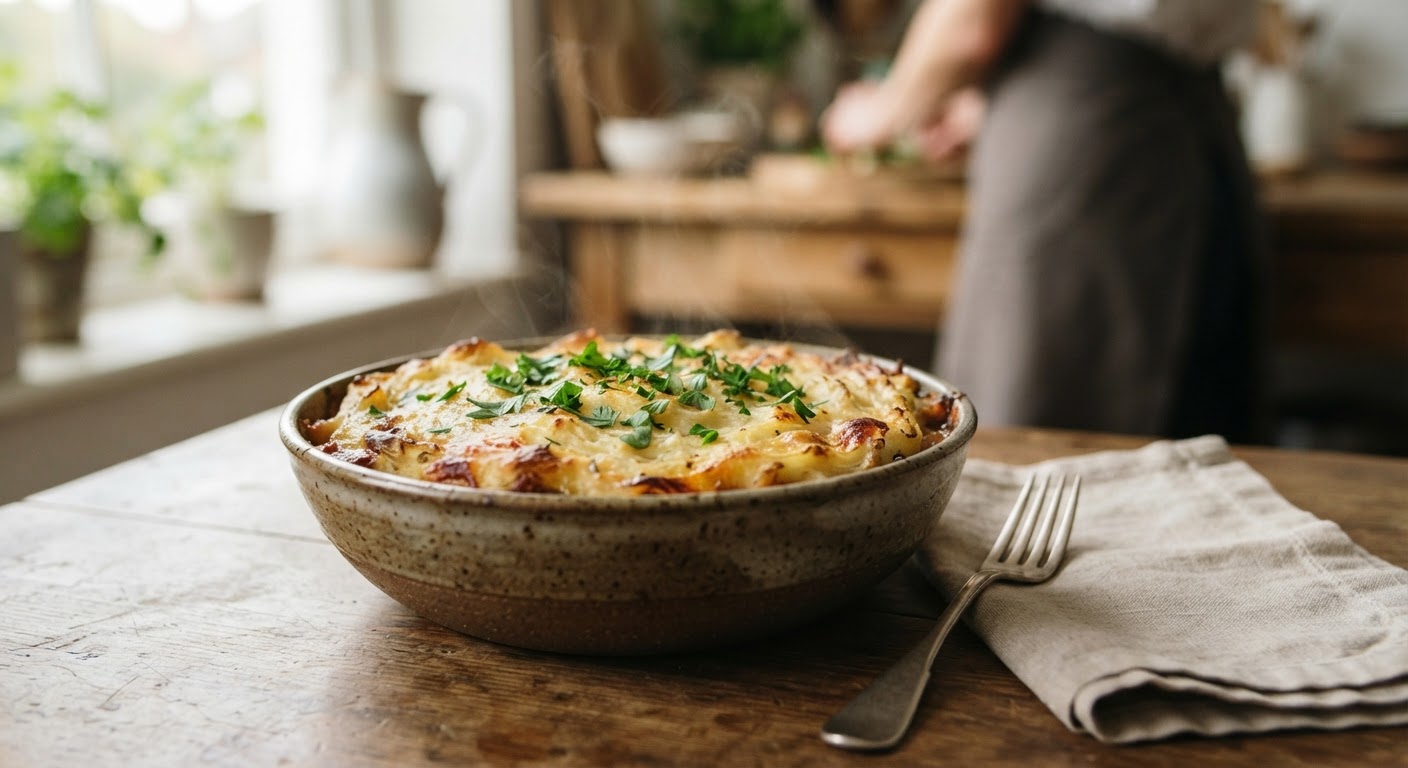
The quest for a truly satisfying and planet-friendly meal often leads us to familiar comforts, reimagined. Our perfect vegan shepherd's pie is one such dish, a deeply flavourful and hearty celebration of plant-based ingredients. This recipe not only rivals its traditional counterpart in taste and texture but also offers a compelling environmental advantage, particularly when considering the significant methane emissions associated with beef production. By swapping beef for a rich blend of lentils, mushrooms, and vegetables, we create a dish that is kinder to the Earth, using less land and water, and producing fewer greenhouse gases. This is not just a recipe; it's a statement that delicious, comforting food can also be a powerful tool for positive change.
Why this recipe works: The environmental case
The environmental impact of our food choices is increasingly under scrutiny, and the humble shepherd's pie, traditionally made with lamb or beef, presents a stark contrast when compared to its vegan counterpart. Ruminant animals, like cattle, produce vast quantities of methane, a potent greenhouse gas, through their digestive processes. Methane from livestock is a significant contributor to global warming, and the sheer scale of the global cattle industry means this is a substantial issue. A 2023 report by the Food and Agriculture Organization of the United Nations (FAO) highlighted that livestock farming accounts for approximately 14.5% of all human-caused greenhouse gas emissions. Beef, in particular, has a very high carbon footprint per kilogram of protein. In contrast, a well-crafted vegan shepherd's pie, relying on pulses and vegetables, bypasses the enteric fermentation process entirely. Lentils and other legumes are nitrogen-fixing plants, which can even improve soil health. This shift drastically reduces the methane budget associated with the meal, offering a clear win for the climate.
Greenhouse Gas Emissions: Beef vs. Lentils (per kg protein)
Source: Our World in Data (2020 data, updated estimates)
Ingredients
- 1 tbsp olive oil (for sautéing)
- 1 large onion, finely chopped (flavour base)
- 2 carrots, finely chopped (sweetness and texture)
- 2 celery stalks, finely chopped (aromatic depth)
- 2 cloves garlic, minced (pungent aroma)
- 250g mushrooms, finely chopped (umami and 'meaty' texture)
- 200g brown or green lentils, rinsed (protein and substance)
- 500ml vegetable stock (liquid base for filling)
- 1 tbsp tomato purée (richness and colour)
- 1 tsp dried mixed herbs (classic flavour)
Method
- Preheat your oven to 190°C (170°C fan/Gas Mark 5).
- To make the filling, heat the olive oil in a large, oven-safe saucepan or casserole dish over medium heat. Add the onion, carrots, and celery and cook until softened, about 8-10 minutes.
- Stir in the garlic and chopped mushrooms and cook for another 5 minutes until the mushrooms have released their liquid and started to brown.
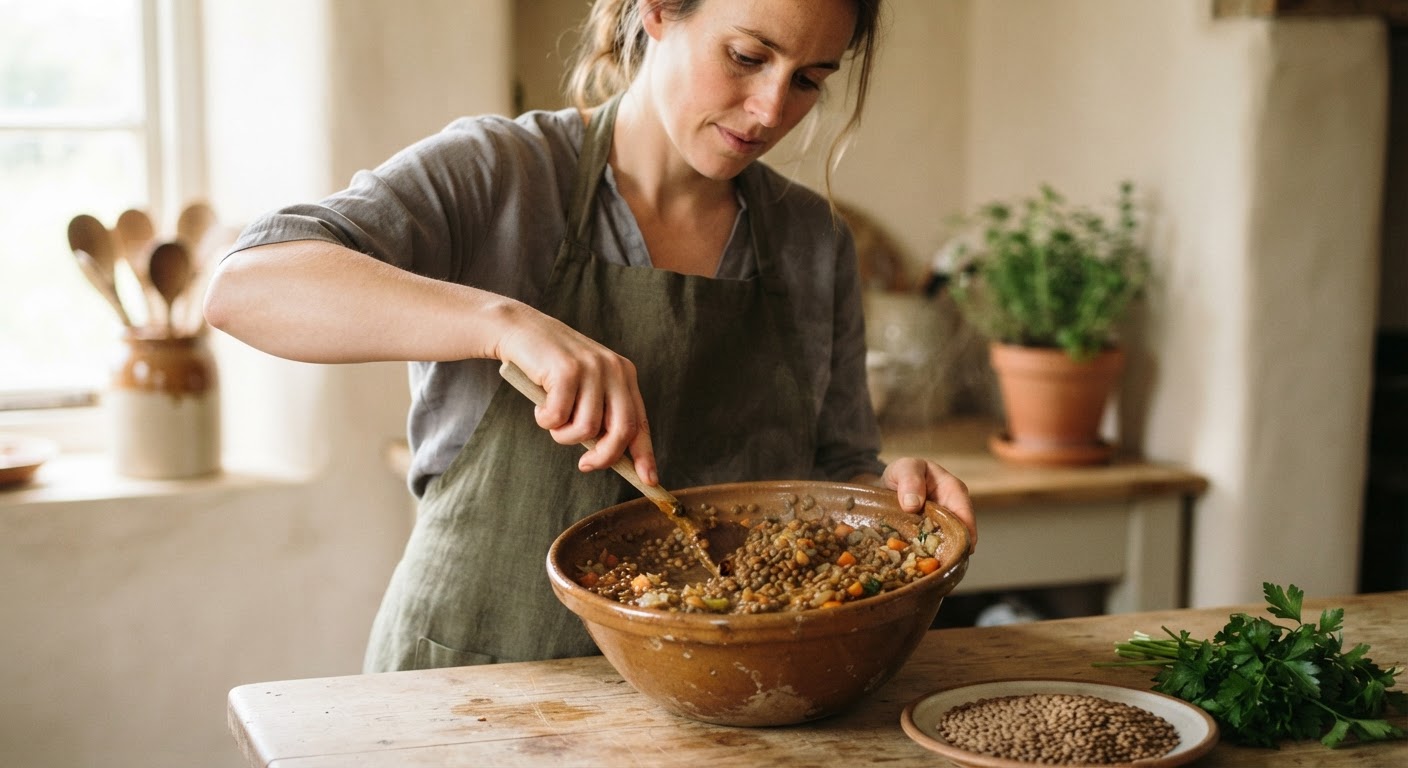
- Add the rinsed lentils, vegetable stock, tomato purée, and mixed herbs. Bring to a simmer, then cover and cook gently for 25-30 minutes, or until the lentils are tender and most of the liquid has been absorbed. Stir occasionally.
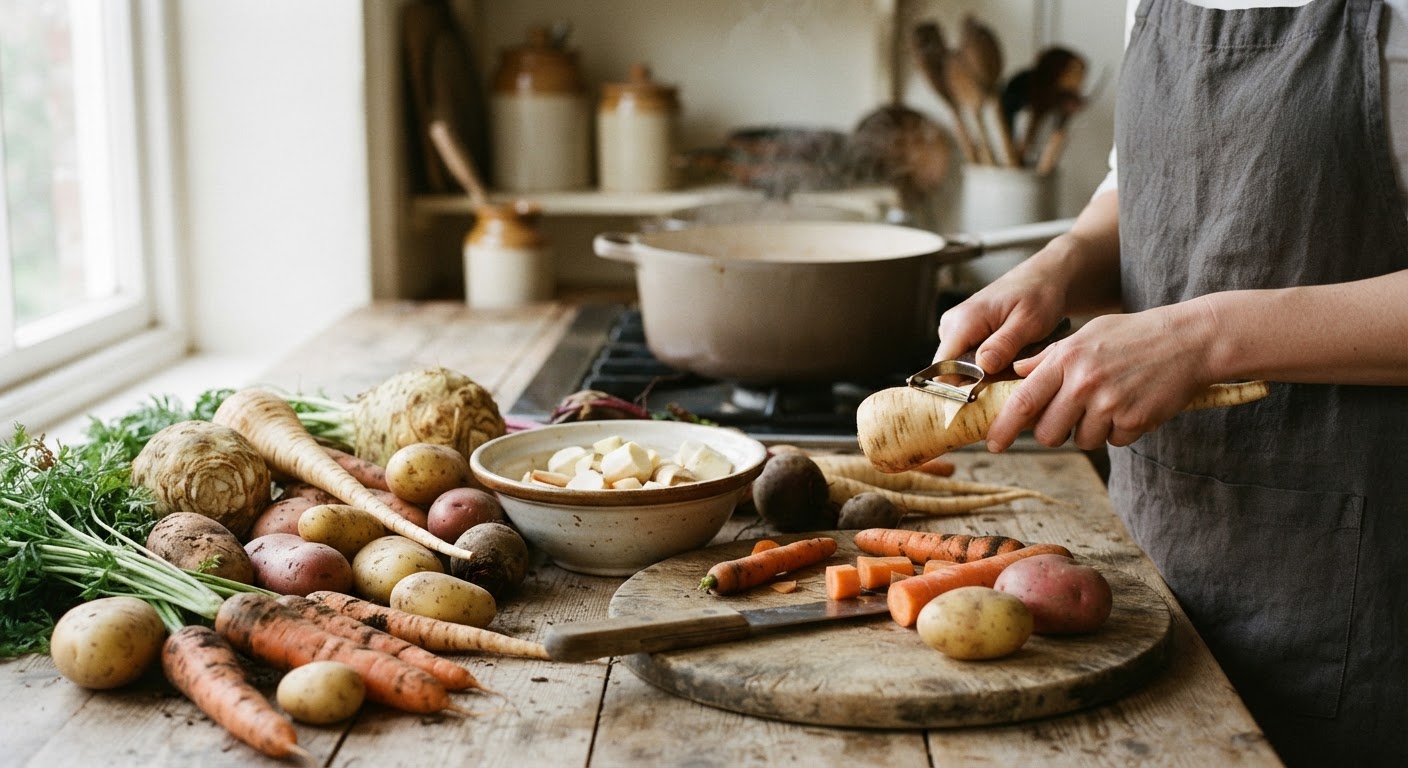
- While the filling simmers, prepare the topping. Boil the cubed potatoes in salted water until very tender, about 15-20 minutes.
- Drain the potatoes thoroughly and return them to the hot pan for a minute to dry out any excess moisture.
- Mash the potatoes with the vegan butter and plant-based milk until smooth and creamy. Season with salt and white pepper.
- Once the lentil filling is cooked, season it generously with salt and black pepper. If it seems too wet, cook uncovered for a few more minutes to reduce the liquid.
- Spoon the mashed potato topping evenly over the lentil filling. You can create a decorative pattern with a fork if desired.
- Bake in the preheated oven for 25-30 minutes, or until the topping is golden brown and the filling is bubbling around the edges.
Variations
- Root Vegetable Mash: Replace some or all of the potatoes with parsnips, sweet potatoes, or celeriac for a different flavour profile.
- Herby Topping: Stir fresh chopped parsley, chives, or rosemary into the mashed potato for an extra burst of freshness.
- Spicy Kick: Add a pinch of chilli flakes or a dash of hot sauce to the lentil filling for a warming element.
- Cheesy Crust: Sprinkle a little vegan cheese over the mash before baking for a golden, bubbly crust.
- Seasonal Veggies: Incorporate other vegetables like peas, sweetcorn, or diced swede into the lentil filling.
Nutrition per serving
Common mistakes to avoid
- Watery Filling: Not allowing the lentil filling to simmer and reduce enough, leading to a soupy consistency.
- Under-seasoning: Failing to season both the filling and the mash adequately, resulting in a bland dish.
- Dry Mash: Over-boiling or not mashing the potatoes while they are hot, leading to a gummy texture.
- Mushy Vegetables: Overcooking the base vegetables (onion, carrot, celery) before adding other ingredients, losing their texture.
- Incorrect Oven Temperature: Not preheating the oven adequately, which can result in a pale, undercooked topping.
“Plant-based diets offer a huge opportunity to reduce greenhouse gas emissions.”
Land and Water Use Comparison
Beyond greenhouse gas emissions, the land and water footprint of food production is another critical environmental consideration. Producing beef requires vast tracts of land for grazing and for growing feed crops. This often contributes to deforestation and habitat loss. Water usage is also significant, encompassing water for drinking, cleaning, and irrigating feed. According to research published in the journal *Nature Food*, the land required per gram of protein for beef is substantially higher than for plant-based proteins like lentils. Similarly, water footprints differ dramatically. A study by the Water Footprint Network indicated that the water footprint for beef can be over ten times that of lentils. Opting for a vegan shepherd's pie is therefore not just about reducing methane; it's also a choice that conserves precious land and water resources, supporting biodiversity and mitigating pressures on ecosystems.
Land Use: Beef vs. Lentils (per kg protein)
Source: Our World in Data (2020 data, updated estimates)
The Global Context: Methane Budgets and Food Security
Understanding methane budgets is crucial for global climate strategies and food security. The Intergovernmental Panel on Climate Change (IPCC) consistently reports on the significant role of agricultural emissions, including methane from livestock, in driving climate change. As global populations grow, the demand for food will increase, placing further pressure on agricultural systems. Transitioning towards more plant-centric diets, as demonstrated by this vegan shepherd's pie recipe, is identified by organizations like the EAT-Lancet Commission as a key strategy for feeding the world sustainably. This approach can help to limit the expansion of land used for agriculture, reduce greenhouse gas emissions, and free up resources. The evidence is clear: shifting away from high-impact animal products towards plant-based alternatives is essential for both environmental stewardship and ensuring a resilient food future for all.
Frequently asked questions
How much methane do cows produce compared to fossil fuels?
Is vegan shepherd's pie really better for the environment?
What is the main environmental benefit of a vegan shepherd's pie?
Can lentils replace the texture of meat in shepherd's pie?
What are the key ingredients for a good vegan shepherd's pie base?
What can I use instead of potatoes for the topping?
Sources & further reading
- Food and Agriculture Organization of the United Nations (FAO) — fao.org
- Our World in Data — ourworldindata.org
- Nature Food — nature.com/natfood
- Water Footprint Network — waterfootprint.org
- Intergovernmental Panel on Climate Change (IPCC) — ipcc.ch
- EAT-Lancet Commission — eatforum.org/eat-lancet-commission