5 Mistakes Finding a Vegan Waffle Brussels Foodies Make
Avoid tourist traps with our vegan waffle Brussels guide to find authentic plant-based Liège and Brussels waffles across 7 top artisan bakeries.
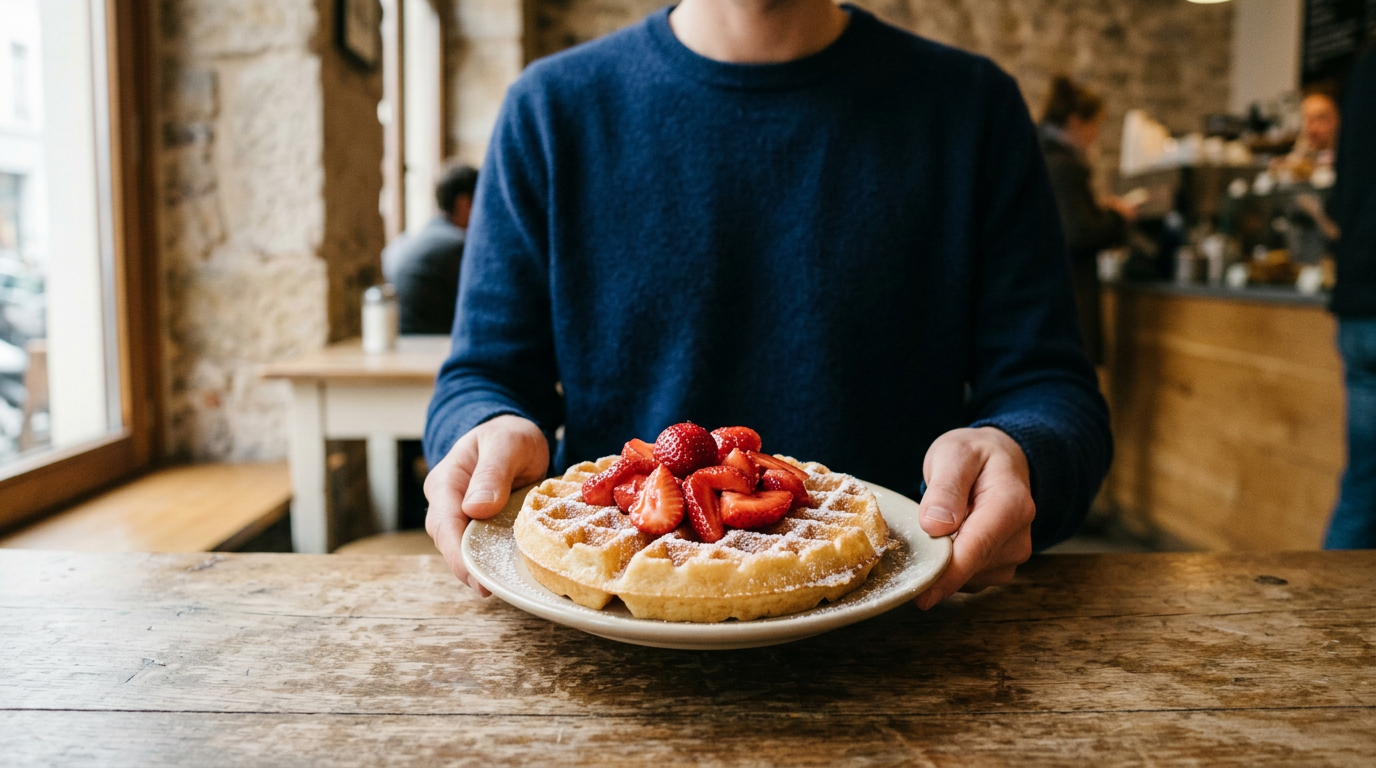
Finding an authentic vegan waffle Brussels tourists can enjoy without ethical compromise is surprisingly tricky in the home of the world's most famous pastry. If you arrive in the Belgian capital expecting every streetside aroma of caramelised sugar to stem from an animal-free batter, you will quickly hit disappointment. Traditional Belgian street kiosks around the Grand-Place rely heavily on dairy fats and chicken eggs to produce their golden grids, leaving unsuspecting plant-based diners with non-vegan snacks.
The Belgian capital has undergone a quiet culinary transformation over the last five years. According to Visit Brussels in 2024, the capital hosts more than 60 fully vegan and vegetarian certified dining venues. However, the waffle trade remains entrenched in historic guilds and quick-service tourist stalls. Avoiding common misconceptions about batter recipes, regional varieties, and preparation methods is essential to experiencing the city's finest plant-based confectionery.
Mistake 1: Assuming Street Carts Sell a Plant-Based Vegan Waffle Brussels Locals Eat
The primary error committed by visitors is walking up to neon-lit kiosks near Manneken Pis and assuming that batter is inherently neutral. Why it happens: the intoxicating smell of melting sugar masks the underlying animal fats. Most conventional vendors use mass-manufactured dry mixes containing skimmed milk powder, dried egg yolk, and sometimes pork lard or bovine tallow for authentic browning. Even when stall operators claim a waffle is 'dairy-free,' they rarely account for egg binders.
According to BE Vegan, traditional Belgian waffle recipes require up to 250 grams of butter per kilogram of flour. In traditional pastry making, butter imparts tender crumb structure while egg whites provide essential structural rise. Plant-based bakeries achieve identical textural crispness by replacing animal fats with deodorised organic coconut oil and unrefined sunflower oils, leavened using natural yeast rather than powdered albumins.
Mistake 2: Confusing Airy Brussels Waffles With Dense Liège Waffles
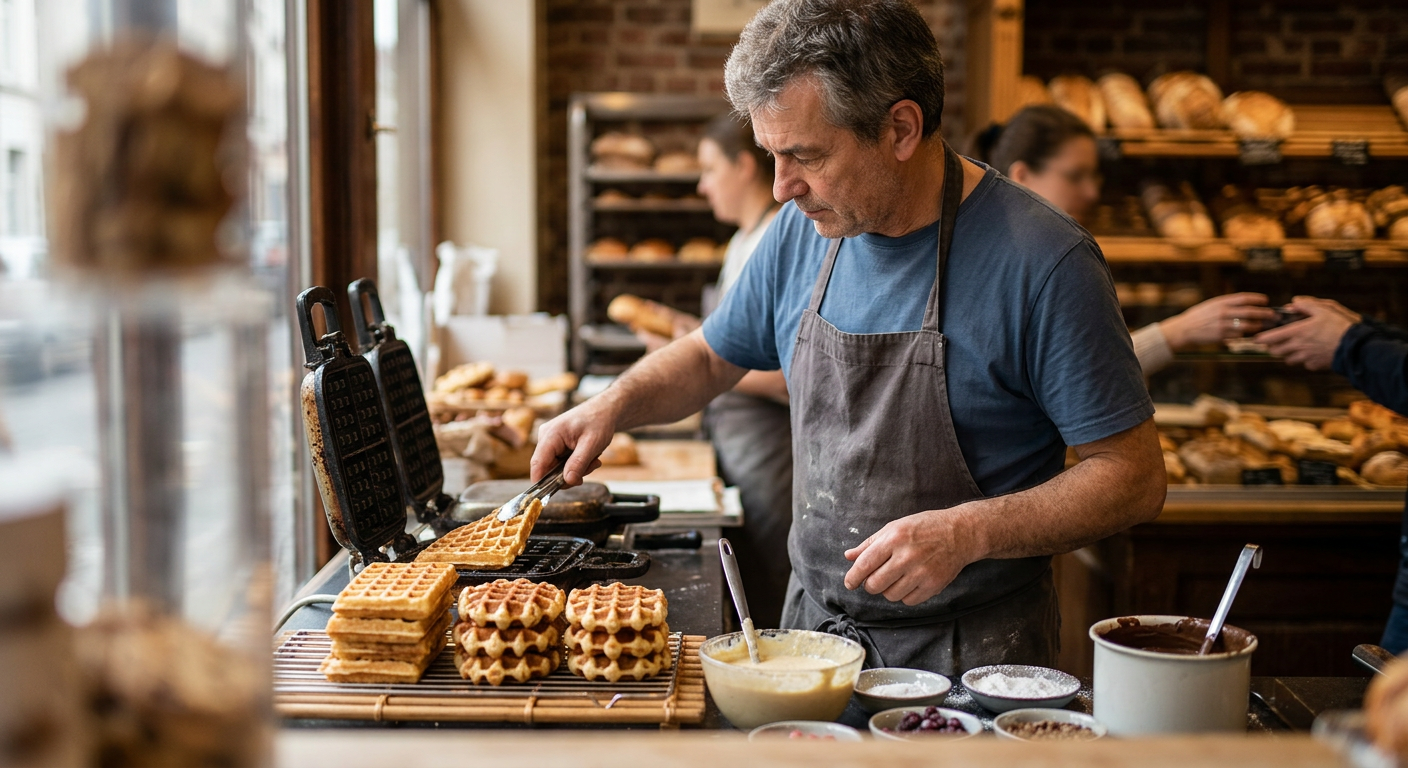
Belgian waffle culture is divided into two distinct culinary traditions, and ordering without understanding this distinction leads to disappointment. Why it happens: international menus often group every iron-pressed batter together under the umbrella term 'Belgian waffle.' In reality, the Brussels waffle (gaufre de Bruxelles) is a light, rectangular pastry made from a runny, aerated batter, whereas the Liège waffle (gaufre de Liège) is an oval, chewy brioche dough packed with crunchy pearl sugar nibs.
Traditional Liège waffles rely on brioche dough enriched with dairy butter and chicken eggs. Making a vegan Liège waffle requires a yeast-leavened dough that can withstand heavy kneading while suspending sugar crystals without dairy fats. The Brussels variety relies on high heat and aeration to achieve paper-thin, shatteringly crisp walls. If you want a light afternoon snack, seek out a dairy-free Brussels waffle; if you want a dense, caramelised street pastry, seek an artisan vegan Liège waffle.
Estimated Carbon Footprint of Waffle Batters
Source: University of Oxford study on ingredient environmental footprints, 2023.
Mistake 3: Overlooking Dairy in Speculoos Sauces and Chocolate Toppings
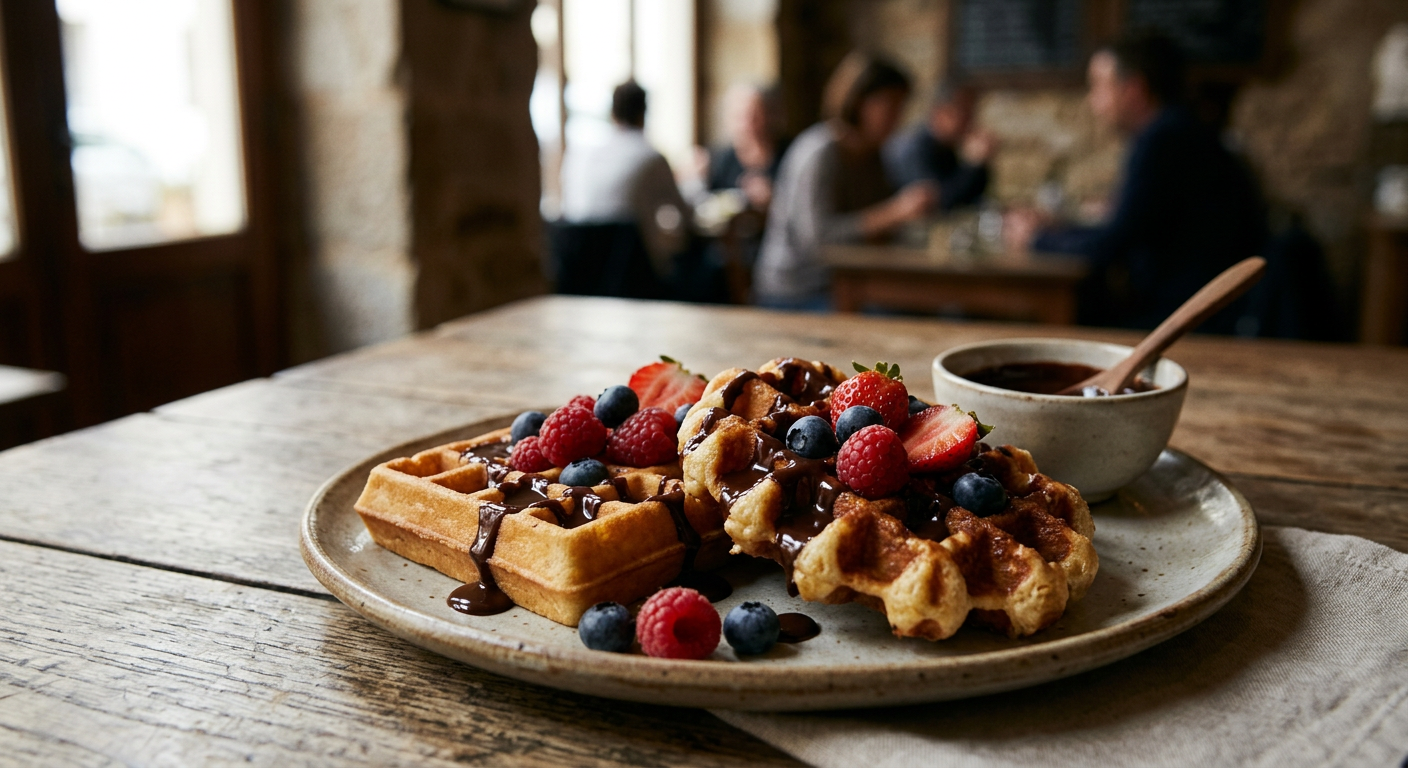
Even when you source an accidental or intentionally plant-based waffle iron, garnish choices introduce unexpected animal derivatives. Why it happens: tourists assume that dark chocolate drizzles and fruit syrups are naturally vegan. In Belgian confectionery, chocolate dispensers at standard stalls frequently dilute couverture with dairy butter, whole milk powder, or condensed milk to keep the sauce glossy and liquid at ambient temperatures.
Similarly, while traditional Lotus Biscoff speculoos spread is famously plant-based, proprietary warm spiced biscuit sauces prepared in-house by dessert stalls often incorporate dairy-derived caramel, butterscotch bases, or animal-derived emulsifiers. Whipped cream is almost universally dairy based unless a café explicitly notes soy or oat cream preparations.
“A certified batter means little if the chocolate drizzle cascades across the pastry with hidden dairy cream and milk fats.”
Mistake 4: Searching Only Central Alleys for a Vegan Waffle Brussels Bakeries Master
Sticking solely to the pedestrian corridors surrounding the Royal Galleries and Grand-Place cuts you off from the city's most inventive plant-based bakeries. Why it happens: the tourist core is dominated by high-volume, low-margin souvenir vendors catering to quick throughput rather than artisan culinary craft. Independent bakers prioritising organic grains, cold-pressed oils, and ethical sourcing establish their ateliers in surrounding residential and creative districts.
The European Vegetarian Union reported in 2023 that plant-based food service options in Belgium expanded by 27 percent over three years. Much of this growth thrives in dynamic neighbourhoods like Saint-Gilles, Ixelles, and the Saint-Géry quarter. Venturing slightly beyond the central ring road rewards travelers with peaceful brunch settings where waffles are treated as artisanal culinary creations rather than pre-made tourist fuel.
Mistake 5: Neglecting Belgian Bakery Schedules and Payment Customs
Nothing dampens an excursion faster than arriving at an artisan vegan bakery only to find shuttered doors or an incompatible card terminal. Why it happens: unlike generic city-centre souvenir kiosks that stay open seven days a week from morning until midnight, artisan vegan establishments operate on classic European artisanal schedules. Many close entirely on Mondays and Tuesdays or conclude batter service by early afternoon once daily dough batches sell out.
A 2023 University of Oxford analysis confirmed plant-based baked goods cut dietary greenhouse gas footprints by up to 50 percent. Artisan kitchens bake fresh daily in limited quantities to minimise food waste and energy overhead. Furthermore, smaller Belgian operators occasionally rely on local debit networks (Bancontact) or mobile applications, making certain foreign credit cards cumbersome to process without cash backup.
Peak Operating Hours of Artisan Vegan Tearooms in Brussels
Compiled from opening schedule data of independent plant-based eateries in central Brussels, 2024.
The Ultimate Plant-Based Waffle Checklist in Brussels
Before you set out on your pastry pilgrimage, run through this practical checklist to guarantee an exceptional, cross-contamination-free Belgian dessert experience.
- Select your desired variety: Choose Brussels style for airy lightness or Liège style for chewy pearl-sugar indulgence.
- Check dedicated iron usage: Ensure the shop employs dedicated plant-based irons rather than scraping off dairy residue between batches.
- Inspect topping labels: Confirm chocolate ganache contains zero whey powder, milk fat, or dairy emulsion.
- Confirm operating hours: Verify the bakery is not closed on typical rest days (Mondays and Tuesdays).
- Carry digital payment and euros: Keep a backup contactless card or small euro cash notes handy for small artisan counters.
With thoughtful planning, experiencing Belgium's legendary waffle craft requires no compromise on ethics. By bypassing generic souvenir stands and patronising dedicated vegan creators across Brussels, you support independent pastry innovation while savouring Europe's sweetest culinary traditions.
Frequently asked questions
Can I find vegan waffles at standard street kiosks in Brussels?
Where is the best place to get a vegan waffle in Brussels?
What is the difference between a Brussels waffle and a Liège waffle?
Are Biscoff speculoos waffle toppings in Brussels always vegan?
Do vegan waffle shops in Brussels cater to gluten-free diets?
How much does a vegan waffle typically cost in Brussels?
Sources & further reading
- Visit Brussels Official Tourism Agency (2024 Report) — visit.brussels
- European Vegetarian Union (EVU) Market Growth Analysis (2023) — euroveg.eu
- BE Vegan Association Dietary Guidelines and Bakery Standards — bevegan.be
- Poore & Nemecek, Reducing Food's Environmental Impacts Through Producers and Consumers, University of Oxford — nature.com