From under-represented traditionsSix more dishes the world already knows.
Plant-based cooking is not a recent invention. The following recipes come from food traditions that have been feeding people on plants for centuries or millennia. Each description doubles as a loose method — enough to cook from, not a rigid instruction set.
Amharic / Tigrinya·Ethiopia
Misir Wat
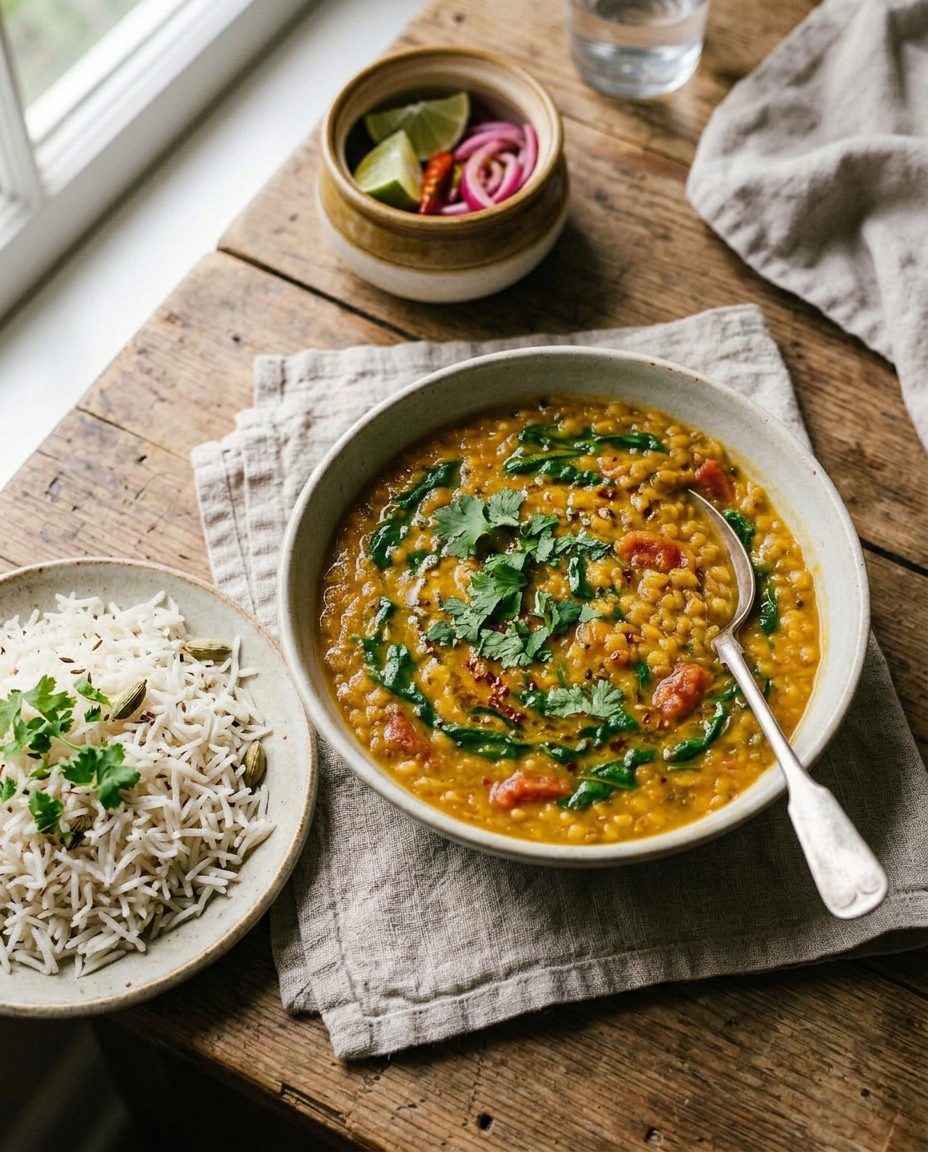
Misir Wat is the red lentil stew at the heart of Ethiopian cooking — slow-cooked with berbere spice blend, caramelised onion, and niter kibbeh (clarified butter, which can be replaced with good olive oil for a fully plant-based version). Onions go in dry first, cooked down until almost caramelised before any fat is added — this is the technique that builds depth. Berbere, garlic, and ginger go in next, then washed red lentils and enough water to cook them through. The result should be thick, almost paste-like, eaten with injera or bread. It is one of the most flavourful dishes in any food tradition and accidentally one of the most nutritionally complete.
Wolof / French·Senegal
Thiéboudienne (plant version)
Thiéboudienne is the national dish of Senegal — traditionally made with fish, but the vegetable version, called Thiébou Yapp bu Weex by some cooks, is equally beloved. Long-grain broken rice is cooked in a tomato and onion base enriched with tomato paste, then layered with whatever root vegetables and squash are in season: sweet potato, cassava, turnip, aubergine, cabbage. The rice absorbs the tomato base as it cooks, turning a deep warm orange. The technique requires patience but little technique: the vegetables go in first to flavour the broth, the rice goes in last to absorb it.
Japanese·Japan
Kenchin-jiru
Kenchin-jiru is a Buddhist temple soup from the Kenchoji monastery in Kamakura — fully plant-based by tradition, developed by monks following a vegetarian code. Root vegetables (burdock, taro, daikon, carrot) and firm tofu are sautéed in sesame oil until the tofu is golden at the edges, then simmered in kombu dashi with soy sauce and mirin. The result is warming and austere in the best sense — deeply flavoured without relying on richness. Konnyaku (konjac) is often added for texture. This soup has been made in essentially the same form since the 13th century.
Spanish / Nahuatl·Mexico
Tinga de Garbanzo
Tinga is traditionally a shredded chicken dish from Puebla, but the garbanzo version has become a staple of Mexican home cooking for plant-based eaters. Chipotle peppers in adobo, tomatoes, and onion form a smoky sauce; drained and rinsed chickpeas go in and cook until they absorb the sauce and begin to break down slightly at the edges. Served in warm corn tortillas with avocado, pickled onion, and salsa, this is one of the most approachable and satisfying plant-based dishes for people who are new to eating this way — it is familiar in flavour and deeply satisfying.
Arabic·Lebanon / Levant
Mujadara
Mujadara is one of the oldest recorded dishes in the world — a mixture of lentils and bulgur wheat or rice topped with deeply caramelised onions that are cooked low and slow until almost jammy. The dish requires almost no technique but a great deal of patience for the onions, which should take 30–45 minutes over medium-low heat to reach the right depth. Served at room temperature with yogurt (or tahini for a fully plant-based version) and a salad of chopped parsley and lemon, it is simultaneously the simplest and most satisfying thing in the Levantine repertoire.
Indonesian / Javanese·Indonesia
Gado-gado
Gado-gado is an Indonesian salad of cooked and raw vegetables — boiled potato, blanched green beans, bean sprouts, cucumber, and often hard-cooked egg (omit for vegan) — brought together by a peanut sauce made from ground roasted peanuts, palm sugar, garlic, lime, and chilli. The sauce is the dish: complex, sweet, sour, and spicy simultaneously. Every region of Indonesia has its own version of the peanut sauce, ranging from smooth to chunky and from mild to very hot. It is served at room temperature and is one of the most complete plant-based meals in terms of protein, fat, and carbohydrate balance.