Buy dry, cook big
Dry beans and lentils are half the cost of canned. Batch-cook 2 kg on Sunday, freeze in portions.
Skip the pricey meat analogues. A pantry of staples, a $30 weekly shop, and a menu that actually keeps you full — with price-per-protein tables you can screenshot.
| Staple | Typical price | Protein | How to use |
|---|---|---|---|
| Dry lentils / split peas | $1.20/lb | 23 g / 100 g dry | Cook in 20 min. Base for soups, dals, taco filling. |
| Dry chickpeas / black beans | $1.30/lb | 19 g / 100 g dry | Soak overnight or pressure cook. Half the cost of canned. |
| Rolled oats | $0.90/lb | 13 g / 100 g | Breakfast, savory porridge, oat milk (blend 1 c + 4 c water). |
| Brown rice | $1.10/lb | 7 g / 100 g | Buy in 10-lb bags. Cook a whole batch and freeze in 1-cup portions. |
| Peanut butter | $3.00/lb | 25 g / 100 g | Fat, protein and calories in one jar. Look for 100% peanut ingredients. |
| Extra-firm tofu | $2/block | 17 g / block | Press, marinate, bake. Cheapest complete protein you can pan-fry. |
| Frozen mixed vegetables | $1.50/lb | — | Peak-season nutrition at half the fresh-produce price. |
| Bananas & apples | $0.60/lb | — | Cheapest year-round fruit almost everywhere on Earth. |
USD, US-average retail prices, bulk-bin basis. Meat prices exclude bones and cooking-loss shrinkage.
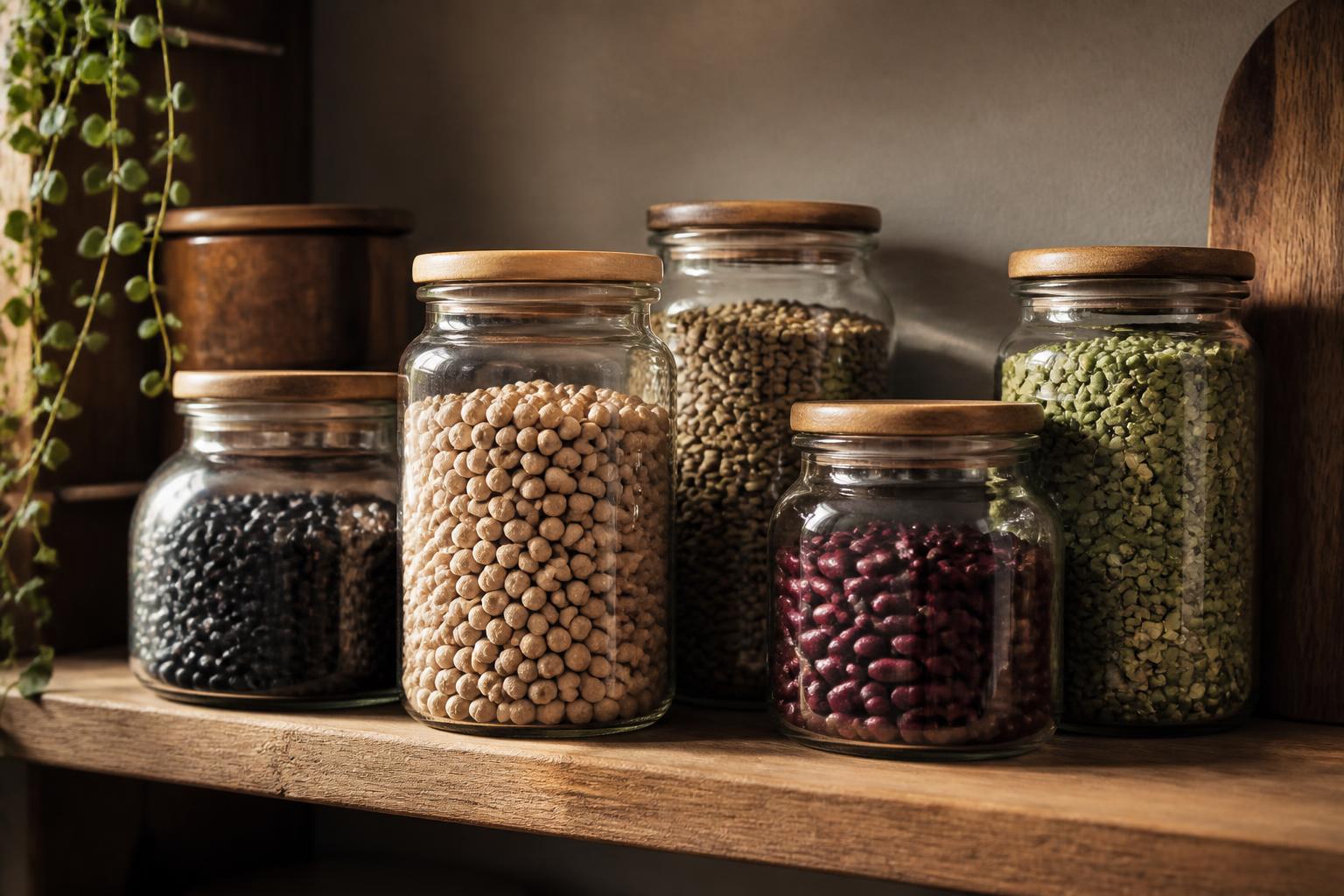
Dry beans and lentils are half the cost of canned. Batch-cook 2 kg on Sunday, freeze in portions.
Produce, bulk bins, frozen. Skip aisles of branded 'vegan' snack foods — they're where budget goes to die.
A big pot of tomato-lentil sauce becomes pasta Monday, stuffed peppers Tuesday and shakshuka Wednesday.
Only if you rely on branded meat and cheese analogues. A whole-food plant-based shop built on beans, rice, oats, potatoes, seasonal produce and frozen vegetables consistently costs less than the average omnivore diet in every major cost-of-living study since 2019.
Dry lentils and split peas — about $0.06–0.10 per 10 g of protein when bought in bulk. Tofu, canned beans, peanut butter and rolled oats are close behind.
Batch one grain, one bean and one sauce every Sunday, then rotate three vegetables through the week. Total active time is under 45 minutes for 15 meals.
Yes — often more so, since they're picked and blast-frozen at peak ripeness. Frozen berries, peas, spinach and broccoli are typically half the price of fresh.
The cost question, answered with receipts
The belief that eating plants costs more comes from comparing the wrong shelves: packaged meat analogues against supermarket mince, rather than the foods that actually carry a plant-based diet. Analyses of national food-price data repeatedly find that a whole-food plant-based basket lands below an average omnivorous one, with the gap widening as you cook more from dry goods.
Protein is the most expensive macronutrient in almost every cuisine, and the price gap between plant and animal protein is large. Dry lentils, beans, chickpeas, oats and peanuts deliver protein at a small fraction of the cost of meat, fish or cheese per equivalent gram. Because protein is where most food budgets concentrate, replacing that one category does most of the work — grains, vegetables and fruit change very little.
Bills rise when meat is swapped one-for-one for branded analogues, ready meals, protein powders, nut butters, plant milks and speciality flours. These are convenience products priced like convenience products. They are useful during a transition and unnecessary afterwards. If your spend increased, look at the packaged shelf rather than the diet.
The cost difference between cooking dry chickpeas and buying tinned ones is roughly threefold; between cooking rice and buying microwave pouches, roughly fivefold. None of this requires skill, only planning: soaking, batch-cooking and freezing turn cheap raw ingredients into convenience you already paid for.
Households throw away a substantial share of what they buy, and fresh produce is the most-wasted category. Shelf-stable staples do not spoil, which means a plant-based store cupboard tends to waste less money than a fridge-led shop. Freezing bread, herbs, cooked grains and ripe fruit removes most of the remaining loss.
In countries where legumes, rice, wheat and seasonal vegetables are the culinary base, plant-based eating is unambiguously cheaper. In places where subsidies keep animal products artificially low at the till, the retail gap narrows — while the public cost of those subsidies remains, simply paid in taxes rather than at the checkout.
Indicative retail prices for dry or unprepared goods; local prices vary substantially. Use the ranking, not the absolute values.
| Food | Typical cost | Protein density | Notes |
|---|---|---|---|
| Dry lentils | Very low | ~25 g / 100 g dry | No soaking, cooks in 20–25 minutes |
| Dry beans & chickpeas | Very low | ~21 g / 100 g dry | Cheapest when cooked in batches and frozen |
| Rolled oats | Very low | ~13 g / 100 g | Also the cheapest breakfast per calorie |
| Peanuts / peanut butter | Low | ~25 g / 100 g | Watch added oils and sugar in cheap brands |
| Tofu | Low–moderate | ~8–16 g / 100 g | Price falls sharply in Asian grocers |
| Seitan (from flour) | Low | ~25 g / 100 g | Made from bread flour at home for very little |
| Eggs | Moderate | ~13 g / 100 g | Price highly volatile with avian influenza outbreaks |
| Chicken breast | High | ~31 g / 100 g | Roughly 5–10× lentils per gram of protein |
| Beef mince | Very high | ~26 g / 100 g | The single most expensive routine protein |
National retail price indices · USDA FoodData Central · supermarket unit pricing
Each step is independent; doing two of them is already noticeable.
A large bag of lentils or dried beans covers weeks of dinners and costs less than two portions of meat.
Cook a kilogram of legumes at once, freeze in portions, and you have tinned convenience at raw-ingredient prices.
Spices, rice, pulses, tahini and tofu are routinely two to four times cheaper in ethnic grocers than in mainstream supermarkets.
Allow yourself one or two convenience items a week rather than eliminating them; the aim is a floor for cooking, not purity.
Buy fresh produce for the first half of the week and frozen for the second. Frozen vegetables are nutritionally equivalent and never wasted.
Whole-food plant-based baskets are consistently found to cost less than average omnivorous baskets in high-income countries, largely because plant protein is far cheaper than animal protein. Diets built on packaged meat and dairy analogues can cost more.
Dry lentils and dry beans, by a wide margin. They also supply fibre, iron, folate and potassium, which meat does not.
Anchor on oats, rice or another local grain, one dry legume, frozen vegetables, a cheap fat such as rapeseed or peanut oil, and iodised salt. Add a B12 supplement, which costs a few cents a week.
As a transition tool and an occasional convenience, yes. As a daily staple they are expensive and usually higher in salt than the foods they imitate.
Organic typically adds 20–50% to the bill for benefits that are contested in nutritional terms. If budget is the constraint, conventional produce eaten daily beats organic produce eaten rarely.
Not inherently. Children eat the same staples in smaller portions. The cost pressure comes from packaged snacks and branded lunch items, which are the same pressure in any diet.
Indicative supermarket prices; ratios hold up better than absolute figures.
Composite of retail price surveys — check your local prices.
A stocked pantry is what makes cheap cooking possible on a tired evening. Dry lentils, rice, oats, pasta, tinned tomatoes, peanut butter, onions, garlic, stock powder, and a handful of spices cover dozens of meals. Buy these in the largest size you will realistically use before it goes stale, and buy them once rather than weekly.
Cook a big pot of beans and a big pot of grain at the start of the week. Monday it is a bowl with roasted vegetables, Wednesday it is a soup with tinned tomatoes, Friday it is filling for wraps. Same base, three dinners, one round of washing up.
Dry legumes cost roughly a third of tinned by weight of cooked food. Soak overnight, boil hard for ten minutes, simmer until soft, freeze in portions. If you only make one change, make it this one.
Whatever is in season locally is cheapest and best. Out of season, frozen wins on price, nutrition and waste. Reduced-price shelves near closing time are how many households eat well on very little.
Vegan sausages, cheeses and ready meals are useful for transition and for guests, but they are the expensive shelf. Using them once a week rather than daily is usually the single biggest line-item change on a receipt.
Eating plant-based is expensive.
Analyses across high- and low-income countries find plant-based diets built on whole foods are typically cheaper than diets containing meat — often by a quarter or more.
You need speciality shops.
Beans, rice, oats, frozen vegetables and peanut butter are in every ordinary supermarket.
Cheap food means boring food.
Spices, acid and fat are what make staples taste different. They cost pennies per meal.
Batch one component, not a full meal. Cooked grain plus tinned beans plus a jar of sauce is a five-minute dinner and still far cheaper than a ready meal.
Eating more plants matters far more than whether they are organic. If money is tight, buy conventional produce and more of it.
Scale the base recipes and keep one familiar carbohydrate on the table at each meal. Familiarity does more for acceptance than novelty.