Tool · Weekly menu builder

Vegan meal planner

A balanced 7-day menu in one click. Reshuffle until you like it, then export your shopping list.
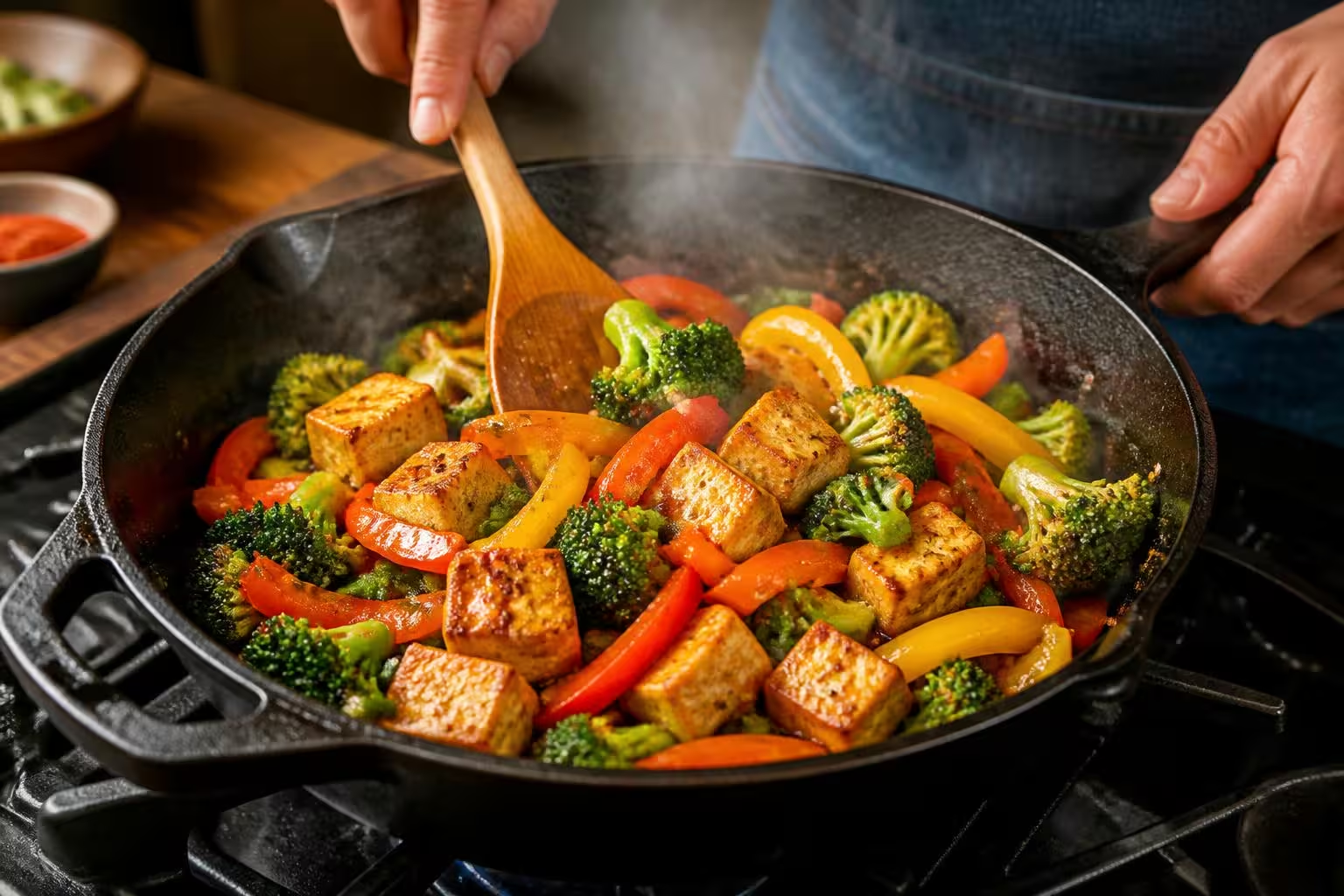
Colourful stir-fry cooking
2000 kcal/day (scaled)
92 g protein/day
2000
kcal / day
target 2000
92g
g protein
1.31 g/kg (70 kg)
53
ingredients
whole-food, low-waste

Mon

1859 kcal · 94 g P
  • Breakfast: Tofu scramble on sourdough
  • Lunch: Chickpea salad wrap
  • Dinner: Red lentil dal with basmati
  • Snack: Roasted chickpeas

Tue

2041 kcal · 100 g P
  • Breakfast: Berry-soy smoothie bowl
  • Lunch: Lentil & vegetable soup + bread
  • Dinner: Pasta with tempeh bolognese
  • Snack: Apple + peanut butter

Wed

2070 kcal · 83 g P
  • Breakfast: Chickpea flour pancakes
  • Lunch: Bean burrito with rice & guac
  • Dinner: Chickpea curry with roti
  • Snack: Trail mix

Thu

2060 kcal · 92 g P
  • Breakfast: Overnight oats with peanut butter & banana
  • Lunch: Buddha bowl (quinoa, chickpeas, tahini)
  • Dinner: Tofu stir-fry with rice
  • Snack: Hummus + carrots

Fri

1859 kcal · 94 g P
  • Breakfast: Tofu scramble on sourdough
  • Lunch: Chickpea salad wrap
  • Dinner: Red lentil dal with basmati
  • Snack: Roasted chickpeas

Sat

2041 kcal · 100 g P
  • Breakfast: Berry-soy smoothie bowl
  • Lunch: Lentil & vegetable soup + bread
  • Dinner: Pasta with tempeh bolognese
  • Snack: Apple + peanut butter

Sun

2070 kcal · 83 g P
  • Breakfast: Chickpea flour pancakes
  • Lunch: Bean burrito with rice & guac
  • Dinner: Chickpea curry with roti
  • Snack: Trail mix

Shopping list

  • almonds
  • apple
  • avocado
  • banana
  • basmati rice
  • black beans
  • broccoli
  • brown lentils
  • brown rice
  • carrot
  • carrots
  • cashews
  • celery
  • chia
  • chickpea flour
  • chickpeas
  • coconut milk
  • dark chocolate
  • extra-firm tofu
  • frozen berries
  • ginger
  • granola
  • hemp seeds
  • hummus
  • kala namak
  • kale
  • lettuce
  • olive oil
  • onion
  • peanut butter
  • pita
  • quinoa
  • raisins
  • red lentils
  • rice
  • rolled oats
  • roti
  • salsa
  • sourdough
  • soy milk
  • soy sauce
  • spices
  • spinach
  • sweet potato
  • tahini
  • tempeh
  • tomato
  • tomato sauce
  • tortilla
  • turmeric
  • vegan mayo
  • whole-wheat pasta
  • whole-wheat wrap

Key takeaways

  • A weekly template beats daily willpower — decide once, eat well seven times.
  • Batch-cook one grain, one legume, one sauce and one roast tray on Sunday: five weekday dinners fall out of it.
  • Aim for half the plate produce, a quarter whole grains, a quarter legumes or tofu — protein takes care of itself.
  • Plan two 'safety-net' meals (pasta, stir-fry) for the nights the plan collapses.

Share this page

Share on XShare on FacebookShare on WhatsApp

Frequently asked questions

Plan five dinners, assume two will be leftovers, takeout or improvisation. Over-planning is the number-one reason weekly plans fail by Wednesday.

Keep reading

Planning method

Building a week of plant-based meals that actually happens

Most abandoned dietary changes fail on logistics rather than conviction. A plan works when it reduces the number of decisions made while hungry, and when the shopping list matches the recipes exactly.

The three-base system

Cook one grain, one legume and one sauce in bulk at the start of the week — for example brown rice, a pot of seasoned lentils and a tahini-lemon dressing. Those three components recombine into at least five distinct meals with fresh vegetables and different spicing. The approach removes the largest single friction point, which is starting a recipe from zero at seven in the evening.

Protein spread across the day

Aim for 20–30 g of protein per main meal rather than one large evening dose; muscle protein synthesis responds better to distribution and it makes the total far easier to hit. Practical anchors: tofu 17 g per 150 g, tempeh 19 g per 100 g, cooked lentils 18 g per cup, seitan 25 g per 100 g, soy milk 8 g per cup, and 6 g in two slices of wholemeal bread.

Cover the four watch-list nutrients

B12 requires a supplement or reliably fortified foods — this is non-negotiable and not a matter of clever meal planning. Vitamin D matters in winter above roughly 37° latitude. Algal oil covers DHA and EPA. Iodine comes from iodised salt or a supplement, since plant milks are usually not fortified with it. Iron and zinc are covered by legumes and seeds when eaten with a source of vitamin C and away from tea and coffee.

Plan the failure modes

Every plan meets a late meeting, an unexpected guest and a day with no energy. Build in one deliberately trivial meal — beans on toast, a jar of sauce with pasta and frozen peas — and keep the ingredients permanently stocked. A plan with a designated collapse option survives; a plan of seven ambitious dinners does not.

A worked week

Batch-cook Sunday; each dinner reuses at least one prepared base.

DayMain mealCore proteinApprox. protein
MondayLentil bologneseRed lentils + walnuts28 g
TuesdayTofu stir-fry with riceFirm tofu26 g
WednesdayChickpea curryChickpeas + soy yoghurt24 g
ThursdayBlack bean chilliBlack beans + rice27 g
FridayTempeh tacosTempeh30 g
SaturdayPeanut noodle bowlEdamame + peanut25 g
SundayRoast traybake + hummusButter beans22 g

Protein estimates from USDA FoodData Central for typical portions.

Setting up your week

  1. 1

    Pick three dinners, not seven

    Repeat each roughly twice. Variety across weeks beats variety within a week for both cost and adherence.

  2. 2

    Write the shopping list from the recipes

    Not from memory. Missing one ingredient is the most common reason a planned meal turns into a takeaway.

  3. 3

    Batch on the quietest day

    Ninety minutes of grains, legumes and one sauce removes about four hours of weeknight cooking.

  4. 4

    Freeze two portions every week

    Within a month you have a rotating emergency shelf that removes the collapse risk entirely.

Stock list

Always in the cupboard

  • Dried and tinned legumes: lentils, chickpeas, black beans, butter beans.
  • Grains: rice, oats, pasta, couscous.
  • Flavour base: tinned tomatoes, stock, soy sauce, tahini, peanut butter, nutritional yeast.
  • Frozen: peas, spinach, edamame, mixed berries.

Common planning mistakes

  • Planning meals you have never cooked before on a weeknight.
  • Relying entirely on fresh produce that spoils by Thursday.
  • Skipping breakfast protein and trying to make it up at dinner.
  • Assuming B12 will come from food without checking fortification labels.

Planning questions

How much does a week like this cost?

Built on dried legumes, grains and seasonal vegetables it is typically cheaper than the omnivorous equivalent — legumes are among the cheapest protein sources available anywhere. Costs rise sharply if the plan leans on meat analogues and pre-prepared items.

Will I get enough protein without supplements?

Yes, if calories are adequate and legumes or soy appear at most meals. Protein powder is a convenience for athletes, not a requirement.

Do I need to combine proteins at each meal?

No. The 'complementary protein' rule from the 1970s was retracted decades ago. Eating a range of plant foods across the day covers all essential amino acids.

What about children?

The same principles apply with higher energy density: nut butters, avocado, full-fat soy products and more frequent meals. B12 and vitamin D supplementation matters more, not less.

How do I handle a household that isn't plant-based?

Build meals with a shared base and a divergent topping — the same chilli, one pot, with cheese or soured cream added at the table rather than cooked in.

Sources

  • Academy of Nutrition and Dietetics (2016). Vegetarian diets position paper.
  • USDA FoodData Central.
  • NHS — The vegan diet and B12 guidance.
  • Mangels, Messina & Messina — The Dietitian's Guide to Vegetarian Diets.