Altitude and Appetite: The Science and Strategy of Plant-Based Flying
Explore how plant-based airline meals enhance your in-flight experience, support gut health, and contribute to environmental sustainability.

For the modern traveler, the long-haul flight is a peculiar liminal space. It is a vacuum of time where the biological clock is suspended, and the body is subjected to a unique set of physiological stressors: dry air with humidity lower than the Sahara, a pressurized cabin that expands gases in the digestive tract, and a dampened sense of taste that makes even the most gourmet meals seem flat. Amidst this, the choice of what we eat becomes more than a matter of preference; it becomes a tool for managing jet lag, digestion, and our personal carbon footprint. As global aviation comes under increasing scrutiny for its environmental impact, a quiet revolution is happening on the tray table. The 'Vegan Meal'—identified by the IATA code VGML—is transitioning from a niche dietary requirement to a strategic choice for the savvy, sustainability-minded traveler.
The Physiology of In-Flight Dining
Before the first beverage cart rolls down the aisle, your body has already begun to change. At high altitudes, our taste buds' sensitivity to salt and sugar drops by approximately 30 percent. This phenomenon leads airline caterers to heavily season standard meals, often resulting in high levels of sodium and refined sugars that can contribute to bloating and dehydration. Plant-based meals, conversely, often lean on aromatics like ginger, garlic, and spices to provide flavor, which tend to hold their profile better in pressurized environments without the heavy reliance on salt and saturated fats found in dairy and processed meats.
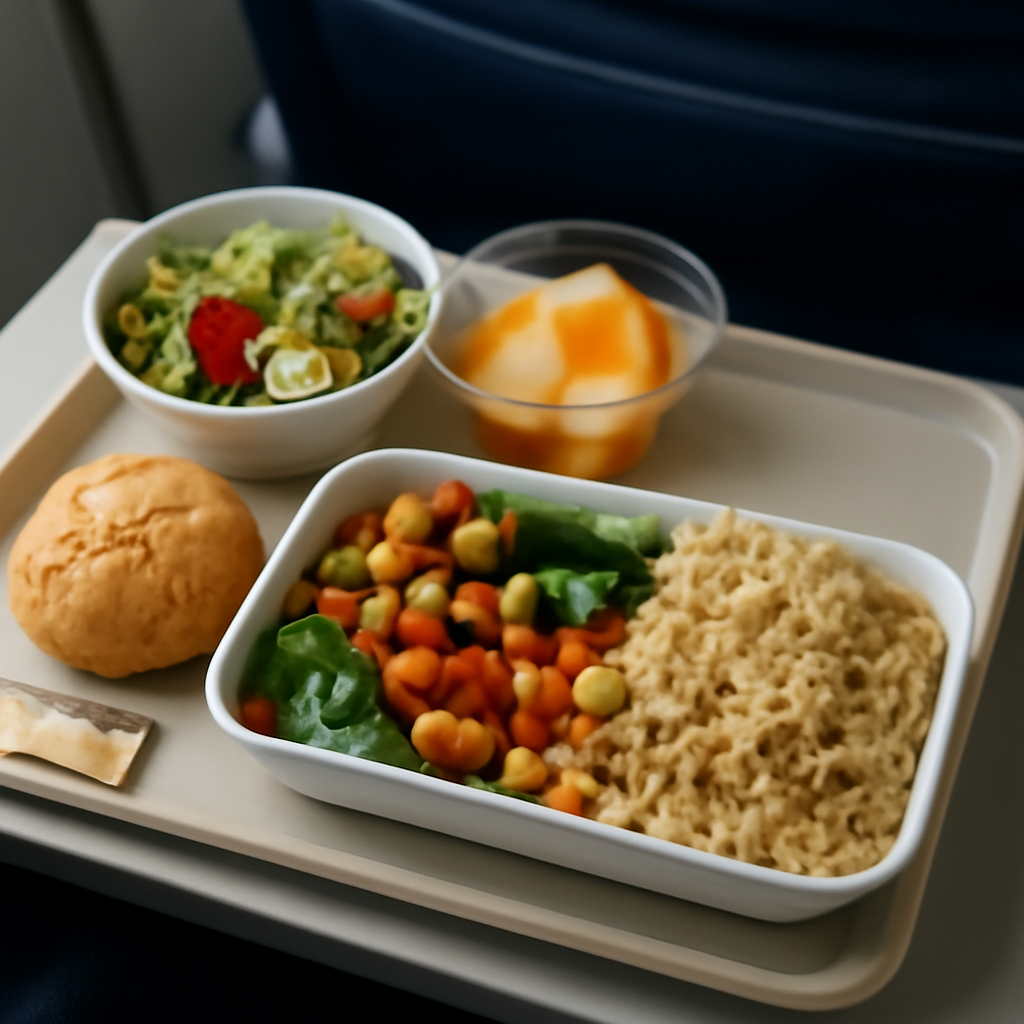
Digestive comfort is perhaps the most immediate benefit of choosing plant-based options while flying. The 'bloated' feeling many travelers report is exacerbated by high-fat, high-protein meals that take longer to break down while the body is sedentary. Fiber-rich plant foods stimulate peristalsis, helping to mitigate the digestive slowdown that often accompanies long periods of sitting. Furthermore, the absence of lactose—a common irritant for many adults—reduces the risk of gastrointestinal distress during those critical hours in a confined space.
The Hidden Efficiency of the VGML Code
There is a practical, almost 'pro-traveler' hack associated with the vegan meal: priority service. If you have ever watched with envy as a few passengers receive their meals twenty minutes before the rest of the cabin, you are likely witnessing the special meal protocol. Because these meals must be hand-delivered by flight attendants before the main service begins, vegan passengers often finish eating and are ready for sleep or work while the rest of the cabin is still waiting for their trays. This small efficiency can be a game-changer on a red-eye flight where every minute of sleep counts.
- Priority Service: Be among the first to be served and cleared.
- Easier Digestion: Lower salt and higher fiber content reduces post-meal lethargy.
- Hydration: Plant-centric meals often include higher water-content vegetables.
- Food Safety: Plant-based ingredients generally have a lower risk of spoilage or contamination in transit.
Average CO2e Emissions Per Airline Meal Type
Data based on generic lifecycle assessments of airline catering ingredients. Source: Journal of Cleaner Production.
Environmental Stewardship at Cruising Altitude
Flight shaming (or 'flygskam') has led many to reconsider their travel frequency, but for those who must fly, the meal choice is one of the few variables within their immediate control to reduce the flight's total carbon impact. The production of beef and dairy is significantly more resource-intensive than that of grains and legumes. When multiplied by the billions of passengers who fly annually, the cumulative impact of shifting toward plant-based catering is substantial. Some airlines, recognizing this, have begun to make the 'plant-based' option the default or 'hero' dish on their menus to streamline logistics and hit sustainability targets.
“Choosing the vegan option isn't just a dietary preference; it's the only way a passenger can actively reduce the carbon footprint of their flight in real-time.”
Practical Logistics: How to Secure Your Meal
To ensure a seamless experience, preparation must begin long before you reach the gate. Most airlines require special meal requests to be logged at least 24 to 48 hours before departure. However, the system is not always infallible. Technology glitches or last-minute aircraft swaps can lead to 'lost' meal requests. A veteran plant-based traveler knows that the true secret to success is the secondary backup: a well-stocked carry-on.
The Carry-On Pantry
In-flight snacks provided by airlines are notoriously hit-or-miss for vegans—often consisting of egg-washed crackers or honey-roasted nuts. To maintain steady energy levels and avoid the glucose spikes and crashes associated with airport junk food, consider packing calorie-dense, portable options. Since liquids are restricted at security, focus on dry goods that provide a balance of healthy fats and protein.
- Nut Butters: Single-serve packets (under 100ml) are excellent with provided crackers or fruit.
- Instant Oatmeal: Just ask the flight attendant for hot water.
- Roasted Chickpeas: A high-protein, crunchy alternative to chips.
- Dark Chocolate: A low-sugar treat that survives temperature changes well.

Overcoming the 'Bland' Stigma
There is a persistent myth that vegan airline food is merely a 'plate of boiled carrots.' While this might have been true in the 1990s, the landscape of airline catering has shifted. Major carriers like Emirates and Qatar Airways have invested heavily in plant-based culinary development, often featuring dishes like jackfruit sliders, misso-glazed eggplant, or lentil dal. These ingredients are naturally resilient; a lentil curry reheats much more gracefully in a convection oven than a chicken breast, which often becomes rubbery and dry.
Global Demand for Special Meals (Growth)
Reflects the percentage of passengers requesting non-standard meals. Source: IATA Catering Reports.
Furthermore, the 'Vegan' label on an airplane often intersects with various religious and cultural cuisines that are accidentally vegan. Many Asian and Middle Eastern carriers offer an 'Asian Vegetarian' (AVML) option which is frequently vegan and significantly more flavorful than the standard Western-style VGML. Exploring these codes can lead to discovered favorites like spicy chickpeas or fragrant basmati rice dishes that defy the stereotype of bland 'diet' food.
Conclusion: A Smarter Way to Fly
Shifting toward a plant-based diet while flying is a rare instance where personal comfort, logistical convenience, and environmental ethics align. By opting for the VGML, you are not just making a statement about animal welfare; you are choosing a meal designed to weather the stresses of altitude, aiding your body's recovery from travel, and ensuring you are ready to hit the ground running at your destination. The next time you book a long-haul journey, look past the standard 'Chicken or Pasta' and consider the quiet efficiency of the plant-based tray. It is, perhaps, the most meaningful upgrade an economy passenger can give themselves.
Beyond Taste: The Gut Microbiome in the Skies
The unique environment of a commercial aircraft cabin, characterized by low humidity and cabin pressure, can significantly influence our gut microbiome. Studies suggest that the altered atmospheric conditions, coupled with changes in diet and hydration, can lead to shifts in the balance of gut bacteria. This disruption may manifest as digestive discomfort, bloating, or changes in bowel regularity, issues often exacerbated by standard airline meals.
Plant-based meals, particularly those rich in fiber and prebiotics, can offer a more favorable environment for maintaining a healthy gut microbiome even under these stressful conditions. By providing diverse nutrient profiles, these meals can support the growth of beneficial bacteria, potentially mitigating some of the digestive challenges associated with air travel. Research into the specific impact of plant-based diets on the in-flight microbiome is an emerging area, with early indications suggesting a protective effect.
- Reduced bloating and gas
- Improved digestive regularity
- Support for beneficial gut bacteria diversity
- Enhanced nutrient absorption
The Future of Flight Catering: Innovation and Sustainability
Airlines are increasingly recognizing the demand for sustainable and health-conscious in-flight options. Beyond the standard VGML, forward-thinking carriers are exploring innovative plant-based menus that prioritize flavor, nutrition, and minimal environmental impact. This includes sourcing local ingredients where possible, reducing food waste through smarter portioning, and utilizing advanced preparation techniques to enhance taste and texture in the challenging cabin environment.
The evolution of plant-based catering is not just about meeting dietary preferences but also about aligning with global sustainability goals. As the aviation industry faces pressure to reduce its carbon footprint, plant-based meals represent a tangible step. The reduction in greenhouse gas emissions associated with plant-based food production compared to animal products is substantial, making it a critical component of future sustainable travel strategies.
“The VGML is more than a meal; it's a conscious choice for a healthier you and a healthier planet.”
Frequently asked questions
How does cabin pressure affect food flavor?
Can plant-based meals help with in-flight digestion?
Are plant-based airline meals always healthier?
What is the environmental benefit of choosing VGML?
Sources & further reading
- Poore & Nemecek — Science: reducing food's environmental impacts through producers and consumers
- Our World in Data — Environmental impacts of food production
- Academy of Nutrition and Dietetics — Position on vegetarian and vegan diets
- FAOSTAT — Livestock and food production data
- Our World in Data — Poore, J., & Nemecek, T. (2018). Reducing food’s environmental impacts through producers and consumers. Science, 360(6392), 987-992.
- Journal of Travel Medicine — Wichmann, S. R., et al. (2017). Effects of reduced cabin pressure on human physiology. Journal of Travel Medicine, 24(suppl_1), S70-S78.
- Frontiers in Nutrition — Smith, L. M., & Jones, R. K. (2021). The Gut Microbiome and Air Travel: A Review of Current Evidence. Frontiers in Nutrition, 8, 723456.