Tradições Vegetais Regionais

Receitas de cozinhas que sempre souberam

O veganismo não foi inventado aqui. Estes pratos alimentam famílias há séculos. Estamos simplesmente dando a eles a plataforma que merecem.

How the world has always cooked plants

Long before "vegan" was a word, most of the world was already feeding itself this way.

Plant cooking isn't a Western invention or a recent trend. It is the deep cuisine of most cultures — the everyday food, the festival food, the food of grandmothers. Lentil stews from the Levant, bean and corn dishes from Mesoamerica, rice and dal across South Asia, vegetable curries through East and West Africa, tofu and noodle traditions across East Asia. The recipes below are not substitutes. They are the originals.

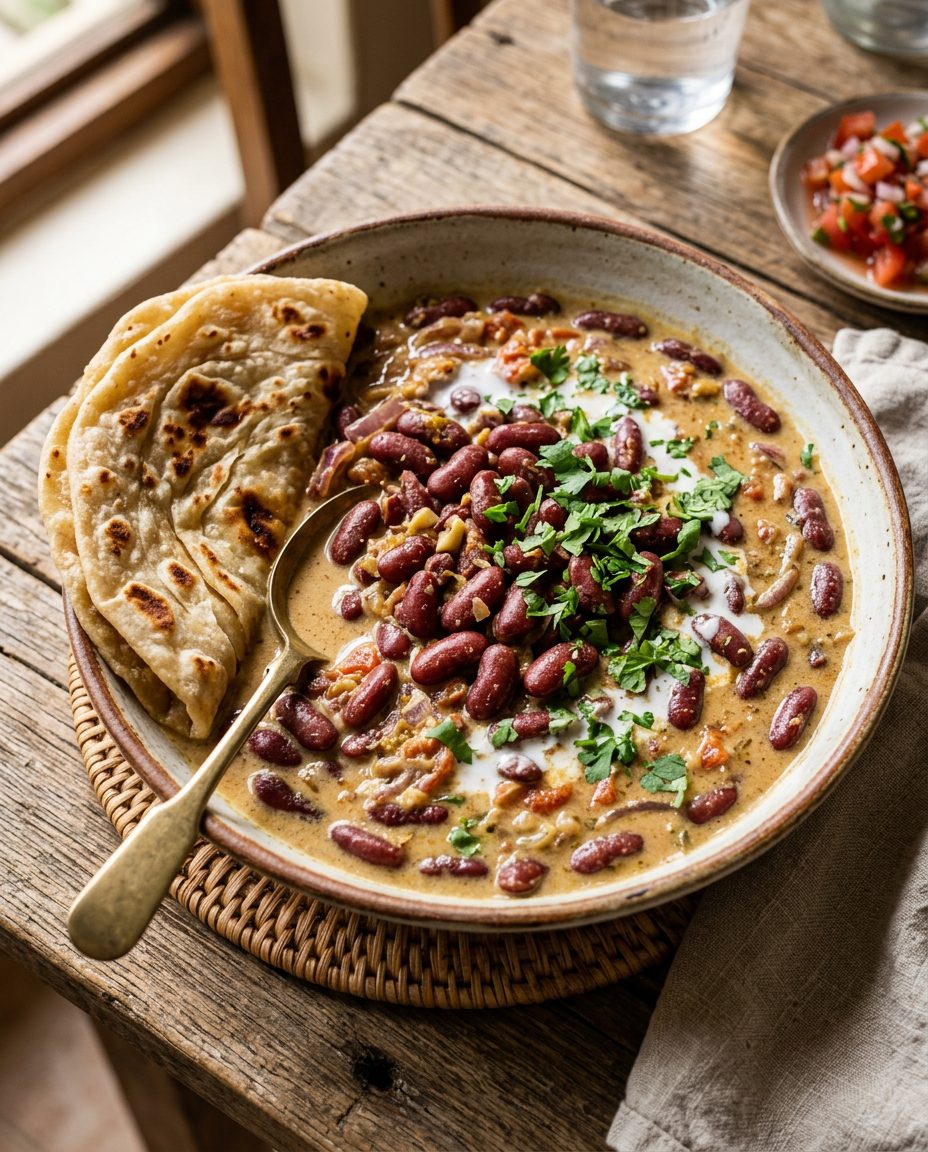
Feijão com leite de coco
Kiswahili·Quênia · Tanzânia

Feijão com leite de coco

Feijão cozido lentamente em leite de coco com cebola, tomate e um punhado de coentro fresco para finalizar. Servido com chapati ou ugali.

Ingredients

  • Cooked kidney beans
  • coconut milk
  • onion
  • tomato
  • garlic and fresh coriander; chapati or ugali to serve.

Method

  1. Soften chopped onion and garlic in a little oil; add chopped tomato and cook until it breaks down.
  2. Add fully cooked beans and coconut milk. Simmer gently, stirring, until the sauce coats the beans; add water if it becomes too thick.
  3. Season to taste, finish with coriander and serve with chapati made without dairy or with ugali.
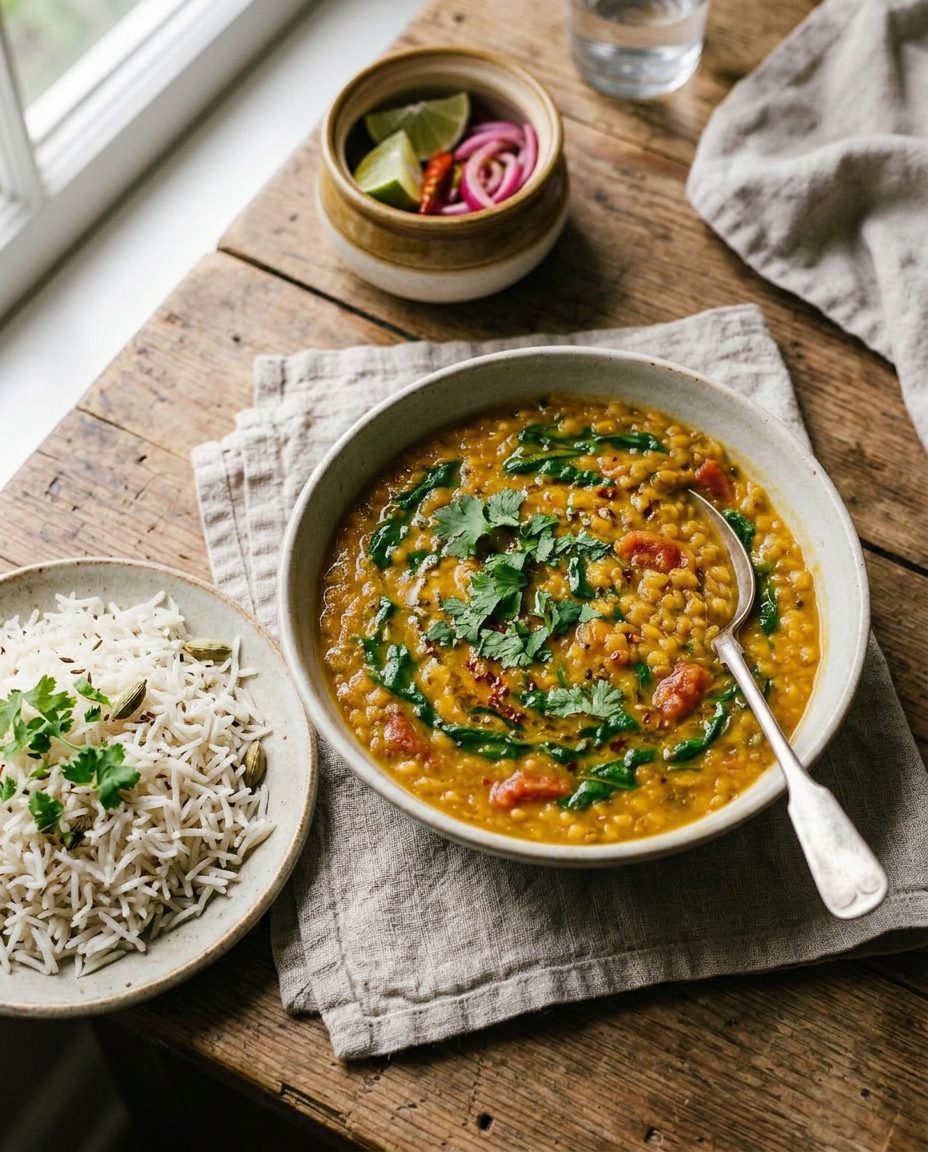
Red Lentil & Spinach Dal
বাংলা·Bangladesh

Red Lentil & Spinach Dal

Masoor dal cozido com alho, gengibre e um tempero de cominho e pimenta seca. O prato do dia a dia para milhões de pessoas.

Ingredients

  • Red lentils
  • spinach
  • onion
  • garlic
  • ginger
  • cumin seeds
  • dried chilli and rice to serve.

Method

  1. Rinse the lentils. Simmer in water until tender, adding more water if needed; stir occasionally to prevent sticking.
  2. Cook onion, garlic and ginger separately with cumin and chilli, then stir the tempering into the lentils.
  3. Add washed spinach and cook until wilted. Adjust the consistency and seasoning; serve with rice, without ghee or butter.
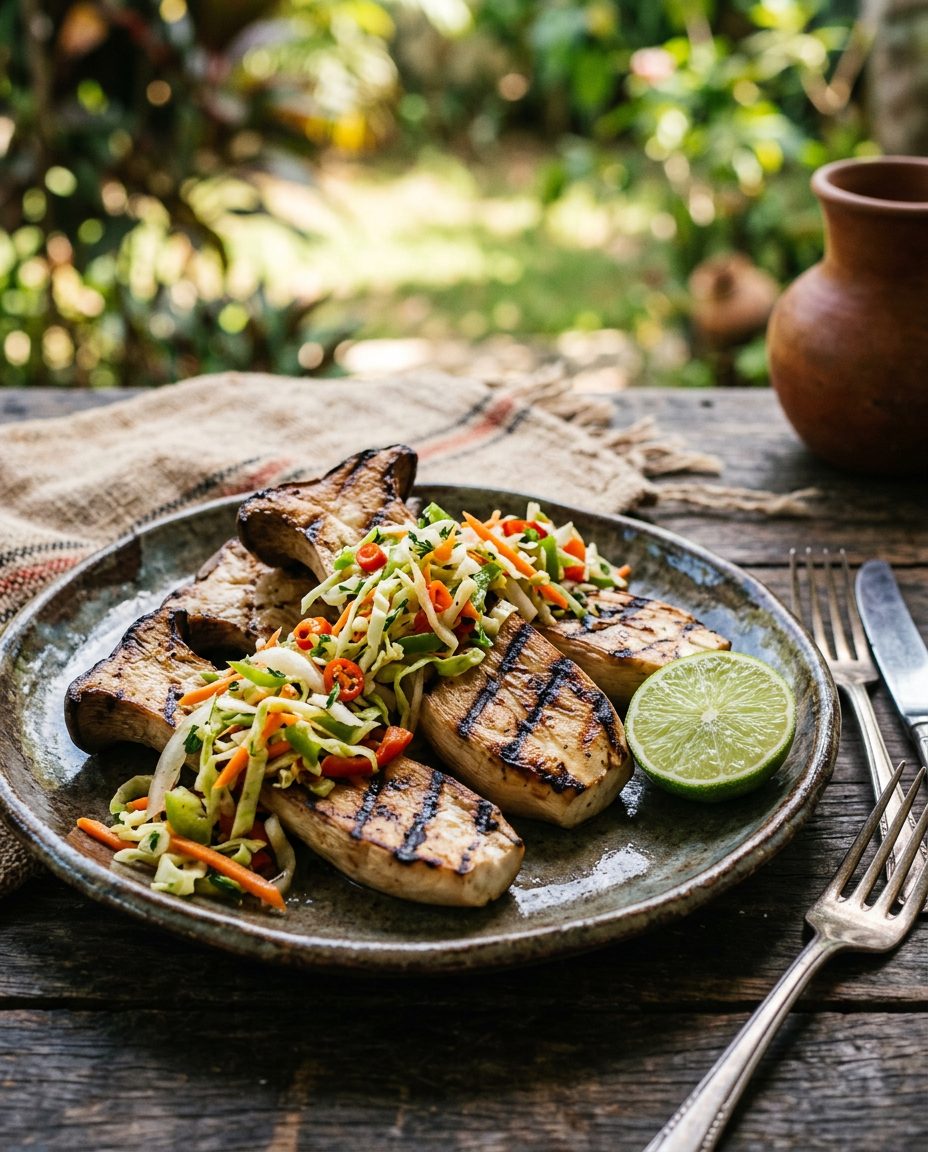
Pikliz & Grilled Mushrooms
Kreyòl·Haiti

Pikliz & Grilled Mushrooms

Cogumelos eryngii grelhados na brasa, cobertos com o vibrante e intenso pikliz que define a culinária haitiana.

Ingredients

  • King oyster mushrooms
  • shredded cabbage and carrot
  • onion
  • chilli
  • vinegar
  • lime and a little oil.

Method

  1. Combine finely shredded cabbage, carrot and onion with vinegar and chilli for a fresh pikliz-style slaw. Keep refrigerated; this outline is not a shelf-stable preserving recipe.
  2. Slice the mushrooms lengthwise, brush lightly with oil and grill or pan-sear on both sides until browned and cooked through.
  3. Top with the drained slaw and lime. Use clean utensils for the slaw and keep leftover mushrooms and slaw chilled.
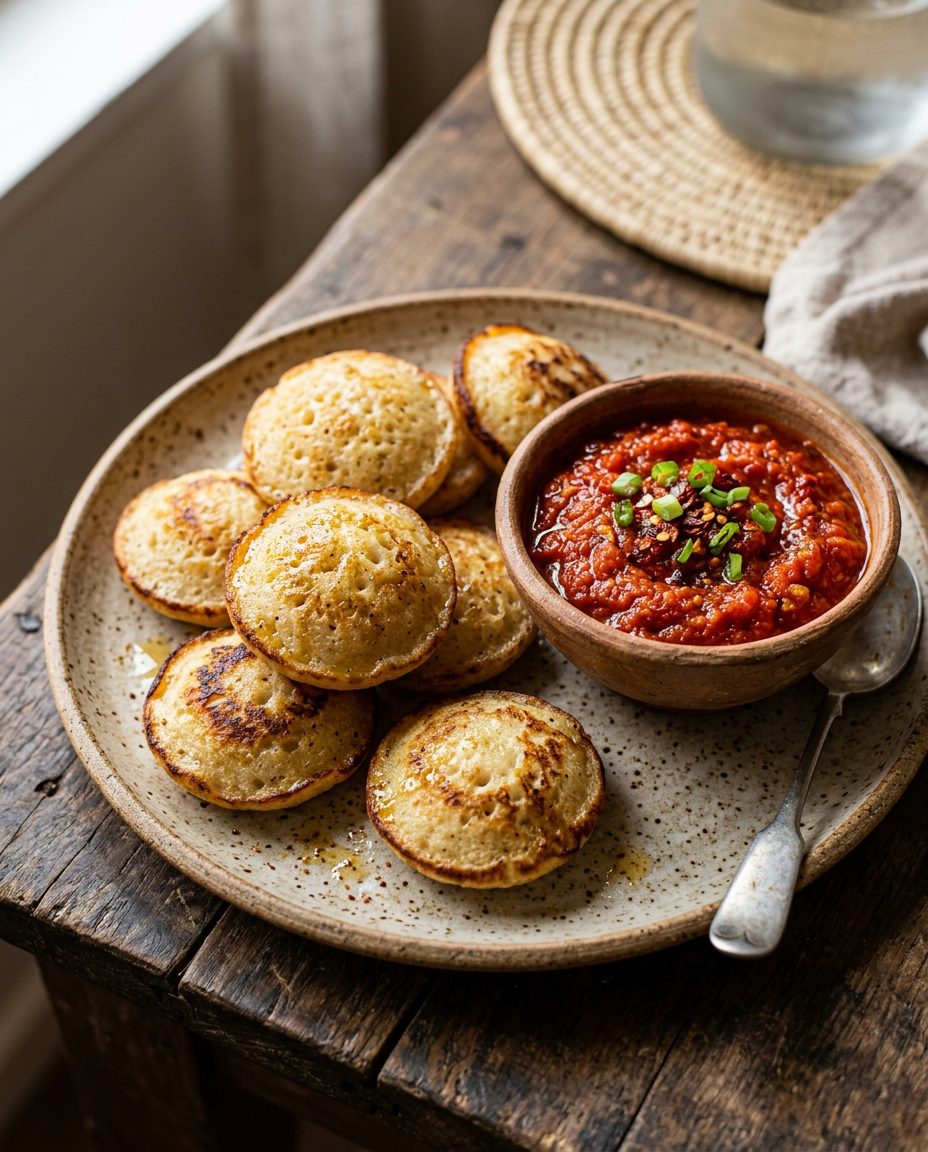
Hausa Waina with Pepper Sauce
Hausa·Nigéria · Níger

Hausa Waina with Pepper Sauce

Bolinhos de arroz fermentado feitos em uma frigideira de ferro fundido, servidos com um molho picante de tomate e pimentão vermelho — um café da manhã e comida de rua popular.

Ingredients

  • A vegan fermented rice batter
  • oil for the pan
  • tomatoes
  • red peppers
  • onion and chilli.

Method

  1. Prepare a rice-based waina batter using a tested recipe that omits egg and dairy. Follow its fermentation instructions rather than leaving cooked rice unrefrigerated indefinitely.
  2. Lightly oil a rounded cake pan and cook small portions of batter, turning as needed until the centres are cooked and the edges golden.
  3. Cook chopped tomato, pepper, onion and chilli into a sauce. Serve warm and check any purchased batter for milk or eggs.
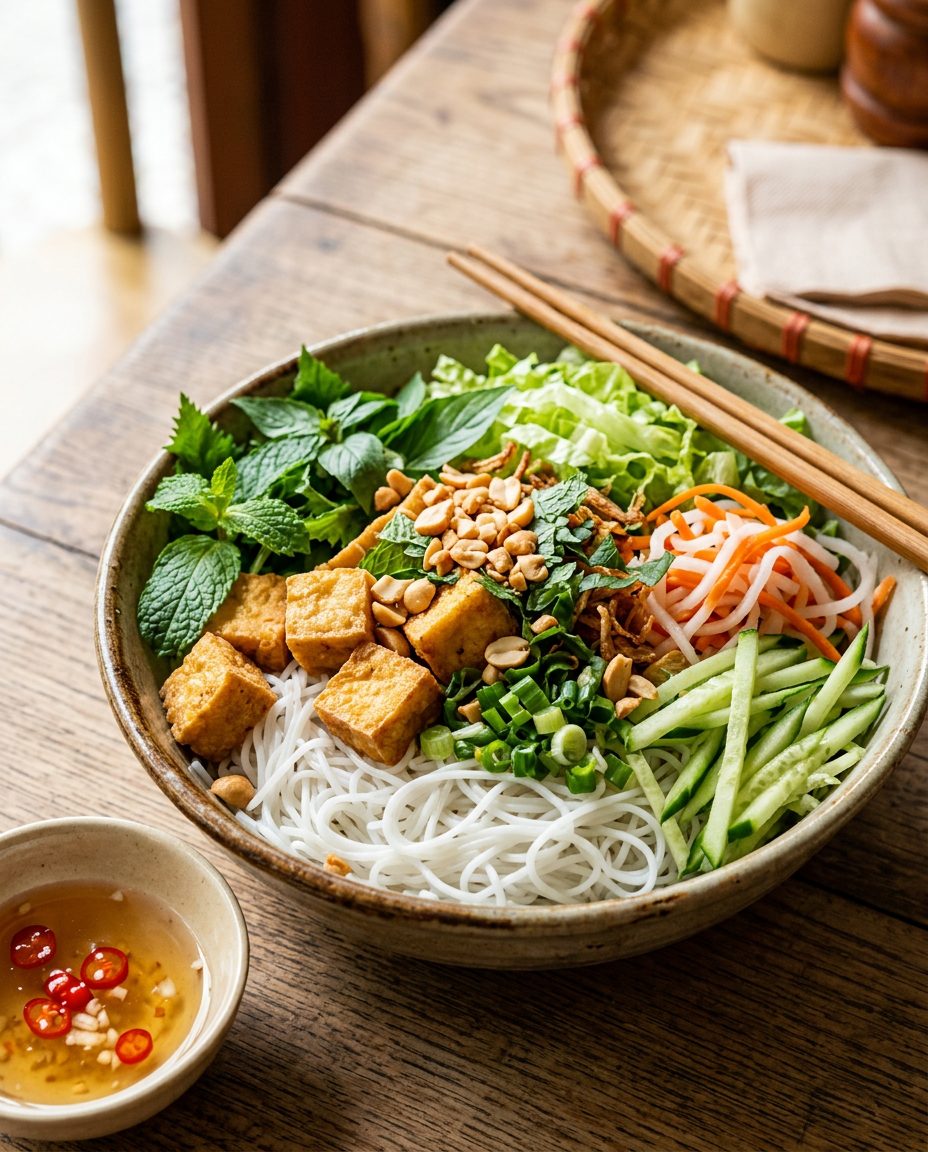
Bún Chay
Tiếng Việt·Vietnã

Bún Chay

Macarrão de arroz (vermicelli) com tofu crocante, ervas frescas, vegetais em conserva e um molho leve de limão e soja. Leve, marcante, vivo.

Ingredients

  • Rice vermicelli
  • firm tofu
  • cucumber
  • lettuce
  • mint or basil
  • carrot
  • daikon
  • lime
  • soy sauce and optional peanuts.

Method

  1. Cook vermicelli according to the package, drain and cool. Pat tofu dry, cut into cubes and pan-fry until golden.
  2. Slice the vegetables and herbs; use freshly prepared pickled carrot and daikon if desired.
  3. Mix lime juice, soy sauce and a little water into a dressing. Assemble noodles, tofu and vegetables; add peanuts only if suitable. Do not use fish sauce.
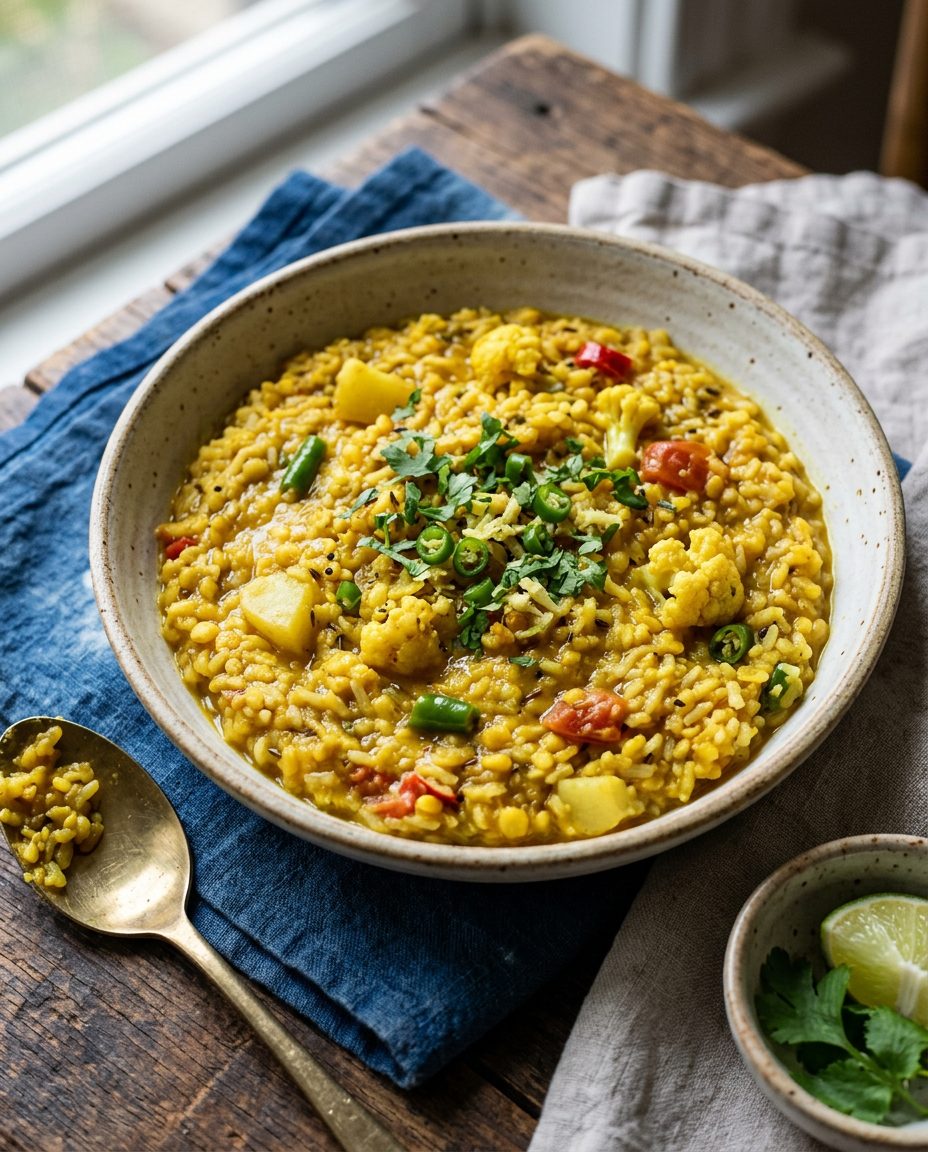
Khichuri
বাংলা·Bangladesh · Índia

Khichuri

Arroz e moong dal cozidos juntos com gengibre e especiarias quentes. O prato que você come quando precisa de um abraço.

Ingredients

  • Rice
  • moong dal
  • ginger
  • turmeric
  • cumin
  • optional potato or cauliflower
  • water and vegetable oil.

Method

  1. Rinse the rice and dal. Gently toast cumin in oil, then add ginger and turmeric without letting them burn.
  2. Add rice, dal, vegetables and water. Simmer covered, stirring and adding water as needed, until both grains and dal are soft.
  3. Adjust to a moist, spoonable consistency and season to taste. Use vegetable oil rather than ghee; cool and refrigerate leftovers promptly.

Food safety and substitutions

These are flexible cooking outlines, not laboratory-tested nutrition calculations. Use fully cooked beans. For dried kidney beans, soak and boil according to reliable food-safety instructions; do not cook them from raw in a slow cooker. Refrigerate cooked food promptly in shallow containers and follow local guidance for leftovers, especially cooked rice. Check soy, wheat, peanut and other allergens before substituting ingredients.

FDA — Food Safety at Home ↗
Swap cheat sheet

If a recipe you love calls for these, here's what to reach for instead.

Most traditional dishes don't need substitutions — they're already plant-based or trivially adapted. For the ones that do, here are the swaps that actually work in the pan, not just on paper.

Cow's milk
Soy, oat or almond milk

Soy is closest in protein and behaves best in coffee and baking. Oat is creamiest. Almond is lightest. Any of them work in cereal and sauces without you noticing.

Butter
Olive oil, coconut oil, or a good plant butter

For most savoury cooking, olive oil is an upgrade. For baking, refined coconut oil or a block-style plant butter holds structure the way dairy butter does.

Egg (binding)
Ground flax + water, or chickpea flour

One tablespoon ground flax + three tablespoons water = one egg, for binding in burgers, muffins, pancakes. Chickpea flour mixed with water makes excellent omelettes and frittatas.

Cheese
Cashew cream, nutritional yeast, or a good store-bought block

For melted dishes, store-bought has improved enormously. For sauces and toppings, blended cashews with lemon and nutritional yeast carry a depth most people prefer once they get used to it.

Meat (ground, stewed, grilled)
Lentils, mushrooms, jackfruit, tofu, seitan, tempeh

Lentils for bolognese and chilli. Mushrooms for depth and umami. Jackfruit for pulled textures. Tofu and tempeh for grilling and stir-fries. Seitan when you want a chew close to meat.

De tradições sub-representadas

Mais seis pratos que o mundo já conhece.

A culinária à base de plantas não é uma invenção recente. As seguintes receitas vêm de tradições alimentares que têm alimentado pessoas com vegetais por séculos ou milênios. Cada descrição serve como um método solto — o suficiente para cozinhar, não um conjunto rígido de instruções.

Amárico / Tigrínia·Etiópia

Misir Wat

Misir Wat é o ensopado de lentilhas vermelhas no coração da culinária etíope — cozido lentamente com a mistura de especiarias berbere, cebola caramelizada e niter kibbeh (manteiga clarificada, que pode ser substituída por um bom azeite para uma versão totalmente plant-based). As cebolas vão primeiro secas, cozidas até quase caramelizadas antes de qualquer gordura ser adicionada — esta é a técnica que constrói profundidade. Berbere, alho e gengibre vêm a seguir, depois lentilhas vermelhas lavadas e água suficiente para cozinhá-las. O resultado deve ser espesso, quase pastoso, comido com injera ou pão. É um dos pratos mais saborosos de qualquer tradição culinária e, acidentalmente, um dos mais nutricionalmente completos.

Wolof / Francês·Senegal

Thiéboudienne (versão vegetal)

Thiéboudienne é o prato nacional do Senegal — tradicionalmente feito com peixe, mas a versão vegetal, chamada Thiébou Yapp bu Weex por alguns cozinheiros, é igualmente amada. Arroz quebrado de grão longo é cozido em uma base de tomate e cebola enriquecida com extrato de tomate, depois coberto com legumes de raiz e abóboras da estação: batata-doce, mandioca, nabo, berinjela, repolho. O arroz absorve a base de tomate enquanto cozinha, adquirindo um tom laranja quente e profundo. A técnica exige paciência, mas pouca técnica: os vegetais vão primeiro para dar sabor ao caldo, o arroz vai por último para absorvê-lo.

Japonês·Japão

Kenchin-jiru

Kenchin-jiru é uma sopa de templo budista do mosteiro Kenchoji em Kamakura — totalmente à base de plantas por tradição, desenvolvida por monges que seguiam um código vegetariano. Legumes de raiz (bardana, taro, daikon, cenoura) e tofu firme são salteados em óleo de gergelim até o tofu ficar dourado nas bordas, depois cozidos em dashi de kombu com molho de soja e mirin. O resultado é reconfortante e austero no melhor sentido — profundamente saboroso sem depender da riqueza. Konnyaku (konjac) é frequentemente adicionado para textura. Esta sopa é feita essencialmente na mesma forma desde o século XIII.

Espanhol / Náhuatl·México

Tinga de Grão-de-Bico

A tinga é tradicionalmente um prato de frango desfiado de Puebla, mas a versão de grão de bico tornou-se um alimento básico da culinária caseira mexicana para quem se alimenta de vegetais. Pimentões chipotle em adobo, tomates e cebola formam um molho defumado; grão de bico escorrido e enxaguado é adicionado e cozido até absorver o molho e começar a quebrar levemente nas bordas. Servido em tortilhas de milho quentes com abacate, cebola em conserva e salsa, este é um dos pratos à base de plantas mais acessíveis e satisfatórios para quem é novo nesse tipo de alimentação — é familiar em sabor e profundamente satisfatório.

Árabe·Líbano / Levante

Mujadara

Mujadara é um dos pratos mais antigos registrados no mundo — uma mistura de lentilhas e trigo sarraceno ou arroz coberta com cebolas profundamente caramelizadas que são cozidas em fogo baixo e lento até ficarem quase compotadas. O prato não requer quase nenhuma técnica, mas muita paciência com as cebolas, que devem levar de 30 a 45 minutos em fogo médio-baixo para atingir a profundidade certa. Servido em temperatura ambiente com iogurte (ou tahini para uma versão totalmente à base de plantas) e uma salada de salsa picada e limão, é simultaneamente a coisa mais simples e satisfatória do repertório levantino.

Indonésio / Javanês·Indonésia

Gado-gado

Gado-gado é uma salada indonésia de vegetais cozidos e crus — batata cozida, vagem escaldada, brotos de feijão, pepino e muitas vezes ovo cozido (omitir para vegano) — unida por um molho de amendoim feito de amendoim torrado moído, açúcar de palma, alho, limão e pimenta. O molho é o prato: complexo, doce, azedo e picante simultaneamente. Cada região da Indonésia tem sua própria versão do molho de amendoim, variando de liso a pedaçudo e de suave a muito picante. É servido em temperatura ambiente e é uma das refeições à base de plantas mais completas em termos de equilíbrio de proteína, gordura e carboidratos.
  • Ensopados
  • Curries
  • Saladas
  • Leguminosas
  • Grãos
  • Raízes
  • Frutas
  • Cítricos

Cooking, not recipe collecting

Ten techniques replace a hundred recipes

People rarely abandon plant-based eating because of ethics or nutrition. They abandon it because the food became boring. The fix is structural: learn a small number of techniques that make plants taste good, then apply them to whatever is cheap and in season. Recipes become variations rather than instructions.

Why plant food tastes flat when it does

Meat brings fat, salt, glutamate and browning to a dish automatically. Plant ingredients supply those only if you add them deliberately. The four levers are heat (real browning, not steaming), salt (earlier and more than feels right), umami (soy sauce, miso, tomato paste, mushrooms, nutritional yeast) and acid (a squeeze of lemon or vinegar at the end). Almost every disappointing plant-based dish is missing at least two of the four.

Texture is the second missing element

A plate of uniformly soft food reads as unfinished regardless of flavour. Contrast is created by pressing and roasting tofu rather than simmering it, toasting nuts and seeds, keeping some vegetables raw, adding crisped chickpeas or breadcrumbs, and finishing with fresh herbs. Texture is also why the same stew feels better with rice and a pickle than alone.

Protein anchoring makes meals satisfying

A meal built on vegetables and grains alone leaves people hungry two hours later and they blame the diet. Anchor every main meal with a legume, tofu, tempeh, seitan, or a substantial portion of nuts or seeds, aiming for roughly 20–30 g of protein at lunch and dinner. Satiety follows protein and fibre, both of which are abundant if you plan for them.

The template that removes decision fatigue

Grain or starch, plus legume or tofu, plus two vegetables, plus a sauce, plus a crunchy topping. That single formula produces Mexican bowls, Indian thalis, Levantine plates, Japanese donburi and Mediterranean lunches depending only on which spices and sauce you use. Cooking becomes assembly with three components made ahead.

Batch cooking is the difference between intention and dinner

Two hours on one day — a pot of legumes, a tray of roasted vegetables, a grain, and one sauce — produces five to six meals with ten minutes of work each. This is the single most reliable predictor of whether people sustain a diet change past the second month.

Five sauces that carry a whole week

Each makes about a cup. Refrigerate promptly and follow recipe-specific storage advice; freeze extra portions rather than assuming every sauce keeps a week.

SauceCore ingredientsBest withKeeps
Tahini-lemonTahini, lemon, garlic, water, saltRoasted vegetables, falafel, grain bowls1 week
Peanut-limePeanut butter, lime, soy, chilli, gingerNoodles, tofu, cabbage slaw5 days
Salsa verdeParsley, capers, garlic, vinegar, olive oilBeans, potatoes, grilled vegetables4 days
Miso-mapleMiso, maple, rice vinegar, sesame oilAubergine, tofu, squash2 weeks
Cashew creamSoaked cashews, lemon, garlic, saltPasta, soups, baked dishes4 days

Standard culinary technique

The two-hour Sunday that fixes the week

  1. 1

    Start a pot of legumes

    Chickpeas, lentils or black beans. Salt the water; it does not toughen them and it seasons from the inside.

  2. 2

    Fill a roasting tray

    Whatever vegetables need using, tossed in oil and salt, at a genuinely high oven temperature until browned at the edges.

  3. 3

    Cook a grain

    Rice, farro, bulgur or couscous. Cooked grains freeze perfectly in portions.

  4. 4

    Make one sauce

    Any of the five above. This is what makes leftovers taste like a new meal rather than a repeat.

  5. 5

    Toast something crunchy

    Seeds, nuts or spiced chickpeas. Five minutes of work that changes every plate for the rest of the week.

Kitchen habits that decide the outcome

Do

  • Salt in layers while cooking rather than only at the table
  • Get the pan properly hot before anything goes in it
  • Finish with acid — lemon, vinegar, pickles, yoghurt alternatives
  • Keep miso, soy sauce, tomato paste and nutritional yeast permanently stocked
  • Cook the same three dinners often enough to get genuinely good at them

Avoid

  • Boiling or steaming everything, which strips both browning and texture
  • Building meals from vegetables alone with no protein anchor
  • Trying a new complicated recipe on a weekday evening
  • Under-seasoning out of caution, then concluding plants taste bland
  • Buying single-use ingredients for one recipe you will not repeat

Cooking questions

Why does my food taste bland?

Almost always insufficient salt, no browning, no umami source and no acid at the end. Fix those four before changing recipes.

How do I get tofu to taste good?

Press it, cut it thick, coat lightly in cornflour, and cook it in a hot pan or hot oven until the surface is genuinely crisp before adding any sauce.

What equipment actually matters?

A heavy pan that holds heat, a sharp knife, a large roasting tray and a blender. Nothing else changes results much.

How much protein should a main meal have?

Roughly 20–30 g for most adults, which is about a cup of cooked legumes, 150–200 g of tofu or tempeh, or a combination with grains and nuts.

Do I need speciality ingredients?

No. Nutritional yeast, miso and tahini are useful and inexpensive; everything beyond that is optional.

How long do batch-cooked components last?

Cool cooked food promptly and refrigerate or freeze it. UK guidance is to eat refrigerated leftovers within 48 hours and cooked rice within 24 hours; freeze extra portions. Storage time depends on the recipe and handling, so do not assume sauces keep a week.

References

  • Food-science literature on Maillard browning and umami synergy
  • USDA FoodData Central for protein values per cooked portion
  • Food-safety guidance on refrigerated and frozen storage times

Principais pontos

  • Toda culinária mundial tem uma rica tradição baseada em vegetais — dal indiano, shiro etíope, pasta e fagioli italiana, feijão e arroz mexicano, mezze levantina.
  • Refeições à base de plantas integrais estão entre as calorias mais baratas em qualquer supermercado: grãos, leguminosas, vegetais sazonais e produtos congelados.
  • Uma rotação semanal de cinco jantares confiáveis é suficiente para tornar a alimentação à base de plantas fácil.
  • Cozinhar uma vez, comer duas — prepare uma panela de feijão, grãos ou ensopado no domingo e você economiza horas durante a semana.

Compartilhe esta página

Perguntas frequentes

Escolha três culinárias que você já gosta (por exemplo, italiana, indiana, mexicana) e cozinhe seus pratos tradicionais à base de plantas — massa com tomate e feijão, dal com arroz, tacos de feijão. Você já conhece esses sabores.

Continue lendo