Millet
Uwele ni kundi la nafaka zenye mbegu ndogo zinazotumika kutengeneza uji, mikate bapa na vyakula vya nafaka katika maeneo mbalimbali. Aina ya nafaka hubadilisha ladha na umbile.
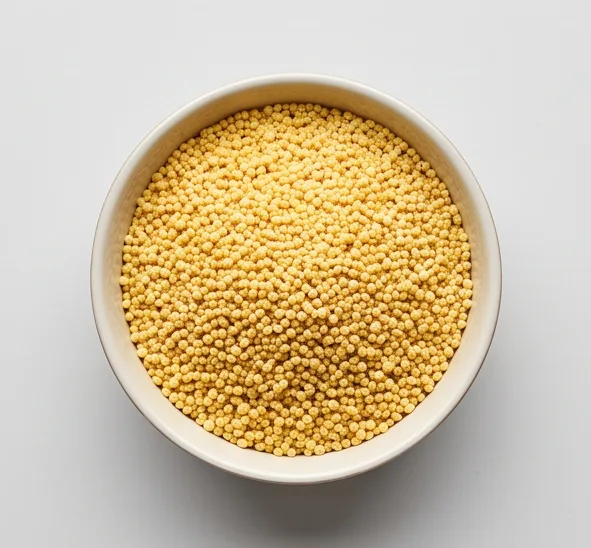
Lishe kwa 100 g cooked
- Kalori
- 119
- Protini
- 3.5 g
- Mafuta
- 1 g
- Wanga
- 24 g
- Nyuzinyuzi
- 1.3 g
Kwa nini ni muhimu
- →Chanzo cha wanga kutoka kwa nafaka
- →Kiasili haina gluteni ikiwa nafaka tupu
Matumizi ya kawaida
Matayarisho na umbile
Osha na upike kulingana na aina ya nafaka hiyo. Maji kidogo huleta nafaka thabiti zaidi kwa ajili ya pilau; maji mengi zaidi na kukoroga huleta uji laini zaidi.
Mambo ya kuangalia kabla ya kutumia
Madai kwamba uwele huufanya mwili kuwa na alikali au kwamba daima una fahirisi ya chini ya glisemiki yanapotosha. Mwitikio wa glukosi kwenye damu hutegemea usindikaji, ukubwa wa kipimo na mlo mzima.
Vyanzo na mipaka
Takwimu za lishe zinaelezea kiwango cha rejea na ni makadirio tu, si uchunguzi wa maabara wa kile unachonunua. Aina ya zao, kiwango cha maji, usindikaji na uongezaji virutubisho vinaweza kubadilisha matokeo. Vyanzo vilivyo hapa chini vinaeleza muundo wa chakula, utunzaji salama na miongozo ya virutubisho; havithibitishi kwamba chakula fulani mahususi kinatibu ugonjwa.
Jinsi Millet inavyofaa katika mlo wa kawaida wa siku
The reference portion of Millet contains 119 kcal, 3.5 g of protein and 1.3 g of fibre per 100 g. Read these figures alongside the preparation state shown above: dry grains, cooked pulses and oils are not interchangeable portions. Multiply each figure by the weight you actually eat divided by 100. A food with little protein or fibre can still have a useful culinary role; it should not be described as a substantial source of those nutrients.
The usual uses of Millet are Uji, Injera (pamoja na teff), Pilau. Choose the portion and preparation for that role rather than assuming every ingredient should be the centre of a meal. For example, herbs season a dish, oils supply concentrated fat, and legumes can contribute protein and fibre. Check the ingredient's own nutrition values and combine it with complementary foods across the day.
Lishe kwa gramu 100, na kwa nini kila mstari ni muhimu
| Kirutubisho | Kwa gramu 100 | Kwa nini ni muhimu |
|---|---|---|
| Kalori | 119 | Uzito wa nishati — muhimu kwa kukadiria ukubwa wa sehemu ikilinganishwa na sahani nzima. |
| Protini | 3.5 g | Inasaidia urekebishaji wa misuli na kujaa; tumia kwa siku nzima badala ya mara moja. |
| Mafuta | 1 g | Hubeba vitamini mumunyifu katika mafuta na ladha; aina ya mafuta ni muhimu zaidi kuliko kiasi. |
| Wanga | 24 g | Chanzo kikuu cha nishati; wanga kutoka vyakula asilia huja pamoja na nyuzinyuzi na madini. |
| Nyuzinyuzi | 1.3 g | Inalisha bakteria za utumbo, inatuliza sukari ya damu na ni kirutubisho ambacho lishe nyingi hazitoshi. |
Kununua na kuhifadhi Millet
- Compare the ingredient list and price for the form you need. A plain version may be useful, but fortified products can provide nutrients that an unfortified version lacks.
- Fresh, frozen, canned and dried products differ in water content, added salt and preparation. Compare nutrition using the same preparation state and a realistic serving, not package weight alone.
- Follow the package's storage instructions. Refrigerate perishable foods promptly; a dry cupboard is not appropriate for every ingredient.
- Buy only an amount you can store safely and use before spoilage. A lower unit price does not save money if part of the food is discarded.
Makosa ya kawaida
- Comparing dry and cooked weights as if they were equivalent. Water absorbed during cooking changes the nutrients per 100 g.
- Assuming every plant ingredient supplies meaningful protein, iron or fibre. Use the values above and the portion actually eaten.
- Ignoring food allergies, age-appropriate textures or a medical condition when choosing a serving.
- Assuming every ingredient can be eaten raw. Follow preparation instructions, especially for dried beans and foods requiring cooking.
Kupika kwa kutumia Millet
Matumizi ya kawaida ni Uji, Injera (pamoja na teff), Pilau. Kila moja ni mfano badala ya kichocheo: mara tu unapojua jinsi Millet inavyofanya kazi na joto na chumvi, unaweza kuiingiza kwenye milo unayopika tayari badala ya kujifunza sahani mpya kutoka mwanzo.
Maswali zaidi watu huuliza
Is Millet a good source of protein?
The reference value is 3.5 g per 100 g. Whether that makes a meaningful contribution depends on the serving you eat. A small amount used for seasoning or cooking fat is not equivalent to a main serving of beans or tofu. Compare the prepared portion, not just the ingredient name.
How much Millet should I eat in a day?
There is no universal serving suitable for every ingredient or person. Match the amount to its role, energy density and your overall diet. Allergies, medical conditions, age and preparation matter. A clinician or registered dietitian can advise on individual restrictions.
Is Millet suitable for children and older adults?
Suitability depends on the ingredient, preparation and person. Consider allergies, swallowing and chewing ability, choking hazards and medical restrictions. Whole nuts and hard pieces may need grinding or another texture adjustment. Do not assume an ingredient is safe or nutrient-dense solely because it is plant-based.
Does cooking change the nutrients in Millet?
Cooking may reduce some heat-sensitive vitamins while improving digestibility or making a food safe to eat. Water gain or loss also changes the figures per 100 g. Compare nutrition data for the same cooked or uncooked form, and follow safe preparation instructions rather than avoiding cooking to preserve nutrients.
Is Millet expensive?
Prices vary by region, season, brand and preparation. Compare the cost of the amount you will actually use, including waste and cooking time. An oil, spice or specialty ingredient cannot be judged as a cheap protein source when it supplies little protein in a normal serving.
Endelea Kuchunguza
Kurasa zinazohusiana na hii kuhusu mabadilisho, viungo, virutubisho na milo.



