지역별 채식 전통

언제나 답을 알고 있던 주방의 레시피

비거니즘은 여기서 발명된 것이 아닙니다. 이 요리들은 수 세기 동안 가족들을 먹여 살렸습니다. 우리는 단지 그 요리들이 마땅히 받아야 할 자리를 만들어주는 것뿐입니다.

How the world has always cooked plants

Long before "vegan" was a word, most of the world was already feeding itself this way.

Plant cooking isn't a Western invention or a recent trend. It is the deep cuisine of most cultures — the everyday food, the festival food, the food of grandmothers. Lentil stews from the Levant, bean and corn dishes from Mesoamerica, rice and dal across South Asia, vegetable curries through East and West Africa, tofu and noodle traditions across East Asia. The recipes below are not substitutes. They are the originals.

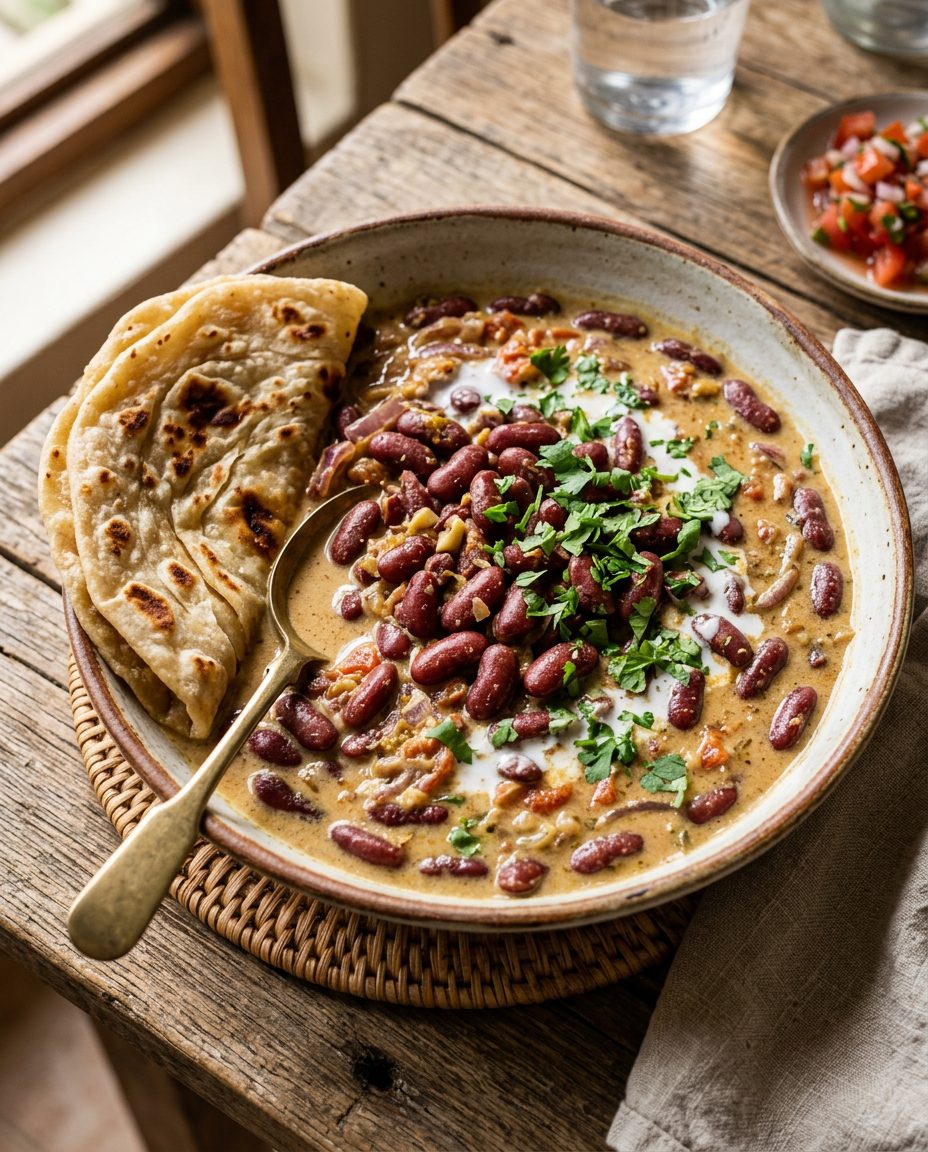
마하라그웨 야 나지
Kiswahili·케냐 · 탄자니아

마하라그웨 야 나지

코코넛 밀크에 양파, 토마토를 넣고 천천히 끓인 콩 요리로, 신선한 고수를 한 줌 얹어 마무리합니다. 차파티나 우갈리와 함께 제공됩니다.

Ingredients

  • Cooked kidney beans
  • coconut milk
  • onion
  • tomato
  • garlic and fresh coriander; chapati or ugali to serve.

Method

  1. Soften chopped onion and garlic in a little oil; add chopped tomato and cook until it breaks down.
  2. Add fully cooked beans and coconut milk. Simmer gently, stirring, until the sauce coats the beans; add water if it becomes too thick.
  3. Season to taste, finish with coriander and serve with chapati made without dairy or with ugali.
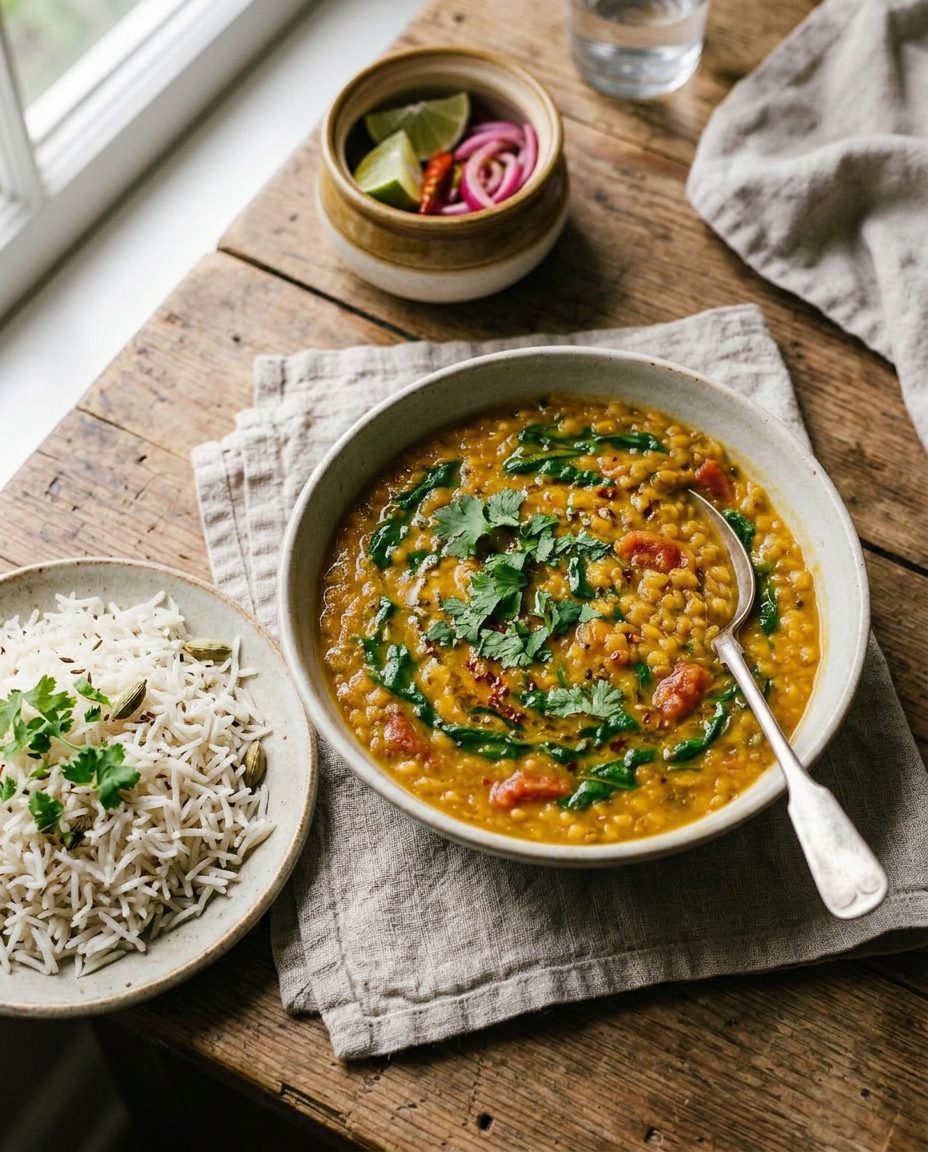
Red Lentil & Spinach Dal
বাংলা·방글라데시

Red Lentil & Spinach Dal

마늘, 생강과 함께 조리하고 쿠민과 건고추로 향을 낸 붉은 렌틸콩(마수르 달). 수백만 명의 일상적인 식사입니다.

Ingredients

  • Red lentils
  • spinach
  • onion
  • garlic
  • ginger
  • cumin seeds
  • dried chilli and rice to serve.

Method

  1. Rinse the lentils. Simmer in water until tender, adding more water if needed; stir occasionally to prevent sticking.
  2. Cook onion, garlic and ginger separately with cumin and chilli, then stir the tempering into the lentils.
  3. Add washed spinach and cook until wilted. Adjust the consistency and seasoning; serve with rice, without ghee or butter.
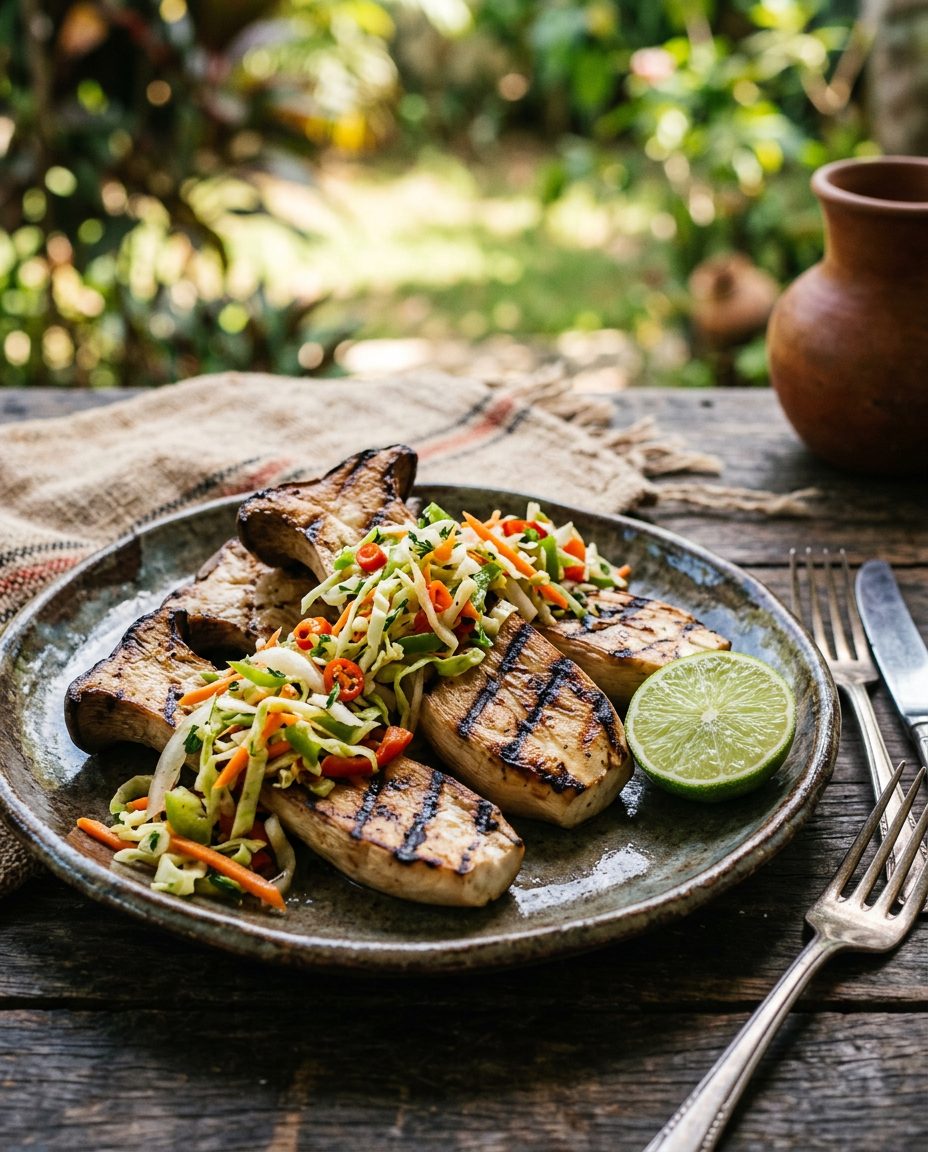
Pikliz & Grilled Mushrooms
Kreyòl·아이티

Pikliz & Grilled Mushrooms

직화로 구운 새송이버섯 위에 아이티 식탁을 대표하는 밝고 강렬한 피클리즈를 얹은 요리입니다.

Ingredients

  • King oyster mushrooms
  • shredded cabbage and carrot
  • onion
  • chilli
  • vinegar
  • lime and a little oil.

Method

  1. Combine finely shredded cabbage, carrot and onion with vinegar and chilli for a fresh pikliz-style slaw. Keep refrigerated; this outline is not a shelf-stable preserving recipe.
  2. Slice the mushrooms lengthwise, brush lightly with oil and grill or pan-sear on both sides until browned and cooked through.
  3. Top with the drained slaw and lime. Use clean utensils for the slaw and keep leftover mushrooms and slaw chilled.
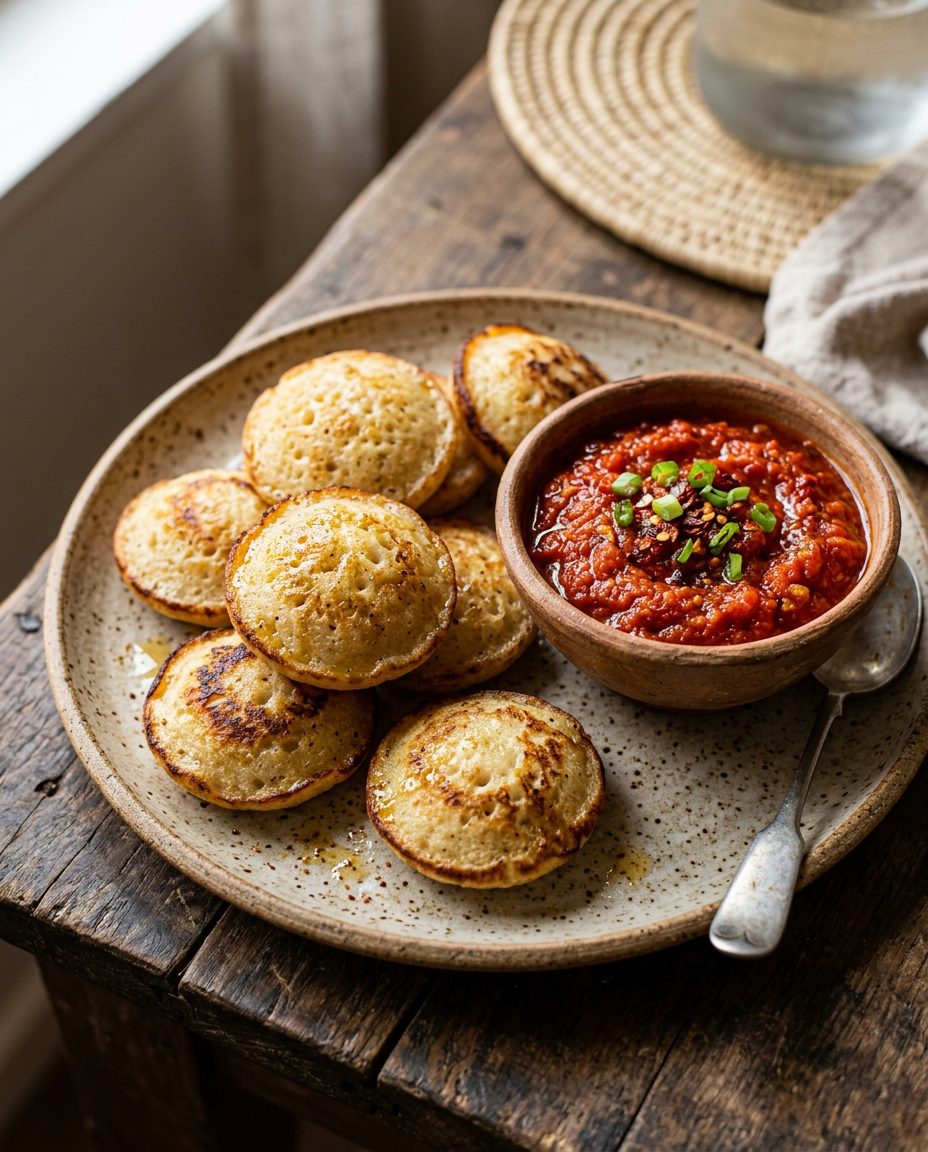
Hausa Waina with Pepper Sauce
Hausa·나이지리아 · 니제르

Hausa Waina with Pepper Sauce

무쇠 팬에 구운 발효 쌀떡으로, 매콤한 토마토 및 고추 소스를 곁들여 먹는 인기 있는 아침 식사이자 길거리 음식입니다.

Ingredients

  • A vegan fermented rice batter
  • oil for the pan
  • tomatoes
  • red peppers
  • onion and chilli.

Method

  1. Prepare a rice-based waina batter using a tested recipe that omits egg and dairy. Follow its fermentation instructions rather than leaving cooked rice unrefrigerated indefinitely.
  2. Lightly oil a rounded cake pan and cook small portions of batter, turning as needed until the centres are cooked and the edges golden.
  3. Cook chopped tomato, pepper, onion and chilli into a sauce. Serve warm and check any purchased batter for milk or eggs.
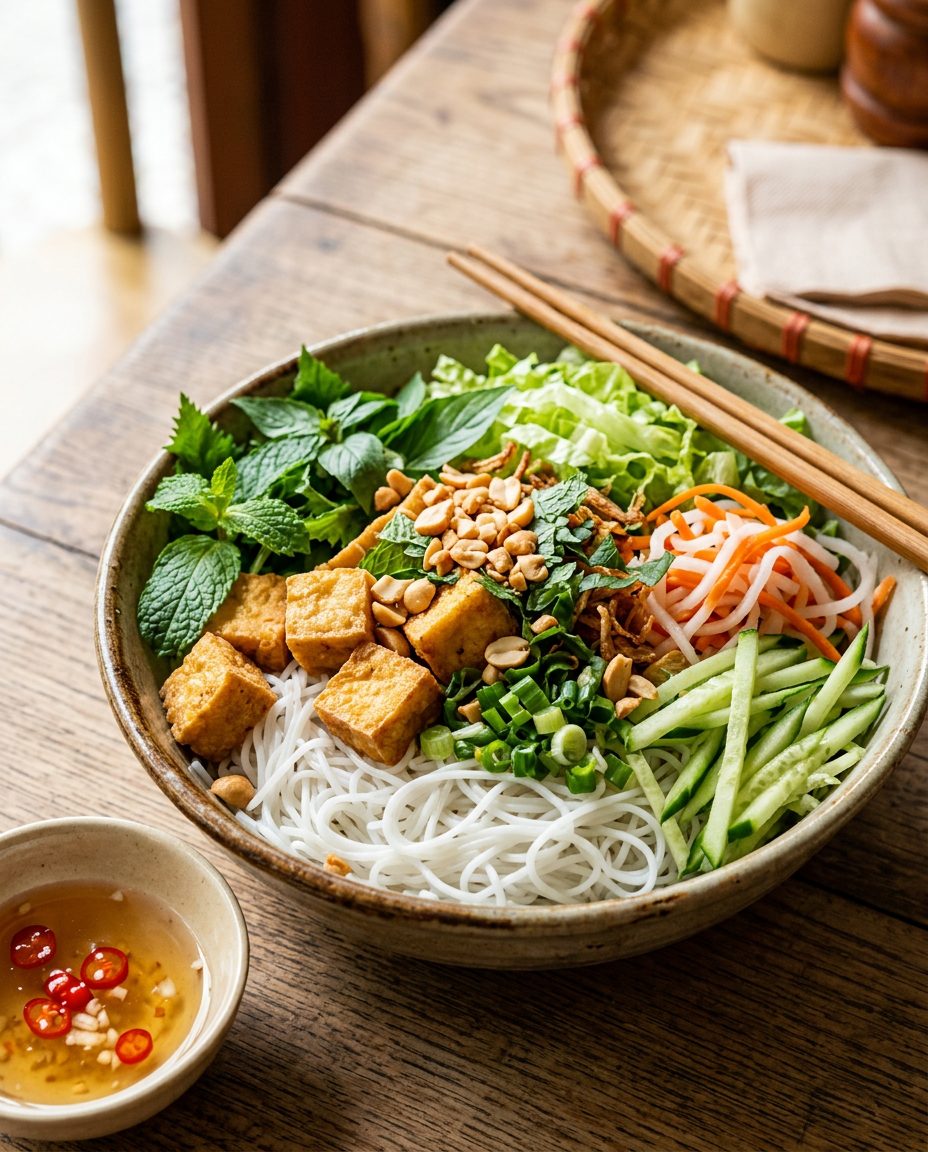
Bún Chay
Tiếng Việt·베트남

Bún Chay

바삭한 두부, 신선한 허브, 절인 채소에 상큼한 라임-간장 드레싱을 곁들인 쌀국수. 가볍고, 짜릿하고, 살아있는 맛.

Ingredients

  • Rice vermicelli
  • firm tofu
  • cucumber
  • lettuce
  • mint or basil
  • carrot
  • daikon
  • lime
  • soy sauce and optional peanuts.

Method

  1. Cook vermicelli according to the package, drain and cool. Pat tofu dry, cut into cubes and pan-fry until golden.
  2. Slice the vegetables and herbs; use freshly prepared pickled carrot and daikon if desired.
  3. Mix lime juice, soy sauce and a little water into a dressing. Assemble noodles, tofu and vegetables; add peanuts only if suitable. Do not use fish sauce.
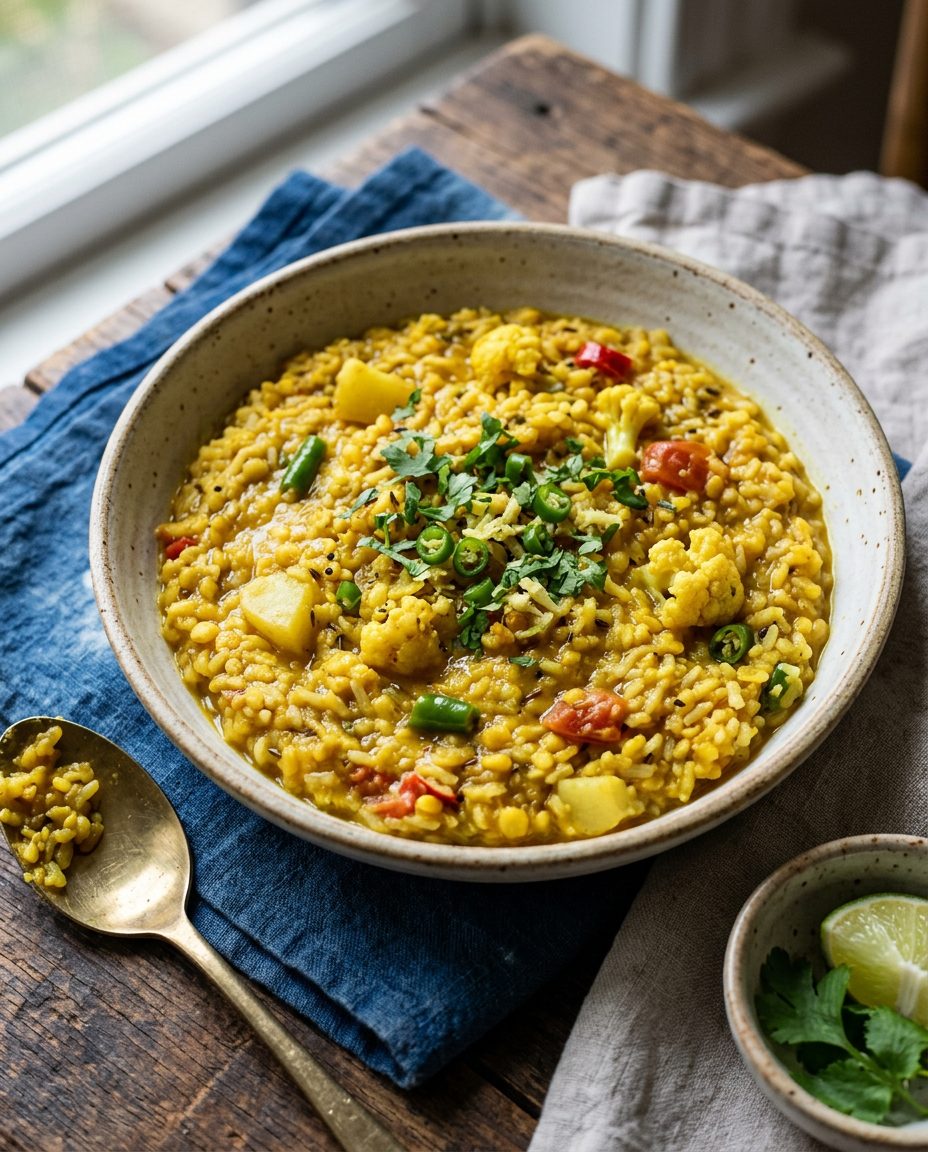
Khichuri
বাংলা·방글라데시 · 인도

Khichuri

쌀과 녹두(뭉달)를 생강과 몸을 따뜻하게 하는 향신료와 함께 끓인 요리. 위로가 필요할 때 먹는 음식입니다.

Ingredients

  • Rice
  • moong dal
  • ginger
  • turmeric
  • cumin
  • optional potato or cauliflower
  • water and vegetable oil.

Method

  1. Rinse the rice and dal. Gently toast cumin in oil, then add ginger and turmeric without letting them burn.
  2. Add rice, dal, vegetables and water. Simmer covered, stirring and adding water as needed, until both grains and dal are soft.
  3. Adjust to a moist, spoonable consistency and season to taste. Use vegetable oil rather than ghee; cool and refrigerate leftovers promptly.

Food safety and substitutions

These are flexible cooking outlines, not laboratory-tested nutrition calculations. Use fully cooked beans. For dried kidney beans, soak and boil according to reliable food-safety instructions; do not cook them from raw in a slow cooker. Refrigerate cooked food promptly in shallow containers and follow local guidance for leftovers, especially cooked rice. Check soy, wheat, peanut and other allergens before substituting ingredients.

FDA — Food Safety at Home ↗
Swap cheat sheet

If a recipe you love calls for these, here's what to reach for instead.

Most traditional dishes don't need substitutions — they're already plant-based or trivially adapted. For the ones that do, here are the swaps that actually work in the pan, not just on paper.

Cow's milk
Soy, oat or almond milk

Soy is closest in protein and behaves best in coffee and baking. Oat is creamiest. Almond is lightest. Any of them work in cereal and sauces without you noticing.

Butter
Olive oil, coconut oil, or a good plant butter

For most savoury cooking, olive oil is an upgrade. For baking, refined coconut oil or a block-style plant butter holds structure the way dairy butter does.

Egg (binding)
Ground flax + water, or chickpea flour

One tablespoon ground flax + three tablespoons water = one egg, for binding in burgers, muffins, pancakes. Chickpea flour mixed with water makes excellent omelettes and frittatas.

Cheese
Cashew cream, nutritional yeast, or a good store-bought block

For melted dishes, store-bought has improved enormously. For sauces and toppings, blended cashews with lemon and nutritional yeast carry a depth most people prefer once they get used to it.

Meat (ground, stewed, grilled)
Lentils, mushrooms, jackfruit, tofu, seitan, tempeh

Lentils for bolognese and chilli. Mushrooms for depth and umami. Jackfruit for pulled textures. Tofu and tempeh for grilling and stir-fries. Seitan when you want a chew close to meat.

From under-represented traditions

Six more dishes the world already knows.

Plant-based cooking is not a recent invention. The following recipes come from food traditions that have been feeding people on plants for centuries or millennia. Each description doubles as a loose method — enough to cook from, not a rigid instruction set.

Amharic / Tigrinya·Ethiopia

Misir Wat

Misir Wat is the red lentil stew at the heart of Ethiopian cooking — slow-cooked with berbere spice blend, caramelised onion, and niter kibbeh (clarified butter, which can be replaced with good olive oil for a fully plant-based version). Onions go in dry first, cooked down until almost caramelised before any fat is added — this is the technique that builds depth. Berbere, garlic, and ginger go in next, then washed red lentils and enough water to cook them through. The result should be thick, almost paste-like, eaten with injera or bread. It is one of the most flavourful dishes in any food tradition and accidentally one of the most nutritionally complete.

Wolof / French·Senegal

Thiéboudienne (plant version)

Thiéboudienne is the national dish of Senegal — traditionally made with fish, but the vegetable version, called Thiébou Yapp bu Weex by some cooks, is equally beloved. Long-grain broken rice is cooked in a tomato and onion base enriched with tomato paste, then layered with whatever root vegetables and squash are in season: sweet potato, cassava, turnip, aubergine, cabbage. The rice absorbs the tomato base as it cooks, turning a deep warm orange. The technique requires patience but little technique: the vegetables go in first to flavour the broth, the rice goes in last to absorb it.

Japanese·Japan

Kenchin-jiru

Kenchin-jiru is a Buddhist temple soup from the Kenchoji monastery in Kamakura — fully plant-based by tradition, developed by monks following a vegetarian code. Root vegetables (burdock, taro, daikon, carrot) and firm tofu are sautéed in sesame oil until the tofu is golden at the edges, then simmered in kombu dashi with soy sauce and mirin. The result is warming and austere in the best sense — deeply flavoured without relying on richness. Konnyaku (konjac) is often added for texture. This soup has been made in essentially the same form since the 13th century.

Spanish / Nahuatl·Mexico

Tinga de Garbanzo

Tinga is traditionally a shredded chicken dish from Puebla, but the garbanzo version has become a staple of Mexican home cooking for plant-based eaters. Chipotle peppers in adobo, tomatoes, and onion form a smoky sauce; drained and rinsed chickpeas go in and cook until they absorb the sauce and begin to break down slightly at the edges. Served in warm corn tortillas with avocado, pickled onion, and salsa, this is one of the most approachable and satisfying plant-based dishes for people who are new to eating this way — it is familiar in flavour and deeply satisfying.

Arabic·Lebanon / Levant

Mujadara

Mujadara is one of the oldest recorded dishes in the world — a mixture of lentils and bulgur wheat or rice topped with deeply caramelised onions that are cooked low and slow until almost jammy. The dish requires almost no technique but a great deal of patience for the onions, which should take 30–45 minutes over medium-low heat to reach the right depth. Served at room temperature with yogurt (or tahini for a fully plant-based version) and a salad of chopped parsley and lemon, it is simultaneously the simplest and most satisfying thing in the Levantine repertoire.

Indonesian / Javanese·Indonesia

Gado-gado

Gado-gado is an Indonesian salad of cooked and raw vegetables — boiled potato, blanched green beans, bean sprouts, cucumber, and often hard-cooked egg (omit for vegan) — brought together by a peanut sauce made from ground roasted peanuts, palm sugar, garlic, lime, and chilli. The sauce is the dish: complex, sweet, sour, and spicy simultaneously. Every region of Indonesia has its own version of the peanut sauce, ranging from smooth to chunky and from mild to very hot. It is served at room temperature and is one of the most complete plant-based meals in terms of protein, fat, and carbohydrate balance.
  • Stews
  • Curries
  • Salads
  • Legumes
  • Grains
  • Roots
  • Fruit
  • Citrus

Cooking, not recipe collecting

Ten techniques replace a hundred recipes

People rarely abandon plant-based eating because of ethics or nutrition. They abandon it because the food became boring. The fix is structural: learn a small number of techniques that make plants taste good, then apply them to whatever is cheap and in season. Recipes become variations rather than instructions.

Why plant food tastes flat when it does

Meat brings fat, salt, glutamate and browning to a dish automatically. Plant ingredients supply those only if you add them deliberately. The four levers are heat (real browning, not steaming), salt (earlier and more than feels right), umami (soy sauce, miso, tomato paste, mushrooms, nutritional yeast) and acid (a squeeze of lemon or vinegar at the end). Almost every disappointing plant-based dish is missing at least two of the four.

Texture is the second missing element

A plate of uniformly soft food reads as unfinished regardless of flavour. Contrast is created by pressing and roasting tofu rather than simmering it, toasting nuts and seeds, keeping some vegetables raw, adding crisped chickpeas or breadcrumbs, and finishing with fresh herbs. Texture is also why the same stew feels better with rice and a pickle than alone.

Protein anchoring makes meals satisfying

A meal built on vegetables and grains alone leaves people hungry two hours later and they blame the diet. Anchor every main meal with a legume, tofu, tempeh, seitan, or a substantial portion of nuts or seeds, aiming for roughly 20–30 g of protein at lunch and dinner. Satiety follows protein and fibre, both of which are abundant if you plan for them.

The template that removes decision fatigue

Grain or starch, plus legume or tofu, plus two vegetables, plus a sauce, plus a crunchy topping. That single formula produces Mexican bowls, Indian thalis, Levantine plates, Japanese donburi and Mediterranean lunches depending only on which spices and sauce you use. Cooking becomes assembly with three components made ahead.

Batch cooking is the difference between intention and dinner

Two hours on one day — a pot of legumes, a tray of roasted vegetables, a grain, and one sauce — produces five to six meals with ten minutes of work each. This is the single most reliable predictor of whether people sustain a diet change past the second month.

Five sauces that carry a whole week

Each makes about a cup. Refrigerate promptly and follow recipe-specific storage advice; freeze extra portions rather than assuming every sauce keeps a week.

SauceCore ingredientsBest withKeeps
Tahini-lemonTahini, lemon, garlic, water, saltRoasted vegetables, falafel, grain bowls1 week
Peanut-limePeanut butter, lime, soy, chilli, gingerNoodles, tofu, cabbage slaw5 days
Salsa verdeParsley, capers, garlic, vinegar, olive oilBeans, potatoes, grilled vegetables4 days
Miso-mapleMiso, maple, rice vinegar, sesame oilAubergine, tofu, squash2 weeks
Cashew creamSoaked cashews, lemon, garlic, saltPasta, soups, baked dishes4 days

Standard culinary technique

The two-hour Sunday that fixes the week

  1. 1

    Start a pot of legumes

    Chickpeas, lentils or black beans. Salt the water; it does not toughen them and it seasons from the inside.

  2. 2

    Fill a roasting tray

    Whatever vegetables need using, tossed in oil and salt, at a genuinely high oven temperature until browned at the edges.

  3. 3

    Cook a grain

    Rice, farro, bulgur or couscous. Cooked grains freeze perfectly in portions.

  4. 4

    Make one sauce

    Any of the five above. This is what makes leftovers taste like a new meal rather than a repeat.

  5. 5

    Toast something crunchy

    Seeds, nuts or spiced chickpeas. Five minutes of work that changes every plate for the rest of the week.

Kitchen habits that decide the outcome

Do

  • Salt in layers while cooking rather than only at the table
  • Get the pan properly hot before anything goes in it
  • Finish with acid — lemon, vinegar, pickles, yoghurt alternatives
  • Keep miso, soy sauce, tomato paste and nutritional yeast permanently stocked
  • Cook the same three dinners often enough to get genuinely good at them

Avoid

  • Boiling or steaming everything, which strips both browning and texture
  • Building meals from vegetables alone with no protein anchor
  • Trying a new complicated recipe on a weekday evening
  • Under-seasoning out of caution, then concluding plants taste bland
  • Buying single-use ingredients for one recipe you will not repeat

Cooking questions

Why does my food taste bland?

Almost always insufficient salt, no browning, no umami source and no acid at the end. Fix those four before changing recipes.

How do I get tofu to taste good?

Press it, cut it thick, coat lightly in cornflour, and cook it in a hot pan or hot oven until the surface is genuinely crisp before adding any sauce.

What equipment actually matters?

A heavy pan that holds heat, a sharp knife, a large roasting tray and a blender. Nothing else changes results much.

How much protein should a main meal have?

Roughly 20–30 g for most adults, which is about a cup of cooked legumes, 150–200 g of tofu or tempeh, or a combination with grains and nuts.

Do I need speciality ingredients?

No. Nutritional yeast, miso and tahini are useful and inexpensive; everything beyond that is optional.

How long do batch-cooked components last?

Cool cooked food promptly and refrigerate or freeze it. UK guidance is to eat refrigerated leftovers within 48 hours and cooked rice within 24 hours; freeze extra portions. Storage time depends on the recipe and handling, so do not assume sauces keep a week.

References

  • Food-science literature on Maillard browning and umami synergy
  • USDA FoodData Central for protein values per cooked portion
  • Food-safety guidance on refrigerated and frozen storage times

Key takeaways

  • Every world cuisine has a rich plant-based tradition — Indian dal, Ethiopian shiro, Italian pasta e fagioli, Mexican beans and rice, Levantine mezze.
  • Whole-food plant meals are among the cheapest calories in any supermarket: grains, legumes, seasonal vegetables and frozen produce.
  • A weekly rotation of five reliable dinners is enough to make plant-based eating effortless.
  • Cooking once, eating twice — batch a pot of beans, grains or stew on Sunday and you save hours across the week.

Share this page

Share on XShare on FacebookShare on WhatsApp

Frequently asked questions

Pick three cuisines you already like (e.g. Italian, Indian, Mexican) and cook their traditional plant-based dishes — pasta with tomato and beans, dal with rice, bean tacos. You already know these flavors.

Keep reading