Swiss chard
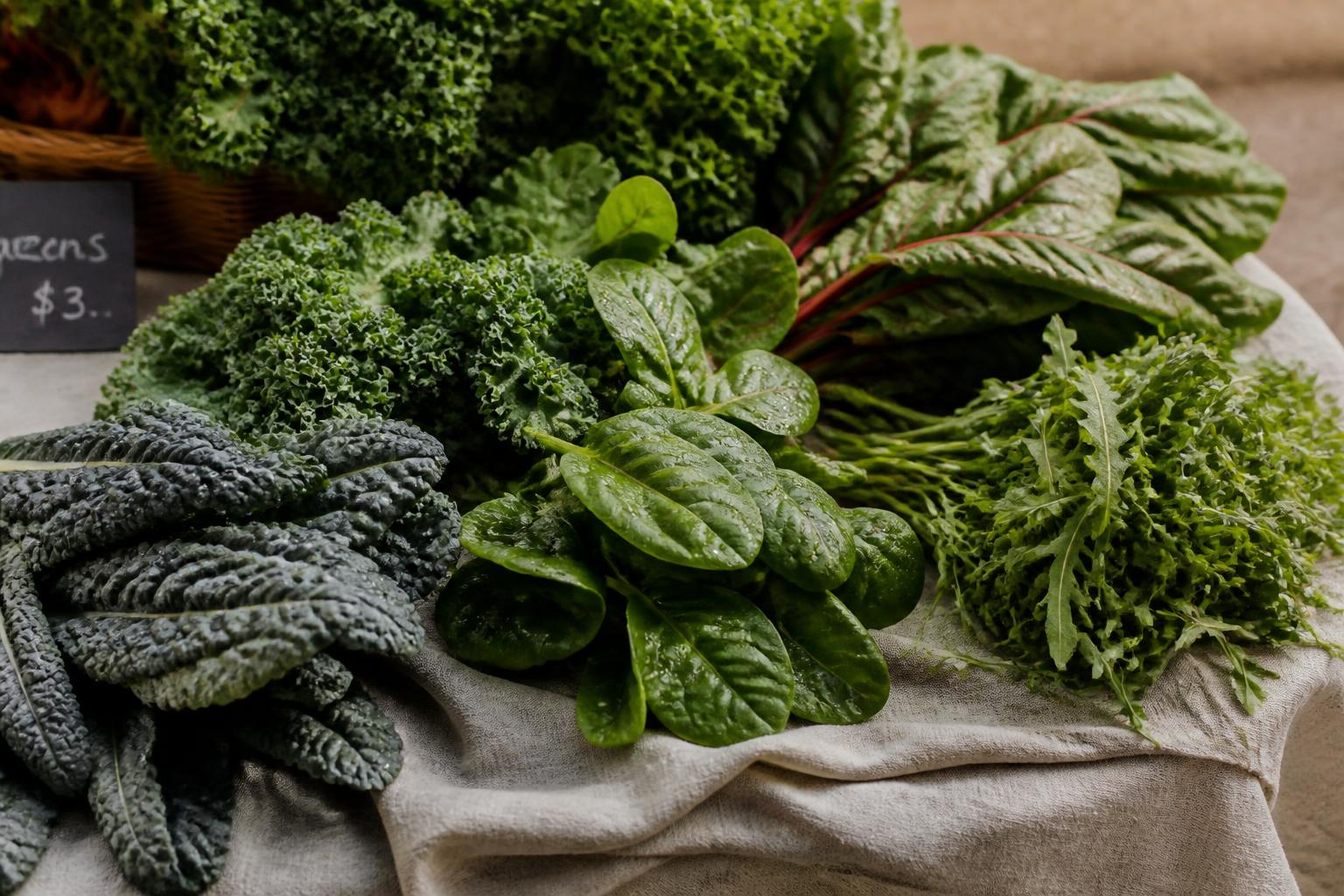
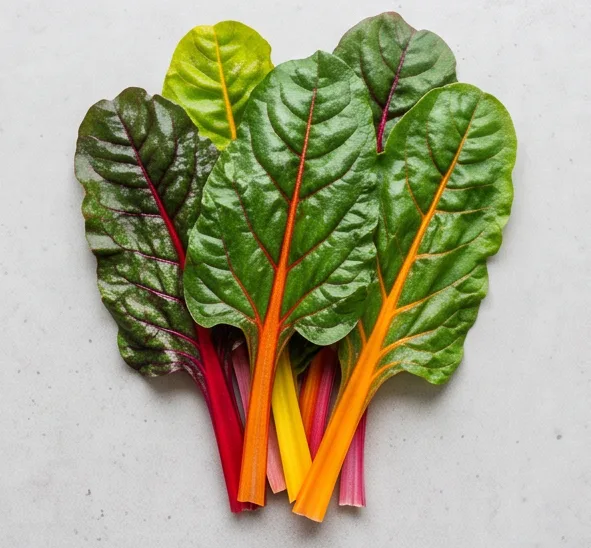
Swiss chard has broad leaves and colourful stems. Leaves and stems cook at different speeds and suit braising, soups and sautés.
Nutrition per 100 g raw
- Calories
- 19
- Protein
- 1.8 g
- Fat
- 0.2 g
- Carbs
- 3.7 g
- Fibre
- 1.6 g
Why it matters
- →Both leaves and stems are edible
- →Contains oxalates
Common uses
Preparation and texture
Separate chopped stems from leaves. Start the stems first, then add leaves once the stems soften; season with garlic and lemon to taste.
What to check before using it
Chard is not interchangeable with low-oxalate greens as a calcium source. Follow personalised advice if you have kidney-stone or other dietary restrictions.
Sources and limits
Nutrition figures describe the reference form and are approximate, not a laboratory analysis of your purchase. Variety, water content, processing and fortification can change the result. The sources below explain food composition, safe handling and nutrient guidance; they do not establish that an individual food treats a disease.
Jak Swiss chard wpisuje się w codzienne jedzenie
The reference portion of Swiss chard contains 19 kcal, 1.8 g of protein and 1.6 g of fibre per 100 g. Read these figures alongside the preparation state shown above: dry grains, cooked pulses and oils are not interchangeable portions. Multiply each figure by the weight you actually eat divided by 100. A food with little protein or fibre can still have a useful culinary role; it should not be described as a substantial source of those nutrients.
The usual uses of Swiss chard are Sautéed, Frittata (with chickpea flour), Braised with garlic. Choose the portion and preparation for that role rather than assuming every ingredient should be the centre of a meal. For example, herbs season a dish, oils supply concentrated fat, and legumes can contribute protein and fibre. Check the ingredient's own nutrition values and combine it with complementary foods across the day.
Wartości odżywcze na 100 g i co każda z nich oznacza w praktyce
| Składnik | Na 100 g | Dlaczego to ważne |
|---|---|---|
| Calories | 19 | Gęstość energetyczna – pomaga ocenić wielkość porcji w kontekście reszty talerza. |
| Protein | 1.8 g | Wspomaga regenerację mięśni i daje uczucie sytości; lepiej rozłożyć spożycie w ciągu dnia niż zjeść wszystko naraz. |
| Fat | 0.2 g | Przenosi witaminy rozpuszczalne w tłuszczach i smak; rodzaj tłuszczu jest ważniejszy niż jego ilość. |
| Carbs | 3.7 g | Główne źródło energii; węglowodany z pełnych produktów dostarczają też błonnika i minerałów. |
| Fibre | 1.6 g | Odżywia bakterie jelitowe, stabilizuje poziom cukru we krwi i jest składnikiem, którego w diecie najczęściej brakuje. |
Kupowanie i przechowywanie Swiss chard
- Compare the ingredient list and price for the form you need. A plain version may be useful, but fortified products can provide nutrients that an unfortified version lacks.
- Fresh, frozen, canned and dried products differ in water content, added salt and preparation. Compare nutrition using the same preparation state and a realistic serving, not package weight alone.
- Follow the package's storage instructions. Refrigerate perishable foods promptly; a dry cupboard is not appropriate for every ingredient.
- Buy only an amount you can store safely and use before spoilage. A lower unit price does not save money if part of the food is discarded.
Częste błędy
- Comparing dry and cooked weights as if they were equivalent. Water absorbed during cooking changes the nutrients per 100 g.
- Assuming every plant ingredient supplies meaningful protein, iron or fibre. Use the values above and the portion actually eaten.
- Ignoring food allergies, age-appropriate textures or a medical condition when choosing a serving.
- Assuming every ingredient can be eaten raw. Follow preparation instructions, especially for dried beans and foods requiring cooking.
Gotowanie z Swiss chard
Typowe zastosowania to Sautéed, Frittata (with chickpea flour), Braised with garlic. Każde z nich to raczej szablon niż przepis: gdy już wiesz, jak Swiss chard reaguje na ciepło i sól, możesz wkomponować go w posiłki, które już gotujesz, zamiast uczyć się nowej potrawy od podstaw.
Więcej pytań, które zadają ludzie
Is Swiss chard a good source of protein?
The reference value is 1.8 g per 100 g. Whether that makes a meaningful contribution depends on the serving you eat. A small amount used for seasoning or cooking fat is not equivalent to a main serving of beans or tofu. Compare the prepared portion, not just the ingredient name.
How much Swiss chard should I eat in a day?
There is no universal serving suitable for every ingredient or person. Match the amount to its role, energy density and your overall diet. Allergies, medical conditions, age and preparation matter. A clinician or registered dietitian can advise on individual restrictions.
Is Swiss chard suitable for children and older adults?
Suitability depends on the ingredient, preparation and person. Consider allergies, swallowing and chewing ability, choking hazards and medical restrictions. Whole nuts and hard pieces may need grinding or another texture adjustment. Do not assume an ingredient is safe or nutrient-dense solely because it is plant-based.
Does cooking change the nutrients in Swiss chard?
Cooking may reduce some heat-sensitive vitamins while improving digestibility or making a food safe to eat. Water gain or loss also changes the figures per 100 g. Compare nutrition data for the same cooked or uncooked form, and follow safe preparation instructions rather than avoiding cooking to preserve nutrients.
Is Swiss chard expensive?
Prices vary by region, season, brand and preparation. Compare the cost of the amount you will actually use, including waste and cooking time. An oil, spice or specialty ingredient cannot be judged as a cheap protein source when it supplies little protein in a normal serving.
Kontynuuj odkrywanie
Strony powiązane z tą przez zamienniki, składniki, składniki odżywcze i posiłki.