Mel
Melit është një grup drithërash me fara të vogla që përdoret në qullra, bukë pa maja dhe gatesa me drithëra në rajone të ndryshme. Varieteti ndryshon shijen dhe teksturën.
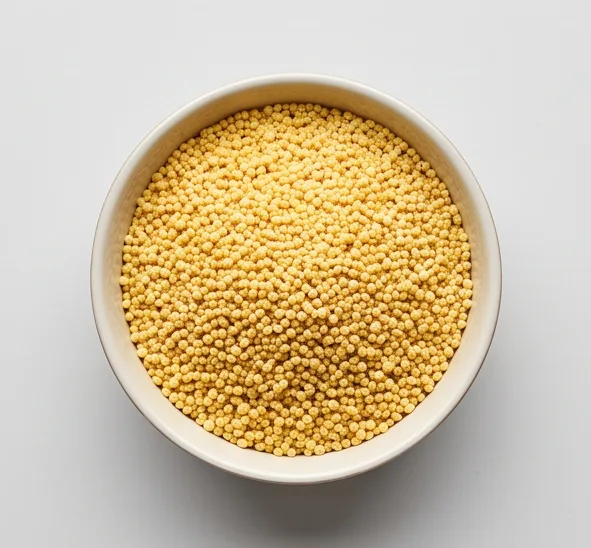
Vlerat ushqyese për 100 g cooked
- Kalori
- 119
- Proteina
- 3.5 g
- Yndyrë
- 1 g
- Karbohidrate
- 24 g
- Fibra
- 1.3 g
Pse ka rëndësi
- →Një burim drithëror i karbohidrateve
- →Natyrisht pa gluten si kokërr e thjeshtë
Përdorime të zakonshme
Përgatitja dhe tekstura
Shpëlajeni dhe gatuajeni sipas varietetit. Më pak ujë jep një kokërr më të qëndrueshme për pilaf; më shumë ujë dhe trazim prodhojnë një qull më të butë.
Çfarë të kontrolloni përpara përdorimit
Pretendimet se meli e bën trupin alkalik ose se ka gjithmonë indeks të ulët glicemik janë çorientuese. Përgjigjja e glukozës në gjak varet nga përpunimi, madhësia e porcionit dhe i gjithë vakti.
Burimet dhe kufizimet
Të dhënat ushqyese përshkruajnë formën e referencës dhe janë të përafërta, jo një analizë laboratorike e blerjes suaj specifike. Varieteti, përmbajtja e ujit, përpunimi dhe pasurimi me lëndë ushqyese mund të ndryshojnë rezultatin. Burimet e mëposhtme shpjegojnë përbërjen e ushqimit, trajtimin e sigurt dhe udhëzimet ushqyese; ato nuk vërtetojnë se një ushqim i caktuar kuron një sëmundje.
Si Mel përshtatet në një ditë normale të të ngrënit
The reference portion of Mel contains 119 kcal, 3.5 g of protein and 1.3 g of fibre per 100 g. Read these figures alongside the preparation state shown above: dry grains, cooked pulses and oils are not interchangeable portions. Multiply each figure by the weight you actually eat divided by 100. A food with little protein or fibre can still have a useful culinary role; it should not be described as a substantial source of those nutrients.
The usual uses of Mel are Qull, Injera (me teff), Pilafi. Choose the portion and preparation for that role rather than assuming every ingredient should be the centre of a meal. For example, herbs season a dish, oils supply concentrated fat, and legumes can contribute protein and fibre. Check the ingredient's own nutrition values and combine it with complementary foods across the day.
Ushqimi për 100 g, dhe për çfarë shërben çdo rresht
| Lënda ushqyese | Për 100 g | Pse ka rëndësi |
|---|---|---|
| Kalori | 119 | Dendësia e energjisë — e dobishme për të gjykuar madhësinë e porcionit në raport me pjesën tjetër të pjatës. |
| Proteina | 3.5 g | Mbështet riparimin e muskujve dhe ngopjen; kombinoje gjatë ditës në vend që ta marrësh të gjithë në një herë. |
| Yndyrë | 1 g | Bart vitaminat e tretshme në yndyrë dhe shijen; lloji i yndyrës ka më shumë rëndësi sesa sasia. |
| Karbohidrate | 24 g | Burimi kryesor i karburantit; karbohidratet nga ushqimet e plota vijnë me fibra dhe minerale të bashkangjitura. |
| Fibra | 1.3 g | Ushqen bakteret e zorrëve, stabilizon sheqerin në gjak dhe është lënda ushqyese që mungon më shumë në dietat. |
Blerja dhe ruajtja e Mel
- Compare the ingredient list and price for the form you need. A plain version may be useful, but fortified products can provide nutrients that an unfortified version lacks.
- Fresh, frozen, canned and dried products differ in water content, added salt and preparation. Compare nutrition using the same preparation state and a realistic serving, not package weight alone.
- Follow the package's storage instructions. Refrigerate perishable foods promptly; a dry cupboard is not appropriate for every ingredient.
- Buy only an amount you can store safely and use before spoilage. A lower unit price does not save money if part of the food is discarded.
Gabime të zakonshme
- Comparing dry and cooked weights as if they were equivalent. Water absorbed during cooking changes the nutrients per 100 g.
- Assuming every plant ingredient supplies meaningful protein, iron or fibre. Use the values above and the portion actually eaten.
- Ignoring food allergies, age-appropriate textures or a medical condition when choosing a serving.
- Assuming every ingredient can be eaten raw. Follow preparation instructions, especially for dried beans and foods requiring cooking.
Gatim me Mel
Përdorimet e zakonshme janë Qull, Injera (me teff), Pilafi. Secila prej tyre është një model dhe jo një recetë: sapo të dish si sillet Mel me nxehtësinë dhe kripën, mund ta fusësh në vaktet që gatuani tashmë në vend që të mësosh një pjatë të re nga fillimi.
Pyetje të tjera që njerëzit bëjnë
Is Mel a good source of protein?
The reference value is 3.5 g per 100 g. Whether that makes a meaningful contribution depends on the serving you eat. A small amount used for seasoning or cooking fat is not equivalent to a main serving of beans or tofu. Compare the prepared portion, not just the ingredient name.
How much Mel should I eat in a day?
There is no universal serving suitable for every ingredient or person. Match the amount to its role, energy density and your overall diet. Allergies, medical conditions, age and preparation matter. A clinician or registered dietitian can advise on individual restrictions.
Is Mel suitable for children and older adults?
Suitability depends on the ingredient, preparation and person. Consider allergies, swallowing and chewing ability, choking hazards and medical restrictions. Whole nuts and hard pieces may need grinding or another texture adjustment. Do not assume an ingredient is safe or nutrient-dense solely because it is plant-based.
Does cooking change the nutrients in Mel?
Cooking may reduce some heat-sensitive vitamins while improving digestibility or making a food safe to eat. Water gain or loss also changes the figures per 100 g. Compare nutrition data for the same cooked or uncooked form, and follow safe preparation instructions rather than avoiding cooking to preserve nutrients.
Is Mel expensive?
Prices vary by region, season, brand and preparation. Compare the cost of the amount you will actually use, including waste and cooking time. An oil, spice or specialty ingredient cannot be judged as a cheap protein source when it supplies little protein in a normal serving.
Vazhdo të eksplorosh
Faqet e lidhura me këtë përmes zëvendësimeve, përbërësve, lëndëve ushqyese dhe vaktëve.