Patata dolce
Le patate dolci sono tuberi amidacei usati in zuppe, purè e piatti al forno. Le varietà a polpa arancione contengono beta-carotene, a differenza di alcune varietà a polpa chiara.
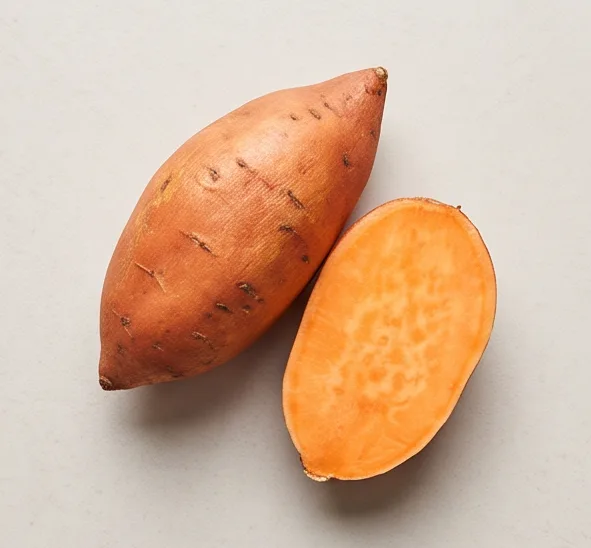
Valori nutrizionali per 100 g raw
- Calorie
- 86
- Proteine
- 1.6 g
- Grassi
- 0.1 g
- Carboidrati
- 20 g
- Fibra
- 3 g
Perché è importante
- →La polpa arancione fornisce beta-carotene
- →I valori differiscono tra prodotto crudo e cotto
Usi comuni
Abbinamenti classici
Cocco · Chipotle · Arachidi · Lime
StagionalitàAutunno–inverno
Preparazione e consistenza
Spazzolare o sbucciare, tagliare a pezzi regolari e cuocere fino a renderle tenere. Schiacciare con una bevanda vegetale o arrostire con spezie; unire legumi o tofu se consumata come piatto principale.
Cosa verificare prima dell'uso
L'apporto di vitamina A dipende dalla varietà, dalla porzione e dalla preparazione. La patata dolce da sola non è un sostituto proteico adeguato di carne o legumi.
Fonti e limiti
I valori nutrizionali descrivono la forma di riferimento e sono indicativi, non costituiscono un'analisi di laboratorio del prodotto acquistato. Varietà, contenuto di acqua, lavorazione e fortificazione possono modificare i dati. Le fonti sottostanti illustrano la composizione degli alimenti, le pratiche per un consumo sicuro e le linee guida nutrizionali; non dimostrano che un singolo alimento sia in grado di curare una malattia.
Come Patata dolce si inserisce in una giornata alimentare normale
The reference portion of Patata dolce contains 86 kcal, 1.6 g of protein and 3 g of fibre per 100 g. Read these figures alongside the preparation state shown above: dry grains, cooked pulses and oils are not interchangeable portions. Multiply each figure by the weight you actually eat divided by 100. A food with little protein or fibre can still have a useful culinary role; it should not be described as a substantial source of those nutrients.
The usual uses of Patata dolce are Al forno, Purè, Curry, Patatine fritte, Base per toast. Choose the portion and preparation for that role rather than assuming every ingredient should be the centre of a meal. For example, herbs season a dish, oils supply concentrated fat, and legumes can contribute protein and fibre. Check the ingredient's own nutrition values and combine it with complementary foods across the day.
Valori nutrizionali per 100 g, e a cosa serve ogni dato
| Nutriente | Per 100 g | Perché è importante |
|---|---|---|
| Calorie | 86 | Densità energetica — utile per valutare la porzione rispetto al resto del piatto. |
| Proteine | 1.6 g | Supporta la riparazione muscolare e la sazietà; meglio distribuirle nell'arco della giornata piuttosto che in un unico pasto. |
| Grassi | 0.1 g | Trasporta vitamine liposolubili e sapore; il tipo di grasso conta più della quantità. |
| Carboidrati | 20 g | Fonte principale di energia; i carboidrati integrali arrivano con fibre e minerali. |
| Fibra | 3 g | Nutre i batteri intestinali, stabilizza la glicemia ed è il nutriente che manca di più nelle diete moderne. |
Acquistare e conservare Patata dolce
- Compare the ingredient list and price for the form you need. A plain version may be useful, but fortified products can provide nutrients that an unfortified version lacks.
- Fresh, frozen, canned and dried products differ in water content, added salt and preparation. Compare nutrition using the same preparation state and a realistic serving, not package weight alone.
- Follow the package's storage instructions. Refrigerate perishable foods promptly; a dry cupboard is not appropriate for every ingredient.
- Buy only an amount you can store safely and use before spoilage. A lower unit price does not save money if part of the food is discarded.
Errori comuni
- Comparing dry and cooked weights as if they were equivalent. Water absorbed during cooking changes the nutrients per 100 g.
- Assuming every plant ingredient supplies meaningful protein, iron or fibre. Use the values above and the portion actually eaten.
- Ignoring food allergies, age-appropriate textures or a medical condition when choosing a serving.
- Assuming every ingredient can be eaten raw. Follow preparation instructions, especially for dried beans and foods requiring cooking.
Cucinare con Patata dolce
Gli usi più comuni sono Al forno, Purè, Curry, Patatine fritte, Base per toast. Ognuno di questi è più un modello che una ricetta: una volta che sai come Patata dolce reagisce al calore e al sale, puoi inserirlo nei piatti che già prepari invece di imparare una nuova ricetta da zero.
Altre domande frequenti
Is Patata dolce a good source of protein?
The reference value is 1.6 g per 100 g. Whether that makes a meaningful contribution depends on the serving you eat. A small amount used for seasoning or cooking fat is not equivalent to a main serving of beans or tofu. Compare the prepared portion, not just the ingredient name.
How much Patata dolce should I eat in a day?
There is no universal serving suitable for every ingredient or person. Match the amount to its role, energy density and your overall diet. Allergies, medical conditions, age and preparation matter. A clinician or registered dietitian can advise on individual restrictions.
Is Patata dolce suitable for children and older adults?
Suitability depends on the ingredient, preparation and person. Consider allergies, swallowing and chewing ability, choking hazards and medical restrictions. Whole nuts and hard pieces may need grinding or another texture adjustment. Do not assume an ingredient is safe or nutrient-dense solely because it is plant-based.
Does cooking change the nutrients in Patata dolce?
Cooking may reduce some heat-sensitive vitamins while improving digestibility or making a food safe to eat. Water gain or loss also changes the figures per 100 g. Compare nutrition data for the same cooked or uncooked form, and follow safe preparation instructions rather than avoiding cooking to preserve nutrients.
Is Patata dolce expensive?
Prices vary by region, season, brand and preparation. Compare the cost of the amount you will actually use, including waste and cooking time. An oil, spice or specialty ingredient cannot be judged as a cheap protein source when it supplies little protein in a normal serving.
Continua a esplorare
Pagine collegate a questa attraverso sostituzioni, ingredienti, nutrienti e pasti.



