Portobello
Portobello is a mature cultivated mushroom, valued for its broad cap and firm texture. It can replace the shape of a burger patty but not its protein content.
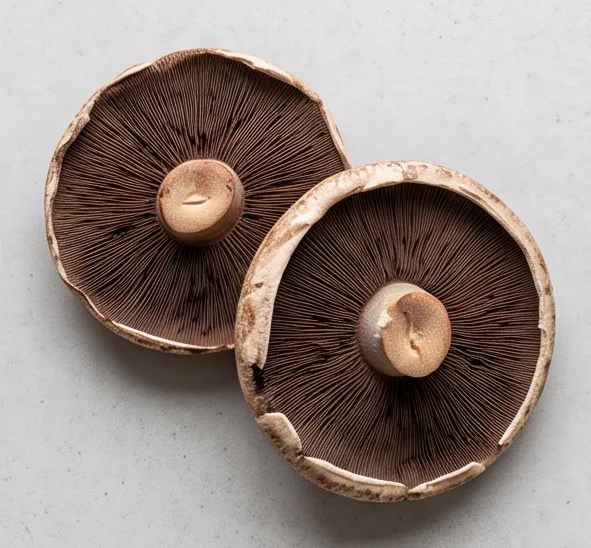
Nutrition per 100 g raw
- Calories
- 22
- Protein
- 2.1 g
- Fat
- 0.4 g
- Carbs
- 3.9 g
- Fibre
- 1.3 g
Why it matters
- →Adds savoury flavour and texture
- →A low-protein alternative to a meat patty
Use it to replace
- • Beef burger patty
Common uses
Preparation and texture
Clean and pat dry, then grill or roast until cooked. Pair with beans, tofu or another protein food when using it in a main dish.
What to check before using it
Mushrooms lose water during cooking, so raw and cooked weights differ. Do not identify wild mushrooms from resemblance to a portobello; buy correctly identified food mushrooms.
Sources and limits
Nutrition figures describe the reference form and are approximate, not a laboratory analysis of your purchase. Variety, water content, processing and fortification can change the result. The sources below explain food composition, safe handling and nutrient guidance; they do not establish that an individual food treats a disease.
Kijan Portobello antre nan yon jounen nòmal manje
The reference portion of Portobello contains 22 kcal, 2.1 g of protein and 1.3 g of fibre per 100 g. Read these figures alongside the preparation state shown above: dry grains, cooked pulses and oils are not interchangeable portions. Multiply each figure by the weight you actually eat divided by 100. A food with little protein or fibre can still have a useful culinary role; it should not be described as a substantial source of those nutrients.
The usual uses of Portobello are Grilled, Stuffed, Sliced in fajitas. Choose the portion and preparation for that role rather than assuming every ingredient should be the centre of a meal. For example, herbs season a dish, oils supply concentrated fat, and legumes can contribute protein and fibre. Check the ingredient's own nutrition values and combine it with complementary foods across the day.
Nitrisyon pou chak 100 g, ak sa chak liy itil pou
| Eleman nitritif | Pou 100 g | Poukisa li enpòtan |
|---|---|---|
| Calories | 22 | Dansite enèji — itil pou jije gwosè pòsyon an parapò ak rès asyèt la. |
| Protein | 2.1 g | Sipòte reparasyon misk ak satyete; pèrsonalize atravè jounen an olye ke nan yon sèl kou. |
| Fat | 0.4 g | Pote vitamin ki fonn nan grès ak gou; kalite grès la pi enpòtan pase kantite a. |
| Carbs | 3.9 g | Sous prensipal gaz; idrat kabòn manje antye vini ak fib ak mineral atache. |
| Fibre | 1.3 g | Nouri bakteri zantray yo, estabilize sik nan san epi se eleman nitritif pifò rejim manke. |
Achte ak estoke Portobello
- Compare the ingredient list and price for the form you need. A plain version may be useful, but fortified products can provide nutrients that an unfortified version lacks.
- Fresh, frozen, canned and dried products differ in water content, added salt and preparation. Compare nutrition using the same preparation state and a realistic serving, not package weight alone.
- Follow the package's storage instructions. Refrigerate perishable foods promptly; a dry cupboard is not appropriate for every ingredient.
- Buy only an amount you can store safely and use before spoilage. A lower unit price does not save money if part of the food is discarded.
Common mistakes
- Comparing dry and cooked weights as if they were equivalent. Water absorbed during cooking changes the nutrients per 100 g.
- Assuming every plant ingredient supplies meaningful protein, iron or fibre. Use the values above and the portion actually eaten.
- Ignoring food allergies, age-appropriate textures or a medical condition when choosing a serving.
- Assuming every ingredient can be eaten raw. Follow preparation instructions, especially for dried beans and foods requiring cooking.
Kwit ak Portobello
Itilizasyon abityèl yo se Grilled, Stuffed, Sliced in fajitas. Chak nan sa yo se yon modèl olye ke yon resèt: yon fwa ou konnen kijan Portobello konpòte li ak chalè ak sèl, ou ka mete li nan manje ou deja kwit olye pou aprann yon nouvo plat depi nan kòmansman.
Plis kesyon moun poze
Is Portobello a good source of protein?
The reference value is 2.1 g per 100 g. Whether that makes a meaningful contribution depends on the serving you eat. A small amount used for seasoning or cooking fat is not equivalent to a main serving of beans or tofu. Compare the prepared portion, not just the ingredient name.
How much Portobello should I eat in a day?
There is no universal serving suitable for every ingredient or person. Match the amount to its role, energy density and your overall diet. Allergies, medical conditions, age and preparation matter. A clinician or registered dietitian can advise on individual restrictions.
Is Portobello suitable for children and older adults?
Suitability depends on the ingredient, preparation and person. Consider allergies, swallowing and chewing ability, choking hazards and medical restrictions. Whole nuts and hard pieces may need grinding or another texture adjustment. Do not assume an ingredient is safe or nutrient-dense solely because it is plant-based.
Does cooking change the nutrients in Portobello?
Cooking may reduce some heat-sensitive vitamins while improving digestibility or making a food safe to eat. Water gain or loss also changes the figures per 100 g. Compare nutrition data for the same cooked or uncooked form, and follow safe preparation instructions rather than avoiding cooking to preserve nutrients.
Is Portobello expensive?
Prices vary by region, season, brand and preparation. Compare the cost of the amount you will actually use, including waste and cooking time. An oil, spice or specialty ingredient cannot be judged as a cheap protein source when it supplies little protein in a normal serving.
Kontinye eksplore
Paj ki gen rapò ak sa a atravè echanj, engredyan, eleman nitritif ak repa.



