Tomatoes
Tomatoes add acidity and umami to sauces, salads and soups. Variety and ripeness change their flavour; cooking changes their texture and lycopene availability.
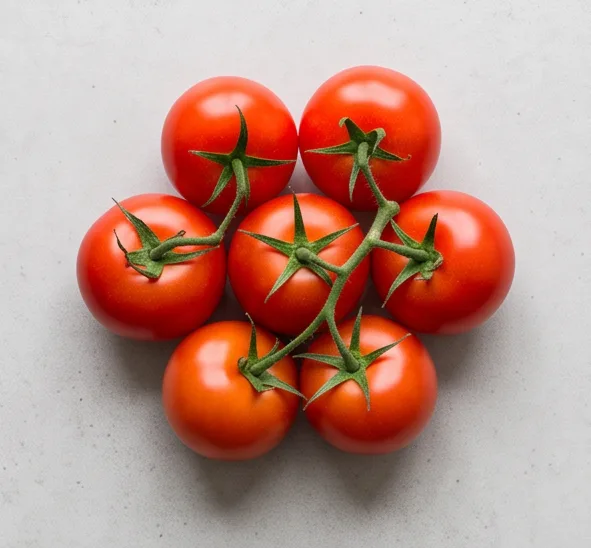
Nutrition per 100 g raw
- Calories
- 18
- Protein
- 0.9 g
- Fat
- 0.2 g
- Carbs
- 3.9 g
- Fibre
- 1.2 g
Why it matters
- →Useful fresh or cooked
- →Fresh, canned and dried forms differ
Common uses
SeasonalitySummer
Preparation and texture
Cook chopped tomatoes into a sauce or use ripe tomatoes raw. Adjust acidity and salt to the whole dish rather than assuming every canned product is seasoned alike.
What to check before using it
A nutrient's antioxidant properties do not prove that a food prevents heart disease. Prepared tomato sauces may include cheese, cream or animal stock.
Sources and limits
Nutrition figures describe the reference form and are approximate, not a laboratory analysis of your purchase. Variety, water content, processing and fortification can change the result. The sources below explain food composition, safe handling and nutrient guidance; they do not establish that an individual food treats a disease.
როგორ ჯდება Tomatoes ჩვეულებრივ კვების რეჟიმში
The reference portion of Tomatoes contains 18 kcal, 0.9 g of protein and 1.2 g of fibre per 100 g. Read these figures alongside the preparation state shown above: dry grains, cooked pulses and oils are not interchangeable portions. Multiply each figure by the weight you actually eat divided by 100. A food with little protein or fibre can still have a useful culinary role; it should not be described as a substantial source of those nutrients.
The usual uses of Tomatoes are Sauce, Salad, Roast, Confit. Choose the portion and preparation for that role rather than assuming every ingredient should be the centre of a meal. For example, herbs season a dish, oils supply concentrated fat, and legumes can contribute protein and fibre. Check the ingredient's own nutrition values and combine it with complementary foods across the day.
კვებითი ღირებულება 100 გრამზე, და რისთვის არის თითოეული მაჩვენებელი
| ნუტრიენტი | 100 გრამზე | რატომ არის მნიშვნელოვანი |
|---|---|---|
| Calories | 18 | ენერგეტიკული სიმკვრივე — გამოსადეგია ულუფის ზომის შესაფასებლად თეფშზე დანარჩენ საკვებთან შედარებით. |
| Protein | 0.9 g | ხელს უწყობს კუნთების აღდგენასა და გაჯერებას; უმჯობესია მისი მიღება მთელი დღის განმავლობაში გადანაწილდეს, ვიდრე ერთჯერადად. |
| Fat | 0.2 g | ატარებს ცხიმში ხსნად ვიტამინებსა და არომატს; ცხიმის ტიპი უფრო მნიშვნელოვანია, ვიდრე რაოდენობა. |
| Carbs | 3.9 g | ენერგიის მთავარი წყარო; მთლიანი მარცვლეულის ნახშირწყლები ბოჭკოსა და მინერალებთან ერთად მოდის. |
| Fibre | 1.2 g | კვებავს ნაწლავის ბაქტერიებს, ასტაბილურებს სისხლში შაქარს და არის ის ნუტრიენტი, რომელიც ყველაზე ხშირად აკლია დიეტებს. |
Tomatoes-ის ყიდვა და შენახვა
- Compare the ingredient list and price for the form you need. A plain version may be useful, but fortified products can provide nutrients that an unfortified version lacks.
- Fresh, frozen, canned and dried products differ in water content, added salt and preparation. Compare nutrition using the same preparation state and a realistic serving, not package weight alone.
- Follow the package's storage instructions. Refrigerate perishable foods promptly; a dry cupboard is not appropriate for every ingredient.
- Buy only an amount you can store safely and use before spoilage. A lower unit price does not save money if part of the food is discarded.
ხშირი შეცდომები
- Comparing dry and cooked weights as if they were equivalent. Water absorbed during cooking changes the nutrients per 100 g.
- Assuming every plant ingredient supplies meaningful protein, iron or fibre. Use the values above and the portion actually eaten.
- Ignoring food allergies, age-appropriate textures or a medical condition when choosing a serving.
- Assuming every ingredient can be eaten raw. Follow preparation instructions, especially for dried beans and foods requiring cooking.
Tomatoes-ის მომზადება
ჩვეულებრივი გამოყენებაა Sauce, Salad, Roast, Confit. თითოეული მათგანი უფრო შაბლონია, ვიდრე რეცეპტი: როგორც კი გაიგებთ, როგორ იქცევა Tomatoes სითბოსა და მარილთან, შეგიძლიათ ჩართოთ ის თქვენს უკვე ნაცნობ კერძებში, ახალი რეცეპტის სწავლის გარეშე.
ხშირად დასმული კითხვები
Is Tomatoes a good source of protein?
The reference value is 0.9 g per 100 g. Whether that makes a meaningful contribution depends on the serving you eat. A small amount used for seasoning or cooking fat is not equivalent to a main serving of beans or tofu. Compare the prepared portion, not just the ingredient name.
How much Tomatoes should I eat in a day?
There is no universal serving suitable for every ingredient or person. Match the amount to its role, energy density and your overall diet. Allergies, medical conditions, age and preparation matter. A clinician or registered dietitian can advise on individual restrictions.
Is Tomatoes suitable for children and older adults?
Suitability depends on the ingredient, preparation and person. Consider allergies, swallowing and chewing ability, choking hazards and medical restrictions. Whole nuts and hard pieces may need grinding or another texture adjustment. Do not assume an ingredient is safe or nutrient-dense solely because it is plant-based.
Does cooking change the nutrients in Tomatoes?
Cooking may reduce some heat-sensitive vitamins while improving digestibility or making a food safe to eat. Water gain or loss also changes the figures per 100 g. Compare nutrition data for the same cooked or uncooked form, and follow safe preparation instructions rather than avoiding cooking to preserve nutrients.
Is Tomatoes expensive?
Prices vary by region, season, brand and preparation. Compare the cost of the amount you will actually use, including waste and cooking time. An oil, spice or specialty ingredient cannot be judged as a cheap protein source when it supplies little protein in a normal serving.
განაგრძე შესწავლა
გვერდები, რომლებიც ერთმანეთთან არის დაკავშირებული შეცვლებით, ინგრედიენტებით, ნუტრიენტებით და კერძებით.



