Walnuts
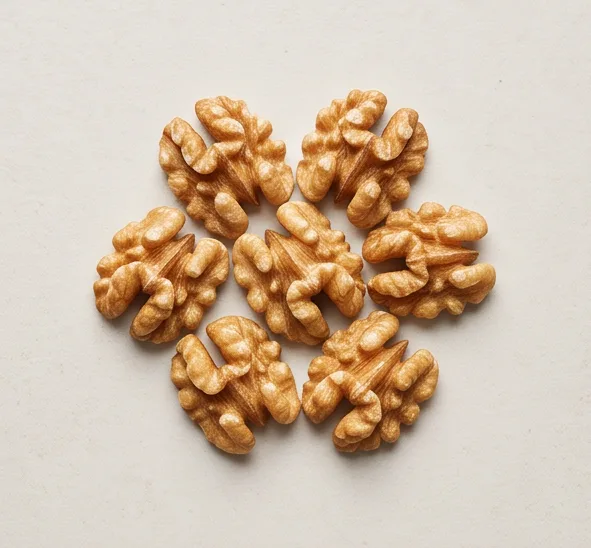
Walnuts have a rich, slightly bitter flavour and contribute the plant omega-3 fatty acid ALA. They suit sauces, salads and baking.
Nutrition per 100 g
- Calories
- 654
- Protein
- 15 g
- Fat
- 65 g
- Carbs
- 14 g
- Fibre
- 6.7 g
Why it matters
- →An ALA source
- →Adds texture rather than replacing every property of meat
Common uses
Preparation and texture
Chop into a lentil filling or blend with herbs for a dairy-free pesto. Store airtight and follow refrigeration guidance where supplied to limit rancidity.
What to check before using it
ALA is not the same as EPA or DHA. Walnuts are a tree-nut allergen; ground walnuts still carry the allergen even when hidden in a sauce.
Sources and limits
Nutrition figures describe the reference form and are approximate, not a laboratory analysis of your purchase. Variety, water content, processing and fortification can change the result. The sources below explain food composition, safe handling and nutrient guidance; they do not establish that an individual food treats a disease.
Comment Walnuts s'intègre dans une journée alimentaire normale
The reference portion of Walnuts contains 654 kcal, 15 g of protein and 6.7 g of fibre per 100 g. Read these figures alongside the preparation state shown above: dry grains, cooked pulses and oils are not interchangeable portions. Multiply each figure by the weight you actually eat divided by 100. A food with little protein or fibre can still have a useful culinary role; it should not be described as a substantial source of those nutrients.
The usual uses of Walnuts are Salad, Pesto (in place of pine nuts), Bolognese base, Baking. Choose the portion and preparation for that role rather than assuming every ingredient should be the centre of a meal. For example, herbs season a dish, oils supply concentrated fat, and legumes can contribute protein and fibre. Check the ingredient's own nutrition values and combine it with complementary foods across the day.
Valeurs nutritionnelles pour 100 g, et à quoi sert chaque ligne
| Nutriment | Pour 100 g | Pourquoi c'est important |
|---|---|---|
| Calories | 654 | Densité énergétique — utile pour évaluer la portion par rapport au reste de l'assiette. |
| Protein | 15 g | Favorise la réparation musculaire et la satiété ; à répartir sur la journée plutôt qu'en une seule fois. |
| Fat | 65 g | Transporte les vitamines liposolubles et la saveur ; le type de gras compte plus que la quantité. |
| Carbs | 14 g | Source d'énergie principale ; les glucides issus d'aliments complets arrivent avec des fibres et des minéraux. |
| Fibre | 6.7 g | Nourrit les bactéries intestinales, stabilise la glycémie et est le nutriment le plus souvent insuffisant dans l'alimentation. |
Acheter et conserver Walnuts
- Compare the ingredient list and price for the form you need. A plain version may be useful, but fortified products can provide nutrients that an unfortified version lacks.
- Fresh, frozen, canned and dried products differ in water content, added salt and preparation. Compare nutrition using the same preparation state and a realistic serving, not package weight alone.
- Follow the package's storage instructions. Refrigerate perishable foods promptly; a dry cupboard is not appropriate for every ingredient.
- Buy only an amount you can store safely and use before spoilage. A lower unit price does not save money if part of the food is discarded.
Erreurs courantes
- Comparing dry and cooked weights as if they were equivalent. Water absorbed during cooking changes the nutrients per 100 g.
- Assuming every plant ingredient supplies meaningful protein, iron or fibre. Use the values above and the portion actually eaten.
- Ignoring food allergies, age-appropriate textures or a medical condition when choosing a serving.
- Assuming every ingredient can be eaten raw. Follow preparation instructions, especially for dried beans and foods requiring cooking.
Cuisiner avec Walnuts
Les utilisations courantes sont Salad, Pesto (in place of pine nuts), Bolognese base, Baking. Chacune est un modèle plutôt qu'une recette : une fois que vous savez comment Walnuts réagit à la chaleur et au sel, vous pouvez l'intégrer dans des plats que vous cuisinez déjà, sans avoir à apprendre une nouvelle recette de zéro.
Autres questions fréquentes
Is Walnuts a good source of protein?
The reference value is 15 g per 100 g. Whether that makes a meaningful contribution depends on the serving you eat. A small amount used for seasoning or cooking fat is not equivalent to a main serving of beans or tofu. Compare the prepared portion, not just the ingredient name.
How much Walnuts should I eat in a day?
There is no universal serving suitable for every ingredient or person. Match the amount to its role, energy density and your overall diet. Allergies, medical conditions, age and preparation matter. A clinician or registered dietitian can advise on individual restrictions.
Is Walnuts suitable for children and older adults?
Suitability depends on the ingredient, preparation and person. Consider allergies, swallowing and chewing ability, choking hazards and medical restrictions. Whole nuts and hard pieces may need grinding or another texture adjustment. Do not assume an ingredient is safe or nutrient-dense solely because it is plant-based.
Does cooking change the nutrients in Walnuts?
Cooking may reduce some heat-sensitive vitamins while improving digestibility or making a food safe to eat. Water gain or loss also changes the figures per 100 g. Compare nutrition data for the same cooked or uncooked form, and follow safe preparation instructions rather than avoiding cooking to preserve nutrients.
Is Walnuts expensive?
Prices vary by region, season, brand and preparation. Compare the cost of the amount you will actually use, including waste and cooking time. An oil, spice or specialty ingredient cannot be judged as a cheap protein source when it supplies little protein in a normal serving.
Continuez à explorer
Pages liées à celle-ci concernant les substituts, ingrédients, nutriments et repas.