퀴노아
퀴노아는 안데스산 씨앗으로, 곡물처럼 조리하여 섭취합니다. 맛이 순하여 필라프, 샐러드, 보울 요리에 잘 어울립니다.
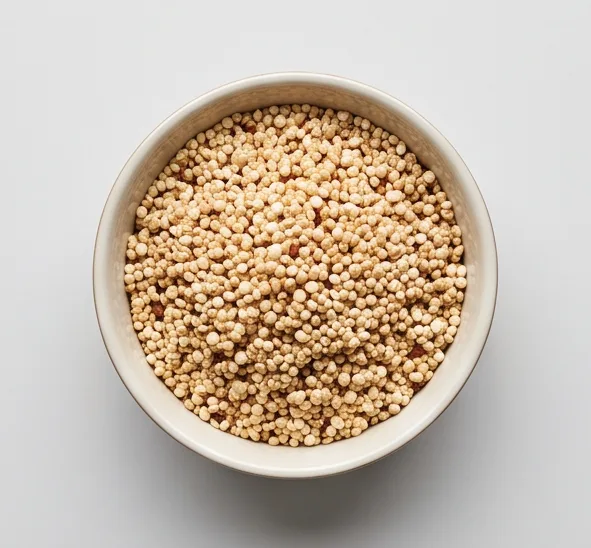
원산지안데스 산맥 — 잉카와 잉카 이전 문명이 재배.
영양성분 100 g cooked 기준
- 열량
- 120
- 단백질
- 4.4 g
- 지방
- 1.9 g
- 탄수화물
- 21 g
- 식이섬유
- 2.8 g
중요한 이유
- →익힌 분량 기준으로 단백질과 식이섬유를 공급합니다
- →가공 환경에 따라 달라질 수 있으나 본래 글루텐이 없습니다
주로 쓰이는 곳
클래식한 궁합
구운 채소 · 레몬 · 허브 · 두부 페타
조리법 및 식감
포장 지침에 따라 겉면의 쓴맛을 줄이기 위해 물로 헹구세요. 부드러워질 때까지 끓인 뒤, 뜸을 들이고 포크 등으로 가볍게 섞어 채소나 콩과 버무리세요.
섭취 전 확인 사항
익힌 퀴노아 1회 분량은 두부나 콩류만큼 단백질이 농축되어 있지 않습니다. 아미노산 조성이 완전하다고 해서 1회 분량만으로 하루 전체 단백질 필요량을 채울 수 있는 것은 아닙니다.
출처 및 한계
영양 성분 수치는 기준 형태를 설명하며 근사치일 뿐, 실제 구매하신 제품에 대한 실험실 분석 결과가 아닙니다. 품종, 수분 함량, 가공 방식 및 영양 강화 여부에 따라 결과가 달라질 수 있습니다. 아래 출처는 식품 구성, 안전한 취급법 및 영양 지침을 설명하는 자료이며, 특정 식품이 질병을 치료한다는 근거가 되지는 않습니다.
하루 식사에서 퀴노아의 역할
The reference portion of 퀴노아 contains 120 kcal, 4.4 g of protein and 2.8 g of fibre per 100 g. Read these figures alongside the preparation state shown above: dry grains, cooked pulses and oils are not interchangeable portions. Multiply each figure by the weight you actually eat divided by 100. A food with little protein or fibre can still have a useful culinary role; it should not be described as a substantial source of those nutrients.
The usual uses of 퀴노아 are 샐러드 베이스, 필라프, 아침 식사 볼, 속 재료. Choose the portion and preparation for that role rather than assuming every ingredient should be the centre of a meal. For example, herbs season a dish, oils supply concentrated fat, and legumes can contribute protein and fibre. Check the ingredient's own nutrition values and combine it with complementary foods across the day.
100g당 영양 성분과 각 항목의 실제 의미
| 영양소 | 100g당 | 중요한 이유 |
|---|---|---|
| 열량 | 120 | 에너지 밀도 — 접시 위에서 적정 분량을 가늠하는 데 유용합니다. |
| 단백질 | 4.4 g | 근육 회복과 포만감 유지에 도움; 하루에 한 번에 몰아먹기보다 여러 끼에 나눠 섭취하세요. |
| 지방 | 1.9 g | 지용성 비타민과 풍미를 전달; 지방의 종류가 양보다 중요합니다. |
| 탄수화물 | 21 g | 주요 에너지원; 통곡물 탄수화물은 식이섬유와 미네랄이 함께 들어 있습니다. |
| 식이섬유 | 2.8 g | 장내 유익균을 키우고 혈당을 안정시키며, 대부분의 식단에서 부족하기 쉬운 영양소입니다. |
퀴노아 구매 및 보관법
- Compare the ingredient list and price for the form you need. A plain version may be useful, but fortified products can provide nutrients that an unfortified version lacks.
- Fresh, frozen, canned and dried products differ in water content, added salt and preparation. Compare nutrition using the same preparation state and a realistic serving, not package weight alone.
- Follow the package's storage instructions. Refrigerate perishable foods promptly; a dry cupboard is not appropriate for every ingredient.
- Buy only an amount you can store safely and use before spoilage. A lower unit price does not save money if part of the food is discarded.
흔한 실수
- Comparing dry and cooked weights as if they were equivalent. Water absorbed during cooking changes the nutrients per 100 g.
- Assuming every plant ingredient supplies meaningful protein, iron or fibre. Use the values above and the portion actually eaten.
- Ignoring food allergies, age-appropriate textures or a medical condition when choosing a serving.
- Assuming every ingredient can be eaten raw. Follow preparation instructions, especially for dried beans and foods requiring cooking.
퀴노아 요리법
보통 샐러드 베이스, 필라프, 아침 식사 볼, 속 재료에 사용됩니다. 각각은 레시피라기보다 템플릿입니다. 퀴노아이 열과 소금에 어떻게 반응하는지만 알면, 새로운 요리를 배우지 않고도 이미 하는 요리에 쉽게 넣을 수 있습니다.
사람들이 자주 묻는 질문
Is 퀴노아 a good source of protein?
The reference value is 4.4 g per 100 g. Whether that makes a meaningful contribution depends on the serving you eat. A small amount used for seasoning or cooking fat is not equivalent to a main serving of beans or tofu. Compare the prepared portion, not just the ingredient name.
How much 퀴노아 should I eat in a day?
There is no universal serving suitable for every ingredient or person. Match the amount to its role, energy density and your overall diet. Allergies, medical conditions, age and preparation matter. A clinician or registered dietitian can advise on individual restrictions.
Is 퀴노아 suitable for children and older adults?
Suitability depends on the ingredient, preparation and person. Consider allergies, swallowing and chewing ability, choking hazards and medical restrictions. Whole nuts and hard pieces may need grinding or another texture adjustment. Do not assume an ingredient is safe or nutrient-dense solely because it is plant-based.
Does cooking change the nutrients in 퀴노아?
Cooking may reduce some heat-sensitive vitamins while improving digestibility or making a food safe to eat. Water gain or loss also changes the figures per 100 g. Compare nutrition data for the same cooked or uncooked form, and follow safe preparation instructions rather than avoiding cooking to preserve nutrients.
Is 퀴노아 expensive?
Prices vary by region, season, brand and preparation. Compare the cost of the amount you will actually use, including waste and cooking time. An oil, spice or specialty ingredient cannot be judged as a cheap protein source when it supplies little protein in a normal serving.
더 둘러보기
대체재, 재료, 영양소, 식사별로 연결된 페이지입니다.



