Watercress
Ang watercress ay isang maanghang-anghang na madahong gulay na ginagamit sa mga ensalada, sandwich, at sabaw. Nagbibigay ito ng ilang micronutrient ngunit hindi ito kumpletong pagkain.
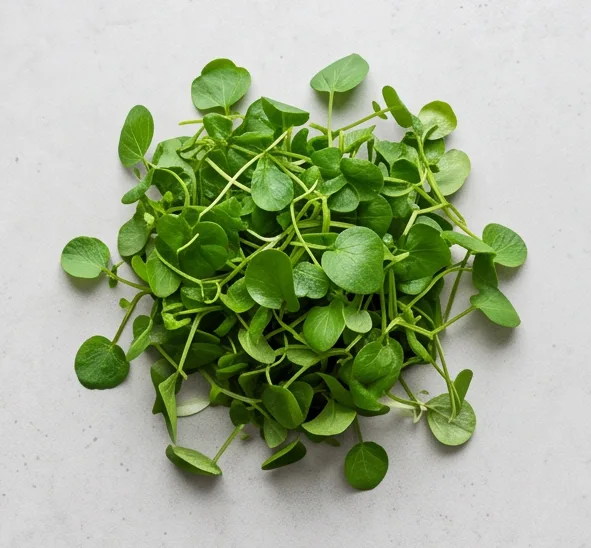
Nutrisyon bawat 100 g raw
- Calories
- 11
- Protina
- 2.3 g
- Taba
- 0.1 g
- Carbohydrates
- 1.3 g
- Hibla
- 0.5 g
Bakit ito mahalaga
- →Nagdaragdag ng maanghang-anghang na lasa
- →Isang madahong gulay, hindi pangkalahatang nagwagi sa ranggo ng nutrisyon
Karaniwang gamit
Paghahanda at tekstura
Bumili mula sa mapagkakatiwalaang tindahan, hugasan ayon sa tagubilin, at alisin ang matitigas na tangkay. Idagdag sa mga sabaw malapit nang matapos o ihalo sa mas banayad na dahon ng ensalada.
Mga dapat suriin bago gamitin
Huwag manguha ng watercress mula sa mga daanan ng tubig na maaaring kontaminado. Inihahambing ng isang pag-aaral sa nutrient density ang piling sustansya sa piling pagkain; hindi nito pinapatunayan na ang isang gulay ang pinakamainam para sa lahat ng tao.
Mga pinagmulan at limitasyon
Naglalarawan ang mga datos ng nutrisyon sa batayang anyo at mga pagtatantya lamang, hindi laboratoryong pagsusuri ng iyong binili. Maaaring magbago ang resulta dahil sa barayti, dami ng tubig, pagpoproseso, at fortipikasyon. Ipinapaliwanag ng mga sanggunian sa ibaba ang komposisyon ng pagkain, ligtas na paghawak, at gabay sa sustansya; hindi nito pinapatunayan na nagpapagaling ng sakit ang isang partikular na pagkain.
Paano umaangkop ang Watercress sa isang normal na araw ng pagkain
The reference portion of Watercress contains 11 kcal, 2.3 g of protein and 0.5 g of fibre per 100 g. Read these figures alongside the preparation state shown above: dry grains, cooked pulses and oils are not interchangeable portions. Multiply each figure by the weight you actually eat divided by 100. A food with little protein or fibre can still have a useful culinary role; it should not be described as a substantial source of those nutrients.
The usual uses of Watercress are Salad, Gulay sa sandwich, Sopas. Choose the portion and preparation for that role rather than assuming every ingredient should be the centre of a meal. For example, herbs season a dish, oils supply concentrated fat, and legumes can contribute protein and fibre. Check the ingredient's own nutrition values and combine it with complementary foods across the day.
Nutrisyon bawat 100 g, at kung para saan ang bawat linya
| Nutriyente | Bawat 100 g | Bakit ito mahalaga |
|---|---|---|
| Calories | 11 | Densidad ng enerhiya — kapaki-pakinabang para sa paghusga sa laki ng bahagi laban sa iba pang nasa plato. |
| Protina | 2.3 g | Sumusuporta sa pag-aayos ng kalamnan at pagkabusog; ipares sa buong araw sa halip na sa isang upuan. |
| Taba | 0.1 g | Nagdadala ng mga bitamina na natutunaw sa taba at lasa; mas mahalaga ang uri ng taba kaysa sa dami. |
| Carbohydrates | 1.3 g | Pangunahing pinagkukunan ng gasolina; ang whole-food carbohydrate ay may kasamang fiber at mineral. |
| Hibla | 0.5 g | Nagpapakain sa gut bacteria, nagpapatatag ng blood sugar, at ito ang nutrient na madalas kulang sa diet. |
Pagbili at pag-iimbak ng Watercress
- Compare the ingredient list and price for the form you need. A plain version may be useful, but fortified products can provide nutrients that an unfortified version lacks.
- Fresh, frozen, canned and dried products differ in water content, added salt and preparation. Compare nutrition using the same preparation state and a realistic serving, not package weight alone.
- Follow the package's storage instructions. Refrigerate perishable foods promptly; a dry cupboard is not appropriate for every ingredient.
- Buy only an amount you can store safely and use before spoilage. A lower unit price does not save money if part of the food is discarded.
Mga karaniwang pagkakamali
- Comparing dry and cooked weights as if they were equivalent. Water absorbed during cooking changes the nutrients per 100 g.
- Assuming every plant ingredient supplies meaningful protein, iron or fibre. Use the values above and the portion actually eaten.
- Ignoring food allergies, age-appropriate textures or a medical condition when choosing a serving.
- Assuming every ingredient can be eaten raw. Follow preparation instructions, especially for dried beans and foods requiring cooking.
Pagluluto gamit ang Watercress
Ang karaniwang gamit ay Salad, Gulay sa sandwich, Sopas. Bawat isa sa mga iyon ay isang template sa halip na isang recipe: kapag alam mo na kung paano kumilos ang Watercress sa init at asin, maaari mo itong isingit sa mga pagkain na niluluto mo na sa halip na matuto ng bagong putahe mula sa simula.
Iba pang tanong ng mga tao
Is Watercress a good source of protein?
The reference value is 2.3 g per 100 g. Whether that makes a meaningful contribution depends on the serving you eat. A small amount used for seasoning or cooking fat is not equivalent to a main serving of beans or tofu. Compare the prepared portion, not just the ingredient name.
How much Watercress should I eat in a day?
There is no universal serving suitable for every ingredient or person. Match the amount to its role, energy density and your overall diet. Allergies, medical conditions, age and preparation matter. A clinician or registered dietitian can advise on individual restrictions.
Is Watercress suitable for children and older adults?
Suitability depends on the ingredient, preparation and person. Consider allergies, swallowing and chewing ability, choking hazards and medical restrictions. Whole nuts and hard pieces may need grinding or another texture adjustment. Do not assume an ingredient is safe or nutrient-dense solely because it is plant-based.
Does cooking change the nutrients in Watercress?
Cooking may reduce some heat-sensitive vitamins while improving digestibility or making a food safe to eat. Water gain or loss also changes the figures per 100 g. Compare nutrition data for the same cooked or uncooked form, and follow safe preparation instructions rather than avoiding cooking to preserve nutrients.
Is Watercress expensive?
Prices vary by region, season, brand and preparation. Compare the cost of the amount you will actually use, including waste and cooking time. An oil, spice or specialty ingredient cannot be judged as a cheap protein source when it supplies little protein in a normal serving.
Magpatuloy sa Paggalugad
Mga kaugnay na pahina sa mga kapalit, sangkap, sustansya, at pagkain.



