Meal planner v2

A whole vegan week, built to your rules

Set a goal, a budget ceiling, a cooking-time limit and any allergens, and the planner deals seven days of breakfasts, lunches and dinners from 40 tested recipes — with per-day protein and calories and one combined shopping list.

Goal

39 recipes match these rules.

Shopping list
Protein / day
50 g
Energy / day
1197 kcal
Week's food cost
$18.60

Monday

1030 kcal · 41 g P
  • Breakfast: Savoury miso porridge
    12 min · 16 g protein · $0.85
  • Lunch: Three-bean freezer chilli
    45 min · 19 g protein · $0.85
  • Dinner: The base roasting tray
    40 min · 6 g protein · $0.60

Tuesday

1170 kcal · 55 g P
  • Breakfast: Turmeric tofu scramble
    10 min · 24 g protein · $1.10
  • Lunch: Make-your-own veggie pizzas
    30 min · 17 g protein · $1.10
  • Dinner: Crispy bean nuggets
    35 min · 14 g protein · $0.80

Wednesday

1050 kcal · 45 g P
  • Breakfast: Green protein smoothie
    4 min · 21 g protein · $1.00
  • Lunch: The base roasting tray
    40 min · 6 g protein · $0.60
  • Dinner: Red lentil dal
    25 min · 18 g protein · $0.60

Thursday

1190 kcal · 53 g P
  • Breakfast: Beans on wholegrain toast
    5 min · 20 g protein · $0.55
  • Lunch: Banana oat pancakes
    15 min · 12 g protein · $0.55
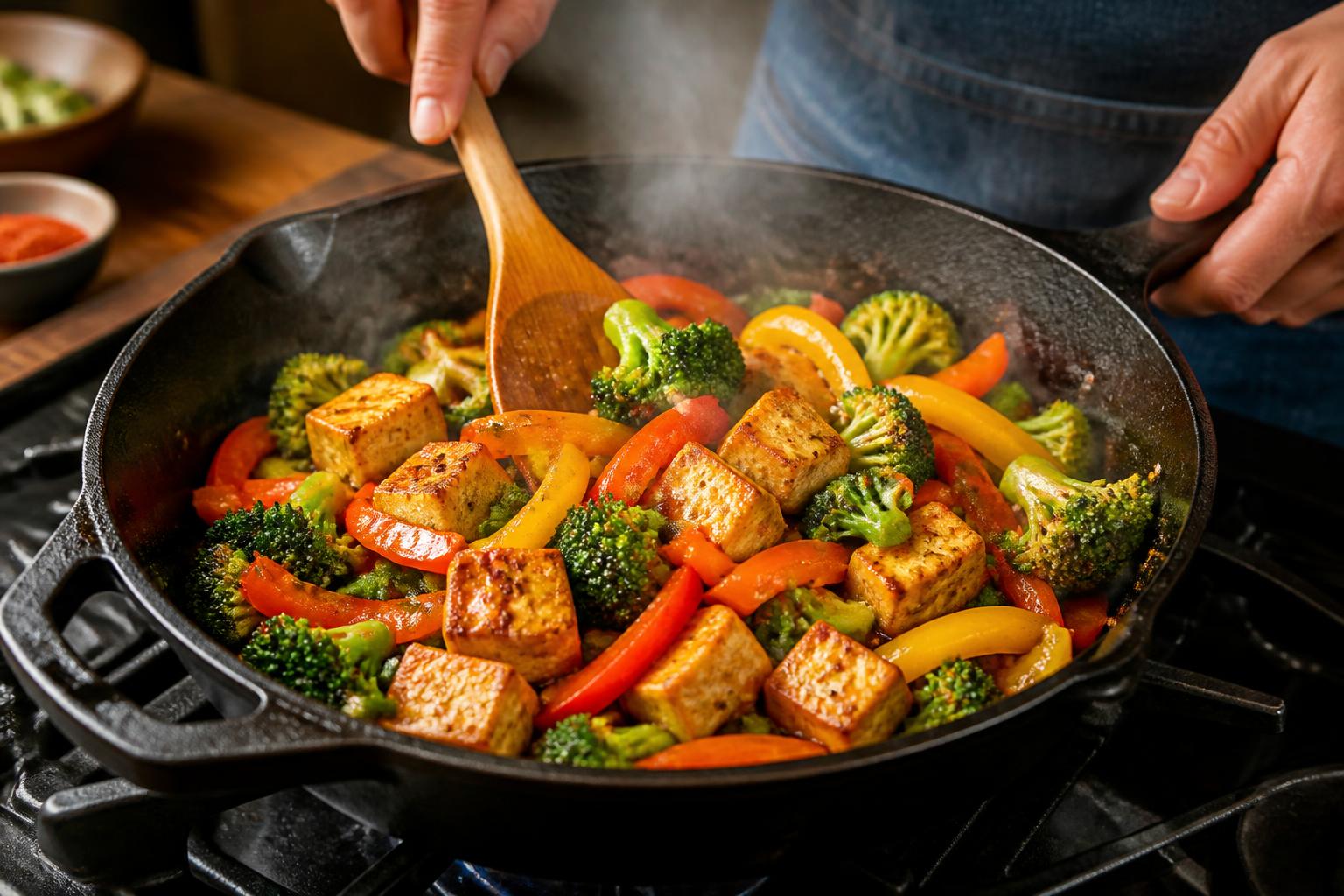
  • Dinner: Sheet-pan tofu and vegetables
    35 min · 21 g protein · $1.40

Friday

1240 kcal · 49 g P
  • Breakfast: Chickpea flour omelette
    15 min · 19 g protein · $0.80
  • Lunch: Chana masala
    35 min · 17 g protein · $0.75
  • Dinner: Hummus and dipper lunchbox
    10 min · 13 g protein · $1.00

Saturday

1330 kcal · 47 g P
  • Breakfast: Soy overnight oats with berries
    5 min · 17 g protein · $0.70
  • Lunch: Hummus and dipper lunchbox
    10 min · 13 g protein · $1.00
  • Dinner: Make-your-own veggie pizzas
    30 min · 17 g protein · $1.10

Sunday

1370 kcal · 60 g P
  • Breakfast: Weekend tofu shakshuka
    30 min · 23 g protein · $1.60
  • Lunch: Lentil bolognese
    45 min · 20 g protein · $0.95
  • Dinner: Cuban-style black bean soup
    40 min · 17 g protein · $0.70

Shopping list

  • 1 bay leaf
  • 1 frozen banana
  • 1 head broccoli
  • 1 onion
  • 1 onion, 2 carrots, 2 celery sticks
  • 1 spring onion
  • 1 tbsp chia seeds
  • 1 tbsp cocoa
  • 1 tbsp ground flaxseed
  • 1 tbsp ground flaxseed + 3 tbsp water
  • 1 tbsp maple syrup
  • 1 tbsp nutritional yeast
  • 1 tbsp white miso
  • 1 tin (400 g) baked beans or cannellini in tomato
  • 1 tin chopped tomatoes
  • 1 tin coconut milk
  • 1 tin each kidney, black and pinto beans
  • 1 tsp baking powder
  • 1 tsp cocoa
  • 1 tsp garlic powder, 1 tsp paprika
  • 1 tsp olive oil
  • 1 tsp sesame oil
  • 1 tsp smoked paprika
  • 1 wholemeal pitta
  • 1.2 l water
  • ½ tsp kala namak (black salt)
  • ½ tsp turmeric
  • ¼ tsp baking powder
  • ¼ tsp turmeric
  • 100 g frozen berries
  • 100 g walnuts, chopped fine
  • 120 g oats, blitzed to flour
  • 150 ml water
  • 2 onions
  • 2 onions, 1 green pepper
  • 2 onions, 2 peppers
  • 2 red onions
  • 2 red peppers, sliced
  • 2 ripe bananas
  • 2 slices wholegrain bread
  • 2 sweet potatoes
  • 2 tbsp cornflour
  • 2 tbsp cumin, 1 tbsp smoked paprika, 1 tsp cinnamon, chilli to taste
  • 2 tbsp curry powder
  • 2 tbsp maple syrup
  • 2 tbsp oil
  • 2 tbsp olive oil
  • 2 tbsp peanut butter
  • 2 tbsp soy sauce or miso
  • 2 tbsp tomato purée
  • 2 tins cannellini beans
  • 2 tins chopped tomatoes
  • 2 tsp cumin, 1 tsp oregano
  • 2 tsp cumin, 1 tsp smoked paprika, ½ tsp chilli
  • 2 tsp cumin, 2 tsp coriander, 1 tsp garam masala, ½ tsp chilli
  • 2 tsp sesame oil
  • 200 g firm tofu, drained
  • 200 g frozen sweetcorn
  • 200 ml fortified soy milk
  • 3 garlic cloves
  • 3 peppers
  • 3 tbsp soy sauce
  • 3 tins black beans (about 720 g drained total)
  • 3 tins chickpeas (or 400 g dried, cooked)
  • 300 g firm tofu
  • 300 ml fortified unsweetened soy milk
  • 300 ml water
  • 350 g brown or puy lentils
  • 4 garlic cloves
  • 4 garlic cloves, ginger
  • 4 small pizza bases or pittas
  • 4 tbsp hummus
  • 500 g red lentils
  • 6 garlic cloves
  • 60 g rolled oats
  • 600 g firm tofu, pressed and cubed
  • 80 g breadcrumbs
  • 80 g chickpea (gram) flour
  • 80 g oats, blitzed
  • Black pepper
  • Bread to serve
  • Broccoli, peppers, red onion
  • Carrot and cucumber sticks
  • Cherry tomatoes
  • Handful of frozen edamame
  • Handful of grapes
  • Handful of mushrooms and spinach
  • Handful of spinach
  • Large handful spinach
  • Lemon
  • Oil spray
  • Optional: nutritional yeast
  • Oregano, bay
  • Parsley
  • Pinch of cinnamon
  • Rice to serve
  • Salt, pepper
  • Salt, pepper, cumin
  • Sesame seeds
  • Small flapjack
  • Spinach to finish
  • Sweetcorn, peppers, olives
  • Thumb of ginger
  • Tomato passata
  • Vegan cheese
  • Vinegar and lime to finish
  • White bean and garlic spread

Questions

How does the 7-day vegan meal planner build a week?

It filters a library of tested plant-based recipes by your goal, budget ceiling, cooking-time limit and any allergen exclusions, then deals breakfasts, lunches and dinners across seven days without repeating a recipe until the pool runs out.

Can I plan a high-protein vegan week?

Yes. Choose the high-protein goal and the planner prefers recipes at 20 g or more of protein per serving — tofu, tempeh, seitan, lentils and soy — usually landing between 90 and 130 g of protein a day for three meals.

How cheap can a vegan week be?

With the budget goal, most weeks come out under about 1 USD per serving. Dried legumes, oats, rice, frozen vegetables and seasonal produce are what keep the number down; convenience meat alternatives are what push it up.

Can I avoid gluten, soy or nuts?

Yes — tick the exclusions and only recipes tagged accordingly are used. If a combination leaves too few recipes, the planner tells you and relaxes the time or budget limit rather than repeating one dish all week.

Behind the generator

How a seven-day plan is assembled

The planner selects recipes by your goal, cost limit, cooking time and exclusion tags. It shows estimated energy and protein, but it is not a nutrient-adequacy solver or a personalised dietary prescription.

The constraints it balances

Recipes are filtered by per-serving cost, preparation time and selected exclusion tags, then ranked or shuffled for the chosen goal. Daily energy and protein are summed from recipe estimates. The planner does not enforce fibre, iron or calcium targets, so check overall adequacy separately.

Why plans repeat ingredients

Deliberate overlap keeps shopping affordable and waste low. A bunch of coriander, a block of tofu and a tin of coconut milk each appear in more than one meal so nothing is bought for a single use. This is the single largest difference between plans that are pleasant to shop for and plans that generate a fridge full of half-used produce.

Budget mode in practice

On the lowest budget setting the plan leans on dried legumes, oats, rice, frozen vegetables, peanut butter and seasonal produce, and drops meat analogues entirely. In most European and North American markets this lands well under the average household per-person food spend, and it is the mode most likely to be cheaper than what you were eating before.

Goal modes and what they change

The high-protein goal favours recipes with more protein; budget and quick goals favour lower costs and shorter times. Batch and kid-friendly modes use recipe tags. These change recipe selection, not body-weight-based targets, meal frequency or a personalised weight-loss prescription.

What each mode optimises

ModePrimary targetTypical protein/dayTrade-off
BudgetCost per serving70–90 gFewer convenience items
QuickUnder 25 min active70–90 gHigher grocery cost
Muscle1.6 g protein per kg110–150 gMore soy and seitan
Weight lossSatiety per calorie90–110 gHigher vegetable volume
FamilyShared, mild dishes60–80 gLess variety across the week
MediterraneanCuisine adherence70–90 gMore olive oil, higher cost

Getting a plan you'll follow

  1. 1

    Be honest about cooking time

    Selecting 45-minute dinners because you would like to be that person is the most common cause of an abandoned plan.

  2. 2

    Regenerate individual meals

    Keep the six dishes that appeal and reroll the seventh. A plan you partly chose is followed far more often than one handed to you whole.

  3. 3

    Export the shopping list once

    Shop from the generated list rather than reconstructing it. It is deduplicated across meals and sized to the portions you set.

  4. 4

    Cook the hardest dish first

    Front-load the unfamiliar recipe to Monday while motivation is highest; leave the reliable ones for Thursday.

Making it stick

Do

  • Keep two meals identical from week to week to reduce decision load.
  • Scale portions up by one and eat the surplus for lunch.
  • Adjust the plan mid-week rather than abandoning it.
  • Note which dishes you actually enjoyed and reuse them next generation.

Don't

  • Generate a new plan every week from scratch — familiarity is the point.
  • Set a budget so tight that the plan becomes rice and beans seven times.
  • Ignore the supplement note; no meal plan supplies reliable B12.
  • Judge the plan on day two, before batch cooking has paid off.

Planner questions

Can I exclude soy, gluten or nuts?

Yes. Exclusions narrow the recipe pool and the planner compensates with legumes, seeds and pseudo-grains; protein targets remain achievable without soy, though it takes larger legume portions.

Does it account for leftovers?

The planner selects breakfast, lunch and dinner separately. You can cook extra for leftovers, but the generated schedule does not automatically reserve a dinner portion for the next day’s lunch.

Is the nutrient data reliable?

It sums the stored energy and protein estimates for the selected recipes. These are not a full nutrient analysis, and the planner has no validated percentage error margin. Use them for orientation rather than clinical decisions.

Can I plan for more than one person?

Recipe portions and adult estimates are only a starting point. Children have age-specific energy and nutrient requirements, not simply smaller versions of adult targets; seek paediatric dietetic advice when planning a child’s vegan diet.

Does the plan work for athletes?

The high-protein mode ranks recipes by their stored protein values; it does not set a g/kg target. Athletes need enough energy, carbohydrate and protein, with amounts adjusted to their training and body weight.