Berries
Also known as: blueberries, raspberries, blackberries, strawberries
Berries include several distinct fruits, with different nutrient profiles. Fresh and frozen berries work in porridge, desserts and sauces.
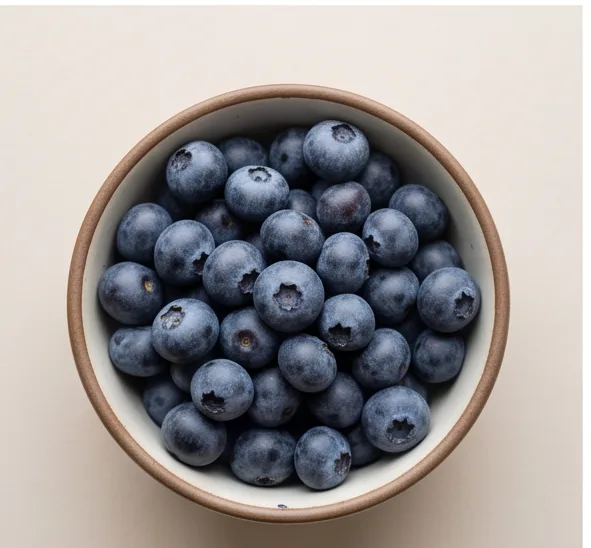
Nutrition per 100 g raw blueberries (example)
- Calories
- 57
- Protein
- 0.7 g
- Fat
- 0.3 g
- Carbs
- 14 g
- Fibre
- 2.4 g
Why it matters
- →Variety matters for the nutrient figures
- →The table is an illustrative blueberry reference, not every berry
Common uses
SeasonalitySummer
Preparation and texture
Wash fresh berries as directed and follow any cooking instructions for frozen products. Stir into porridge or cook into a sauce without assuming added sugar is needed.
What to check before using it
Observational links between fruit intake and health do not prove berries prevent cognitive decline or heart disease. The same nutrition figure should not be attributed to every berry variety.
Sources and limits
Nutrition figures describe the reference form and are approximate, not a laboratory analysis of your purchase. Variety, water content, processing and fortification can change the result. The sources below explain food composition, safe handling and nutrient guidance; they do not establish that an individual food treats a disease.
Як Berries вписується у звичайний день харчування
The reference portion of Berries contains 57 kcal, 0.7 g of protein and 2.4 g of fibre per 100 g. Read these figures alongside the preparation state shown above: dry grains, cooked pulses and oils are not interchangeable portions. Multiply each figure by the weight you actually eat divided by 100. A food with little protein or fibre can still have a useful culinary role; it should not be described as a substantial source of those nutrients.
The usual uses of Berries are Porridge topper, Smoothies, Baking, Fresh. Choose the portion and preparation for that role rather than assuming every ingredient should be the centre of a meal. For example, herbs season a dish, oils supply concentrated fat, and legumes can contribute protein and fibre. Check the ingredient's own nutrition values and combine it with complementary foods across the day.
Харчова цінність на 100 г і для чого потрібен кожен показник
| Поживна речовина | На 100 г | Чому це важливо |
|---|---|---|
| Calories | 57 | Енергетична щільність — допомагає оцінити розмір порції відносно решти тарілки. |
| Protein | 0.7 g | Підтримує відновлення м'язів і насичення; краще розподіляти протягом дня, а не вживати за один раз. |
| Fat | 0.3 g | Переносить жиророзчинні вітаміни та смак; тип жиру важливіший за його кількість. |
| Carbs | 14 g | Основне джерело енергії; вуглеводи з цільних продуктів надходять разом із клітковиною та мінералами. |
| Fibre | 2.4 g | Живить кишкові бактерії, стабілізує рівень цукру в крові — це поживна речовина, якої найчастіше не вистачає в раціоні. |
Купівля та зберігання Berries
- Compare the ingredient list and price for the form you need. A plain version may be useful, but fortified products can provide nutrients that an unfortified version lacks.
- Fresh, frozen, canned and dried products differ in water content, added salt and preparation. Compare nutrition using the same preparation state and a realistic serving, not package weight alone.
- Follow the package's storage instructions. Refrigerate perishable foods promptly; a dry cupboard is not appropriate for every ingredient.
- Buy only an amount you can store safely and use before spoilage. A lower unit price does not save money if part of the food is discarded.
Типові помилки
- Comparing dry and cooked weights as if they were equivalent. Water absorbed during cooking changes the nutrients per 100 g.
- Assuming every plant ingredient supplies meaningful protein, iron or fibre. Use the values above and the portion actually eaten.
- Ignoring food allergies, age-appropriate textures or a medical condition when choosing a serving.
- Assuming every ingredient can be eaten raw. Follow preparation instructions, especially for dried beans and foods requiring cooking.
Приготування Berries
Звичайні способи використання — це Porridge topper, Smoothies, Baking, Fresh. Кожен із них — радше шаблон, ніж рецепт: щойно ви зрозумієте, як Berries поводиться під дією тепла та солі, ви зможете додавати його до страв, які вже готуєте, замість того щоб учитися готувати нову страву з нуля.
Інші запитання, які часто ставлять
Is Berries a good source of protein?
The reference value is 0.7 g per 100 g. Whether that makes a meaningful contribution depends on the serving you eat. A small amount used for seasoning or cooking fat is not equivalent to a main serving of beans or tofu. Compare the prepared portion, not just the ingredient name.
How much Berries should I eat in a day?
There is no universal serving suitable for every ingredient or person. Match the amount to its role, energy density and your overall diet. Allergies, medical conditions, age and preparation matter. A clinician or registered dietitian can advise on individual restrictions.
Is Berries suitable for children and older adults?
Suitability depends on the ingredient, preparation and person. Consider allergies, swallowing and chewing ability, choking hazards and medical restrictions. Whole nuts and hard pieces may need grinding or another texture adjustment. Do not assume an ingredient is safe or nutrient-dense solely because it is plant-based.
Does cooking change the nutrients in Berries?
Cooking may reduce some heat-sensitive vitamins while improving digestibility or making a food safe to eat. Water gain or loss also changes the figures per 100 g. Compare nutrition data for the same cooked or uncooked form, and follow safe preparation instructions rather than avoiding cooking to preserve nutrients.
Is Berries expensive?
Prices vary by region, season, brand and preparation. Compare the cost of the amount you will actually use, including waste and cooking time. An oil, spice or specialty ingredient cannot be judged as a cheap protein source when it supplies little protein in a normal serving.
Продовжуйте досліджувати
Сторінки, пов'язані з цією через заміни, інгредієнти, поживні речовини та страви.



