Seitan
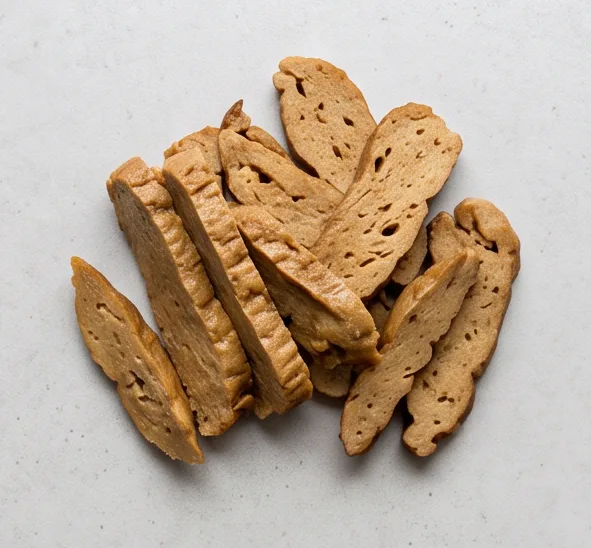
Seitan is a prepared wheat-gluten food with a firm, chewy texture. Its composition varies with the recipe and added ingredients.
Nutrition per 100 g
- Calories
- 141
- Protein
- 25 g
- Fat
- 1.9 g
- Carbs
- 5.7 g
- Fibre
- 1 g
Why it matters
- →Concentrated wheat protein
- →Unsuitable for coeliac disease and wheat allergy
Use it to replace
- • Chicken
- • Beef strips
Common uses
Preparation and texture
Use prepared seitan in strips or slices and avoid overcooking if it becomes tough. When making it from gluten flour, use a tested recipe and fully cook the dough.
What to check before using it
Dry vital wheat gluten and cooked seitan are different nutrition records. Seitan is relatively low in lysine; include legumes and other protein foods across the day.
Sources and limits
Nutrition figures describe the reference form and are approximate, not a laboratory analysis of your purchase. Variety, water content, processing and fortification can change the result. The sources below explain food composition, safe handling and nutrient guidance; they do not establish that an individual food treats a disease.
普段の食事にSeitanを取り入れるコツ
The reference portion of Seitan contains 141 kcal, 25 g of protein and 1 g of fibre per 100 g. Read these figures alongside the preparation state shown above: dry grains, cooked pulses and oils are not interchangeable portions. Multiply each figure by the weight you actually eat divided by 100. A food with little protein or fibre can still have a useful culinary role; it should not be described as a substantial source of those nutrients.
The usual uses of Seitan are Kebabs, Stir-fry, Sandwich filling. Choose the portion and preparation for that role rather than assuming every ingredient should be the centre of a meal. For example, herbs season a dish, oils supply concentrated fat, and legumes can contribute protein and fibre. Check the ingredient's own nutrition values and combine it with complementary foods across the day.
100gあたりの栄養価と、各栄養素の実用的な意味
| 栄養素 | 100gあたり | なぜ重要か |
|---|---|---|
| Calories | 141 | エネルギー密度:お皿の他の食材とのバランスを考える目安に。 |
| Protein | 25 g | 筋肉の修復と満腹感をサポート。1回で摂るより、1日を通して分散して摂るのが効果的。 |
| Fat | 1.9 g | 脂溶性ビタミンと風味を運ぶ。量より質が重要。 |
| Carbs | 5.7 g | 主なエネルギー源。全粒の炭水化物は食物繊維やミネラルも一緒に摂れる。 |
| Fibre | 1 g | 腸内細菌のエサになり、血糖値を安定させる。多くの食事で不足しがちな栄養素。 |
Seitanの選び方と保存方法
- Compare the ingredient list and price for the form you need. A plain version may be useful, but fortified products can provide nutrients that an unfortified version lacks.
- Fresh, frozen, canned and dried products differ in water content, added salt and preparation. Compare nutrition using the same preparation state and a realistic serving, not package weight alone.
- Follow the package's storage instructions. Refrigerate perishable foods promptly; a dry cupboard is not appropriate for every ingredient.
- Buy only an amount you can store safely and use before spoilage. A lower unit price does not save money if part of the food is discarded.
よくある失敗
- Comparing dry and cooked weights as if they were equivalent. Water absorbed during cooking changes the nutrients per 100 g.
- Assuming every plant ingredient supplies meaningful protein, iron or fibre. Use the values above and the portion actually eaten.
- Ignoring food allergies, age-appropriate textures or a medical condition when choosing a serving.
- Assuming every ingredient can be eaten raw. Follow preparation instructions, especially for dried beans and foods requiring cooking.
Seitanの調理法
一般的な使い方はKebabs, Stir-fry, Sandwich fillingです。これらはレシピというよりテンプレート。Seitanが熱や塩とどう反応するかがわかれば、新しい料理を覚えるより、普段作る料理に組み込めます。
よくある質問をもっと見る
Is Seitan a good source of protein?
The reference value is 25 g per 100 g. Whether that makes a meaningful contribution depends on the serving you eat. A small amount used for seasoning or cooking fat is not equivalent to a main serving of beans or tofu. Compare the prepared portion, not just the ingredient name.
How much Seitan should I eat in a day?
There is no universal serving suitable for every ingredient or person. Match the amount to its role, energy density and your overall diet. Allergies, medical conditions, age and preparation matter. A clinician or registered dietitian can advise on individual restrictions.
Is Seitan suitable for children and older adults?
Suitability depends on the ingredient, preparation and person. Consider allergies, swallowing and chewing ability, choking hazards and medical restrictions. Whole nuts and hard pieces may need grinding or another texture adjustment. Do not assume an ingredient is safe or nutrient-dense solely because it is plant-based.
Does cooking change the nutrients in Seitan?
Cooking may reduce some heat-sensitive vitamins while improving digestibility or making a food safe to eat. Water gain or loss also changes the figures per 100 g. Compare nutrition data for the same cooked or uncooked form, and follow safe preparation instructions rather than avoiding cooking to preserve nutrients.
Is Seitan expensive?
Prices vary by region, season, brand and preparation. Compare the cost of the amount you will actually use, including waste and cooking time. An oil, spice or specialty ingredient cannot be judged as a cheap protein source when it supplies little protein in a normal serving.
もっと探す
このページに関連する、代替食材、材料、栄養素、食事のページです。