Cashews
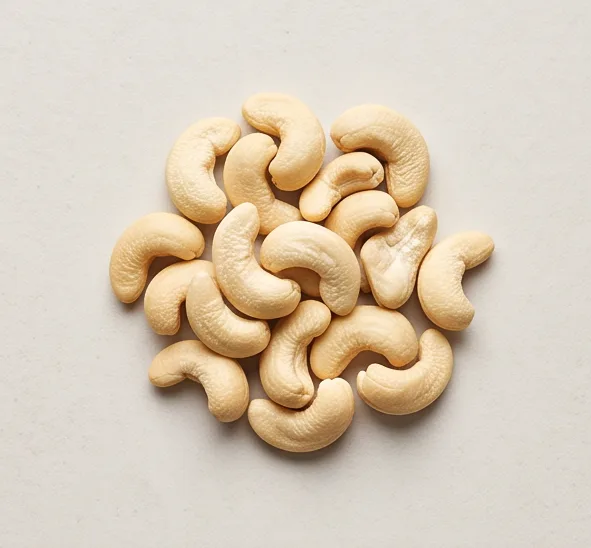
Cashews blend into creamy sauces and desserts because of their mild flavour and texture. Cashew cream is a culinary dairy substitute, not an identical nutrient replacement.
Nutrition per 100 g
- Calories
- 553
- Protein
- 18 g
- Fat
- 44 g
- Carbs
- 30 g
- Fibre
- 3.3 g
Why it matters
- →Useful for smooth dairy-free sauces
- →An energy-dense tree nut
Use it to replace
- • Dairy cream (blended, soaked)
Common uses
Preparation and texture
Soften according to a tested recipe, drain and blend with fresh water until smooth. Refrigerate prepared cashew sauces rather than treating them like a dry pantry ingredient.
What to check before using it
Cashews are a tree-nut allergen. Homemade cashew cream is not automatically fortified with calcium or B12 and should not be described as nutritionally equivalent to milk.
Sources and limits
Nutrition figures describe the reference form and are approximate, not a laboratory analysis of your purchase. Variety, water content, processing and fortification can change the result. The sources below explain food composition, safe handling and nutrient guidance; they do not establish that an individual food treats a disease.
Cashews günlük beslenmeye nasıl uyuyor
The reference portion of Cashews contains 553 kcal, 18 g of protein and 3.3 g of fibre per 100 g. Read these figures alongside the preparation state shown above: dry grains, cooked pulses and oils are not interchangeable portions. Multiply each figure by the weight you actually eat divided by 100. A food with little protein or fibre can still have a useful culinary role; it should not be described as a substantial source of those nutrients.
The usual uses of Cashews are Cashew cream, Vegan cheesecake, Curry. Choose the portion and preparation for that role rather than assuming every ingredient should be the centre of a meal. For example, herbs season a dish, oils supply concentrated fat, and legumes can contribute protein and fibre. Check the ingredient's own nutrition values and combine it with complementary foods across the day.
100 gram başına besin değerleri ve her bir satırın aslında ne işe yaradığı
| Besin Öğesi | 100 g'da | Neden önemli |
|---|---|---|
| Calories | 553 | Enerji yoğunluğu — porsiyon büyüklüğünü tabaktaki diğer yiyeceklere göre ayarlamak için kullanışlı. |
| Protein | 18 g | Kas onarımını ve tokluğu destekler; gün içinde tek seferde değil, dağıtarak alın. |
| Fat | 44 g | Yağda çözünen vitaminleri ve lezzeti taşır; yağın türü miktarından daha önemlidir. |
| Carbs | 30 g | Ana yakıt kaynağı; tam gıda karbonhidratı lif ve minerallerle birlikte gelir. |
| Fibre | 3.3 g | Bağırsak bakterilerini besler, kan şekerini dengeler ve çoğu diyette eksik olan besin öğesidir. |
Cashews satın almak ve saklamak
- Compare the ingredient list and price for the form you need. A plain version may be useful, but fortified products can provide nutrients that an unfortified version lacks.
- Fresh, frozen, canned and dried products differ in water content, added salt and preparation. Compare nutrition using the same preparation state and a realistic serving, not package weight alone.
- Follow the package's storage instructions. Refrigerate perishable foods promptly; a dry cupboard is not appropriate for every ingredient.
- Buy only an amount you can store safely and use before spoilage. A lower unit price does not save money if part of the food is discarded.
Sık yapılan hatalar
- Comparing dry and cooked weights as if they were equivalent. Water absorbed during cooking changes the nutrients per 100 g.
- Assuming every plant ingredient supplies meaningful protein, iron or fibre. Use the values above and the portion actually eaten.
- Ignoring food allergies, age-appropriate textures or a medical condition when choosing a serving.
- Assuming every ingredient can be eaten raw. Follow preparation instructions, especially for dried beans and foods requiring cooking.
Cashews ile yemek yapmak
Genel kullanım alanları Cashew cream, Vegan cheesecake, Curry. Bunların her biri bir tariften çok bir şablondur: Cashews'in ısı ve tuzla nasıl davrandığını öğrendiğinde, onu sıfırdan yeni bir yemek öğrenmek yerine zaten pişirdiğin yemeklere yerleştirebilirsin.
Merak edilen diğer sorular
Is Cashews a good source of protein?
The reference value is 18 g per 100 g. Whether that makes a meaningful contribution depends on the serving you eat. A small amount used for seasoning or cooking fat is not equivalent to a main serving of beans or tofu. Compare the prepared portion, not just the ingredient name.
How much Cashews should I eat in a day?
There is no universal serving suitable for every ingredient or person. Match the amount to its role, energy density and your overall diet. Allergies, medical conditions, age and preparation matter. A clinician or registered dietitian can advise on individual restrictions.
Is Cashews suitable for children and older adults?
Suitability depends on the ingredient, preparation and person. Consider allergies, swallowing and chewing ability, choking hazards and medical restrictions. Whole nuts and hard pieces may need grinding or another texture adjustment. Do not assume an ingredient is safe or nutrient-dense solely because it is plant-based.
Does cooking change the nutrients in Cashews?
Cooking may reduce some heat-sensitive vitamins while improving digestibility or making a food safe to eat. Water gain or loss also changes the figures per 100 g. Compare nutrition data for the same cooked or uncooked form, and follow safe preparation instructions rather than avoiding cooking to preserve nutrients.
Is Cashews expensive?
Prices vary by region, season, brand and preparation. Compare the cost of the amount you will actually use, including waste and cooking time. An oil, spice or specialty ingredient cannot be judged as a cheap protein source when it supplies little protein in a normal serving.
Keşfetmeye Devam Et
Bu sayfayla değişimler, malzemeler, besinler ve öğünler üzerinden bağlantılı sayfalar.



