High-protein vegan meals
Quick answer
The US adult protein RDA is 0.8 g/kg/day; EFSA uses 0.83 g/kg, while ISSN suggests 1.4–2.0 g/kg for most exercising adults. Tofu, lentils, seitan and soy milk can help meet these needs. Use product labels and portion weights; three meals plus a snack should be sized to your own body weight and training.
Every meal here delivers at least 25 g of protein per serving, calculated from standard composition tables rather than estimated. Protein is the most-asked and least-difficult question in plant-based eating: soy, seitan, lentils and beans do the work, and the numbers below show by how much.
Key facts
- Recipes
- 10 with full nutrition estimates
- Average protein
- 29 g per serving
- Fastest recipe
- 15 minutes
- Cheapest serving
- $0.70
10 of 10 recipes
Most protein
29 g per serving
- Seitan and broccoli stir-fryTime: 20 min · Cost: $2.1038 g
- Red lentil pasta bakeTime: 45 min · Cost: $1.9034 g
- Tempeh peanut bowlTime: 25 min · Cost: $2.3032 g
- Peanut tofu noodlesTime: 15 min · Cost: $1.8031 g
- Baked tofu katsuTime: 40 min · Cost: $2.0030 g
USDA FoodData Central; McCance & Widdowson's The Composition of Foods
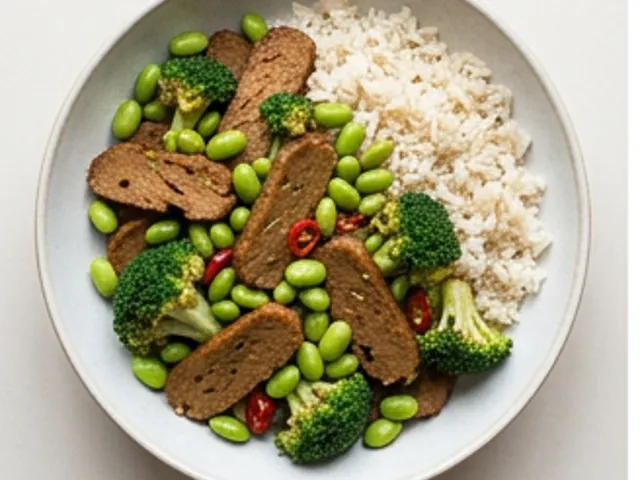
Seitan and broccoli stir-fry
The heavyweight: protein from seitan and edamame. Nutrition is an estimate; portions and brands vary.
- Protein
- 38 g
- Kcal
- 560
- Time
- 20m
- Cost
- $2.10
Ingredients and method
- 300 g seitan, sliced
- 200 g frozen edamame
- 1 head broccoli
- 3 tbsp soy sauce
- 1 tbsp rice vinegar
- 2 tsp sesame oil
- Garlic, ginger, chilli
- Rice to serve
- Sear the seitan hard in a very hot pan until it colours — it needs browning to taste of anything.
- Add broccoli and a splash of water, cover 3 minutes to steam.
- Add edamame, aromatics and sauce, toss 2 minutes, serve over rice.
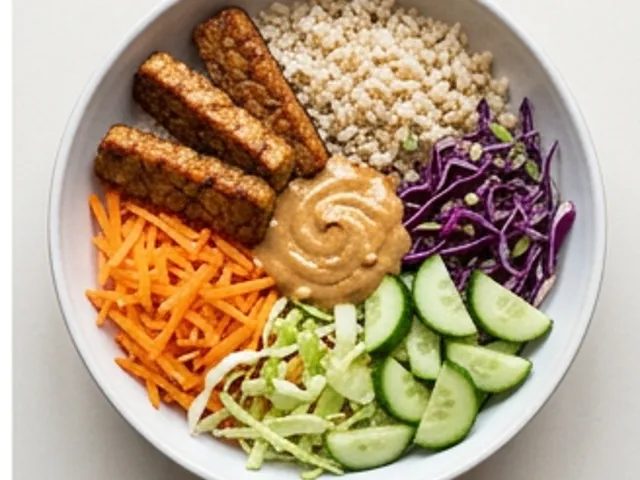
Tempeh peanut bowl
Tempeh plus peanut sauce plus brown rice — protein and a genuinely good dinner. Nutrition is an estimate; portions and brands vary.
- Protein
- 32 g
- Kcal
- 640
- Time
- 25m
- Cost
- $2.30
Ingredients and method
- 250 g tempeh
- 2 tbsp soy sauce
- 180 g brown rice
- Carrot, cabbage, cucumber
- 3 tbsp peanut butter
- Lime, chilli, garlic, ginger
- Steam the tempeh 10 minutes to remove bitterness, then fry in soy sauce until dark.
- Whisk the peanut sauce with lime, chilli, garlic and water.
- Build over rice with raw shredded vegetables for texture.
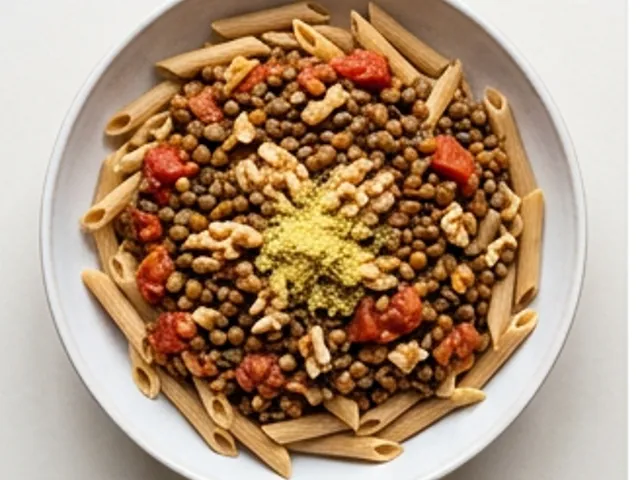
Lentil and walnut ragù
protein with wholewheat pasta, and it costs under a dollar. Nutrition is an estimate; portions and brands vary.
- Protein
- 27 g
- Kcal
- 610
- Time
- 45m
- Cost
- $1.05
Ingredients and method
- 300 g puy lentils
- 100 g walnuts
- Soffritto: onion, carrot, celery
- 2 tins tomatoes
- Tomato purée
- 400 g wholewheat pasta
- Nutritional yeast
- Build the soffritto slowly, add purée and cook it out for 2 minutes.
- Add lentils, tomatoes, chopped walnuts and water; simmer 30 minutes.
- Serve over wholewheat pasta with nutritional yeast.
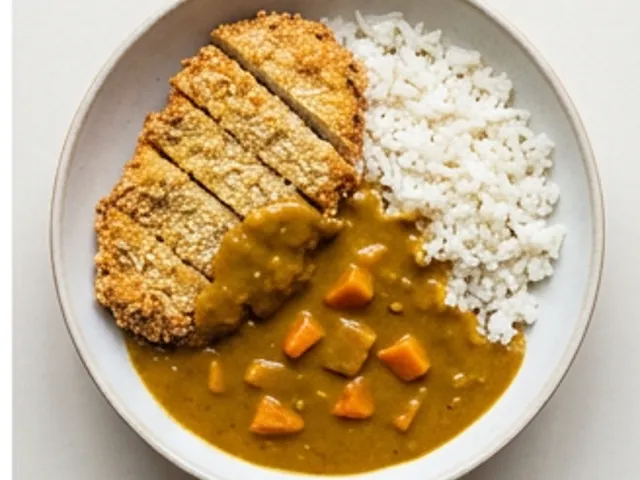
Baked tofu katsu
Panko-crusted tofu with curry sauce. protein without deep frying. Nutrition is an estimate; portions and brands vary.
- Protein
- 30 g
- Kcal
- 620
- Time
- 40m
- Cost
- $2.00
Ingredients and method
- 400 g extra-firm tofu
- 80 g panko
- 3 tbsp flour + water slurry
- Curry sauce: onion, carrot, curry powder, stock, soy sauce
- Rice to serve
- Press the tofu 20 minutes, slice into slabs, coat in slurry then panko.
- Bake at 220 °C for 25 minutes, turning once, until hard and golden.
- Blend the simmered curry sauce smooth and pour over sliced katsu and rice.
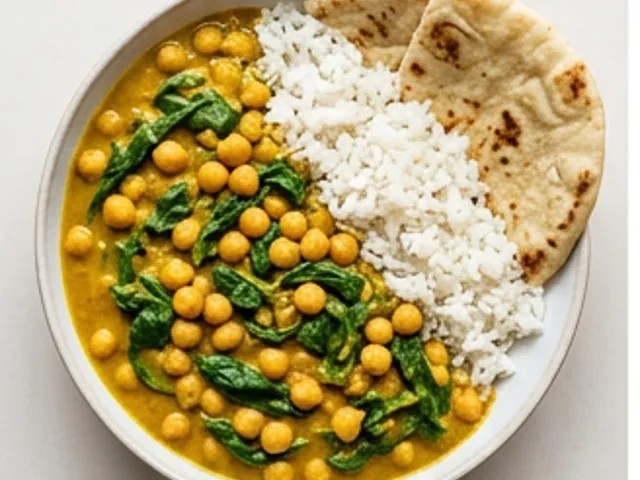
Chickpea and spinach curry
protein, high in iron, and it costs less than a coffee. Nutrition is an estimate; portions and brands vary.
- Protein
- 26 g
- Kcal
- 520
- Time
- 30m
- Cost
- $0.95
Ingredients and method
- 3 tins chickpeas
- 300 g spinach
- 1 tin coconut milk
- 2 onions, garlic, ginger
- 2 tbsp curry powder, 1 tsp turmeric
- Lemon
- Rice or flatbread
- Fry onions, garlic, ginger and spices until fragrant.
- Add chickpeas and coconut milk, simmer 15 minutes to thicken.
- Wilt spinach through, finish with lemon for iron absorption and brightness.
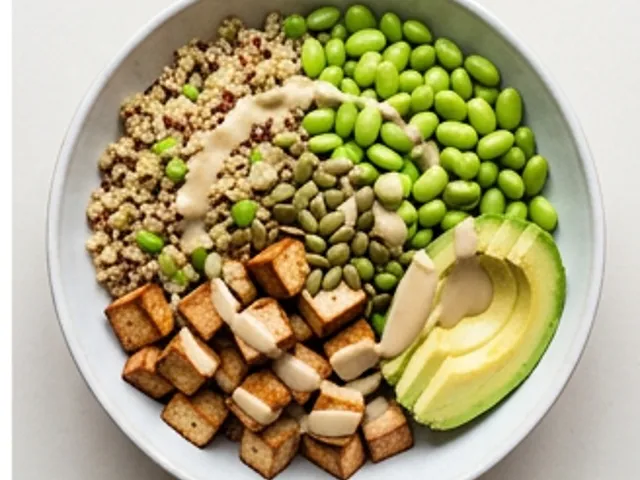
Quinoa and edamame bowl
Two complete proteins in one bowl, 28 g per serving, no cooking beyond the quinoa. Nutrition is an estimate; portions and brands vary.
- Protein
- 28 g
- Kcal
- 590
- Time
- 25m
- Cost
- $2.20
Ingredients and method
- 160 g quinoa
- 250 g frozen edamame
- 200 g smoked tofu
- Avocado
- Tahini-lemon dressing
- Pumpkin seeds
- Cook the quinoa and cool slightly.
- Boil the edamame 4 minutes; cube the smoked tofu.
- Assemble with avocado, dressing and pumpkin seeds.
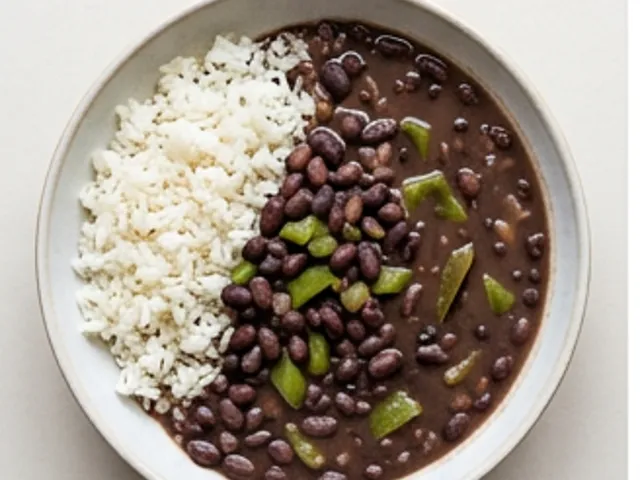
Cuban-style black bean soup
A filling bean soup that works well for batch cooking. Nutrition is an estimate and excludes the unspecified rice serving.
- Protein
- 17 g
- Kcal
- 430
- Time
- 40m
- Cost
- $0.70
Ingredients and method
- 3 tins black beans (about 720 g drained total)
- 2 onions, 1 green pepper
- 6 garlic cloves
- 2 tsp cumin, 1 tsp oregano
- 1 bay leaf
- Vinegar and lime to finish
- Rice to serve
- Sofrito the onion, pepper and garlic for 12 minutes.
- Add beans with their liquid, spices and bay; simmer 25 minutes.
- Blend a third of the pot and stir back in for body. Finish with vinegar and lime.
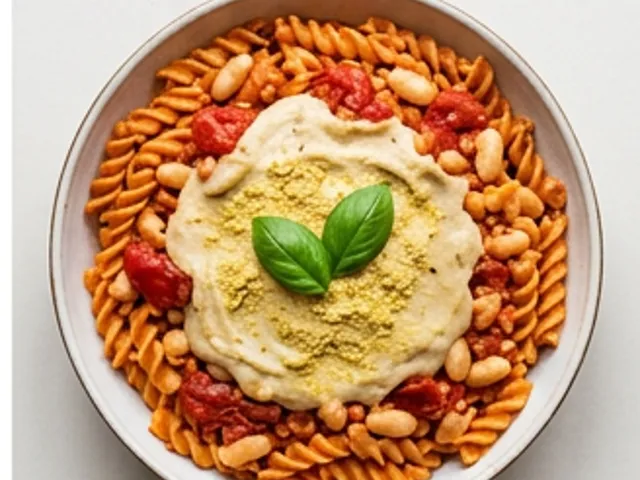
Red lentil pasta bake
Legume pasta doubles the protein of wheat pasta. 34 g per serving. Nutrition is an estimate; portions and brands vary.
- Protein
- 34 g
- Kcal
- 580
- Time
- 45m
- Cost
- $1.90
Ingredients and method
- 400 g red lentil pasta
- 2 tins chopped tomatoes
- 1 tin white beans
- Onion, garlic, basil
- Cashew or soy béchamel
- Nutritional yeast
- Undercook the pasta by 3 minutes — it finishes in the oven.
- Mix with the tomato and bean sauce, top with béchamel and yeast.
- Bake 25 minutes at 200 °C until browned at the edges.
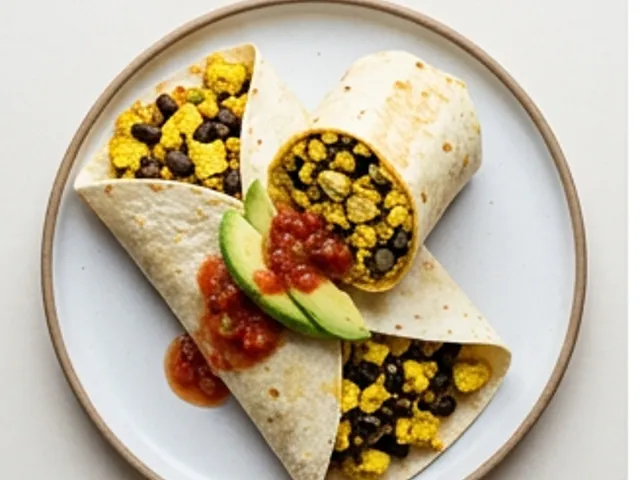
Tofu scramble burrito
Breakfast, lunch or 11 p.m. — protein in something you eat with one hand. Nutrition is an estimate; portions and brands vary.
- Protein
- 29 g
- Kcal
- 610
- Time
- 15m
- Cost
- $1.70
Ingredients and method
- 300 g firm tofu
- 1 tin black beans
- 2 large tortillas
- Kala namak, turmeric, cumin
- Salsa, avocado, hot sauce
- Scramble the tofu with the spices.
- Warm the beans and mash lightly.
- Fill, fold and sear the burrito seam-down in a dry pan for 2 minutes a side.
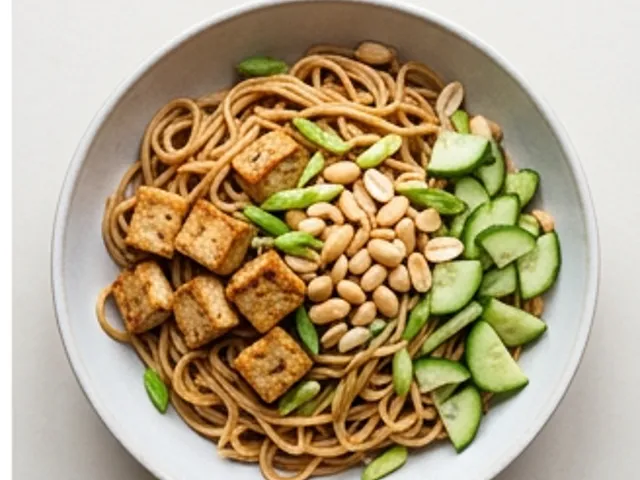
Peanut tofu noodles
Fifteen minutes, protein, and it works cold from a lunchbox. Nutrition is an estimate; portions and brands vary.
- Protein
- 31 g
- Kcal
- 680
- Time
- 15m
- Cost
- $1.80
Ingredients and method
- 250 g wholewheat noodles
- 300 g smoked or baked tofu
- 3 tbsp peanut butter
- 2 tbsp soy sauce
- 1 tbsp rice vinegar
- Chilli, garlic, lime
- Spring onion, cucumber, peanuts
- Cook and rinse the noodles cold so they do not clump.
- Whisk the peanut sauce with hot water until pourable.
- Toss everything with the cubed tofu and top with peanuts and spring onion.
What to get right
Soy is the complete one
Soy foods provide all nine essential amino acids. Protein-quality scores differ between whole soy foods and isolates and depend on processing, so they should not all be assigned the same DIAAS as animal protein.
You do not need to combine at every meal
The 'complementary protein' rule from the 1970s has been retired. The liver maintains an amino acid pool across the day, so eating beans at lunch and grains at dinner works exactly as well as combining them in one bowl.
Leucine matters for muscle
Leucine helps stimulate muscle protein synthesis, but the response depends on age, meal size and protein source. Aim for adequate daily protein and protein-containing meals; 30 g of plant protein does not invariably provide 2.5–3 g leucine.
Watch total calories, not just protein
Plant proteins arrive with fibre, which is filling. Athletes who undereat on a plant-based diet usually have a calorie problem, not a protein problem — add oils, nuts, dried fruit and refined grains alongside the whole foods.
Questions people ask
How much protein do vegans need?
The same as anyone else: about 0.8–1.0 g per kg of body weight for general health, rising to 1.4–2.0 g/kg for people training for strength. Some guidance suggests adding roughly 10% on plant diets to account for slightly lower digestibility, which for a 70 kg adult is around 6 g — one extra serving of beans.
What is the highest-protein vegan food?
Compare foods in the same form: dried TVP and protein isolates are more concentrated than cooked foods. Seitan often supplies around 25 g per 100 g cooked; tempeh and tofu are also rich sources. Check labels, and include legumes or soy for lysine.
Can you build muscle on a vegan diet?
Yes. Controlled trials comparing soy and whey protein supplementation alongside resistance training find no significant difference in strength or lean mass gains when total protein and calories are matched. Distribution across meals and total intake matter more than the source.
Is plant protein worse quality than animal protein?
Individual plant foods have lower digestibility scores and some, like grains, are low in lysine, but a varied diet corrects this without effort. Soy scores close to dairy on DIAAS; combining legumes and grains across a day fills any gap.
Other meal hubs
Data: USDA FoodData Central; McCance & Widdowson's The Composition of Foods · Free to reuse under CC BY 4.0 with a link back.
Tẹ̀ ẹ̀wọ̀n sí i
Àwọn ojú-ewé tó jẹ́ mọ́ eyí nípa àwọn ìyípadà, àwọn ohun elo, àwọn nǹkan àfúnni àti àwọn onjẹ.